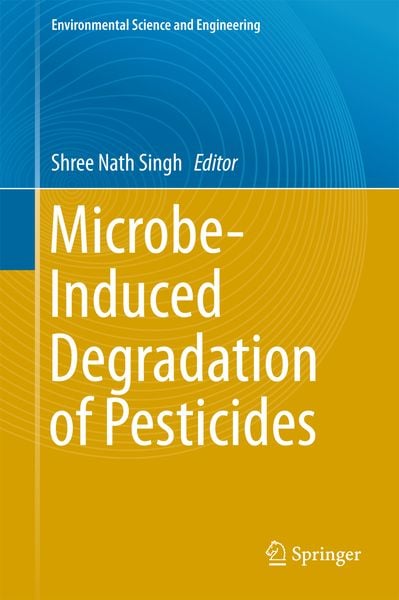
Microbe-Induced Degradation of Pesticides
-
- Hardcover ausgewählt
- Taschenbuch
- eBook
-
Sprache:Englisch
Fr. 138.00
inkl. gesetzl. MwSt.,
Beschreibung
Produktdetails
Einband
Gebundene Ausgabe
Erscheinungsdatum
20.09.2016
Abbildungen
XII, 43 illus., 3 illus. in color., farbige Illustrationen, schwarz-weiss Illustrationen
Herausgeber
Shree Nath SinghVerlag
SpringerSeitenzahl
233
Maße (L/B/H)
24.1/16/2 cm
Gewicht
541 g
Auflage
1st ed. 2017
Sprache
Englisch
ISBN
978-3-319-45155-8
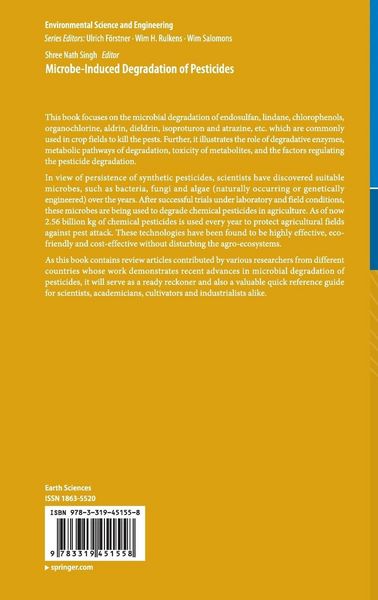
This book focuses on the microbial degradation of endosulfan, lindane, chlorophenols, organochlorine, aldrin, dieldrin, isoproturon and atrazine, etc. which are commonly used in crop fields to kill the pests. Further, it illustrates the role of degradative enzymes, metabolic pathways of degradation, toxicity of metabolites, and the factors regulating the pesticide degradation.
In view of persistence of synthetic pesticides, scientists have discovered suitable microbes, such as bacteria, fungi and algae (naturally occurring or genetically engineered) over the years. After successful trials under laboratory and field conditions, these microbes are being used to degrade chemical pesticides in agriculture. As of now 2.56 billion kg of chemical pesticides is used every year to protect agricultural fields against pest attack. These technologies have been found to be highly effective, eco-friendly and cost-effective without disturbing the agro-ecosystems.
As this book contains review articles contributed by various researchers from different countries whose work demonstrates recent advances in microbial degradation of pesticides, it will serve as a ready reckoner and also a valuable quick reference guide for scientists, academicians, cultivators and industrialists alike.
Kundinnen und Kunden meinen
Verfassen Sie die erste Bewertung zu diesem Artikel
Helfen Sie anderen Kund*innen durch Ihre Meinung