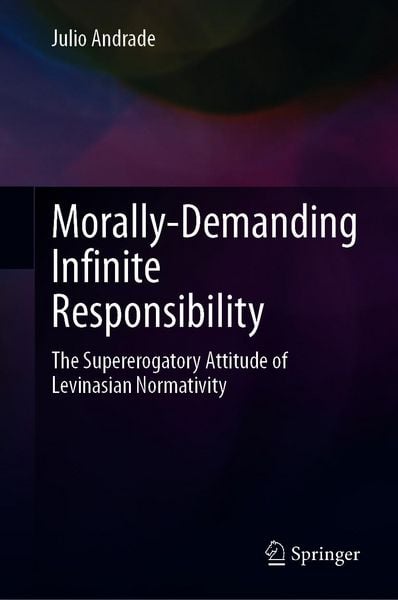
Morally-Demanding Infinite Responsibility The Supererogatory Attitude of Levinasian Normativity
-
- Hardcover
- Taschenbuch
- eBook ausgewählt
-
Form:Einzelkauf Download
-
Sprache:Englisch
Fr. 150.90
inkl. gesetzl. MwSt.Beschreibung
Produktdetails
Format
Kopierschutz
Nein
Family Sharing
Nein
Text-to-Speech
Nein
Erscheinungsdatum
16.03.2021
Verlag
SpringerSeitenzahl
204 (Printausgabe)
Dateigröße
2244 KB
Sprache
Englisch
EAN
9783030616304
This book presents a conceptual mapping of supererogation in the analytic moral philosophical tradition. It first asks whether supererogation can be conceptualised in the absence of obligation or duty and then makes the case that it can be. It does so by enlisting the resources of the continental tradition, specifically using the work of Emmanuel Levinas and his notion of infinite responsibility. In so doing the book contributes to the ongoing efforts to create a common ethical terminology between the analytic and continental traditions within moral philosophy.
Supererogatory actions are praiseworthy actions that go 'beyond duty', and yet are not blameworthy when not performed. In responding to this paradox, moral philosophy either brackets or attempts a reductionism of supererogation. Supererogation is epitomised in the paradigmatic figures of the saint and hero. Yet, most would agree that emulating these figures is too morally demanding. We rightly ask: where does moral obligation end? Is it even possible, or desirable to demarcate such a boundary? Besides the important theoretical issues these questions raise, they also speak to practical ethical dilemmas in the contemporary milieu, as they concern the global wealthy's responsibility to the poor and the challenges of development aid work.
Supererogatory actions are praiseworthy actions that go 'beyond duty', and yet are not blameworthy when not performed. In responding to this paradox, moral philosophy either brackets or attempts a reductionism of supererogation. Supererogation is epitomised in the paradigmatic figures of the saint and hero. Yet, most would agree that emulating these figures is too morally demanding. We rightly ask: where does moral obligation end? Is it even possible, or desirable to demarcate such a boundary? Besides the important theoretical issues these questions raise, they also speak to practical ethical dilemmas in the contemporary milieu, as they concern the global wealthy's responsibility to the poor and the challenges of development aid work.
Kundinnen und Kunden meinen
Verfassen Sie die erste Bewertung zu diesem Artikel
Helfen Sie anderen Kund*innen durch Ihre Meinung