Beschreibung
Produktdetails
Format
ePUB
Kopierschutz
Nein
Family Sharing
Ja
Text-to-Speech
Ja
Altersempfehlung
ab 13 Jahr(e)
Erscheinungsdatum
27.02.2025
Verlag
E-BookaramaSeitenzahl
(Printausgabe)
Dateigröße
1697 KB
Sprache
Englisch
EAN
9788835855460
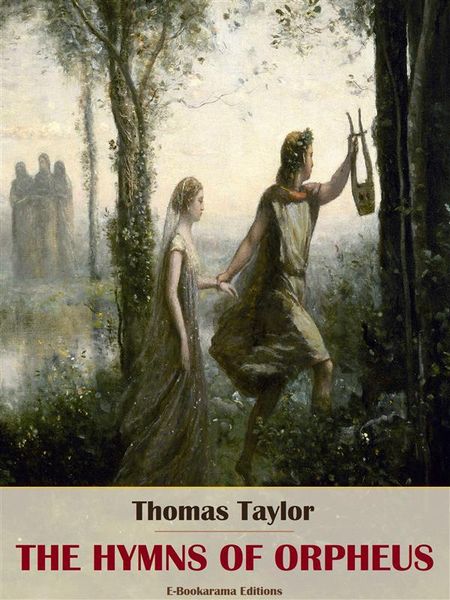
At the very beginnings of the Archaic Age, the great singer Orpheus taught a new religion that centred around the immortality of the human soul and its journey after death. He felt that achieving purity by avoiding meat and refraining from committing harm further promoted the pursuit of a peaceful life. Elements of the worship of Dionysus, such as shape-shifting and ritualistic ecstasy, were fused with Orphic beliefs to produce a powerful and illuminating new religion that found expression in the mystery cults.
"The Hymns of Orpheus" are a set of pre-classical poetic compositions, attributed to the culture hero Orpheus, himself the subject of the renowned myth.
In reality, these poems were probably anonymously composed by several different poets somewhere in Asia Minor, most likely in the middle of the third century AD. At this turbulent time, the Hellenic past was fighting for its survival, while the new Christian faith was spreading everywhere. "The Hymns of Orpheus" thus reflect a pious spirituality in the form of traditional literary conventions. The hymns themselves are devoted to specific divinities as well as to cosmic elements. Prefaced with offerings, strings of epithets invoke the various attributes of the divinity and prayers ask for peace and health to the initiate.
Reminiscent of the Rig-Veda, "The Hymns of Orpheus" contain a rich set of clues about prehistoric European mythology.
This 1792 translation by Thomas Taylor, a British neo-Platonist classicist, is of additional interest for its introduction and extensive footnotes, which discuss in great detail Taylors' philosophy. Taylor, who was considered a bit outside the pale by contemporary scholars, was an influence on successive generations of occultists such as the Theosophists and the Golden Dawn, and in the 20th Century such writers as Manly P. Hall.
"The Hymns of Orpheus" are a set of pre-classical poetic compositions, attributed to the culture hero Orpheus, himself the subject of the renowned myth.
In reality, these poems were probably anonymously composed by several different poets somewhere in Asia Minor, most likely in the middle of the third century AD. At this turbulent time, the Hellenic past was fighting for its survival, while the new Christian faith was spreading everywhere. "The Hymns of Orpheus" thus reflect a pious spirituality in the form of traditional literary conventions. The hymns themselves are devoted to specific divinities as well as to cosmic elements. Prefaced with offerings, strings of epithets invoke the various attributes of the divinity and prayers ask for peace and health to the initiate.
Reminiscent of the Rig-Veda, "The Hymns of Orpheus" contain a rich set of clues about prehistoric European mythology.
This 1792 translation by Thomas Taylor, a British neo-Platonist classicist, is of additional interest for its introduction and extensive footnotes, which discuss in great detail Taylors' philosophy. Taylor, who was considered a bit outside the pale by contemporary scholars, was an influence on successive generations of occultists such as the Theosophists and the Golden Dawn, and in the 20th Century such writers as Manly P. Hall.
Kundinnen und Kunden meinen
Verfassen Sie die erste Bewertung zu diesem Artikel
Helfen Sie anderen Kund*innen durch Ihre Meinung