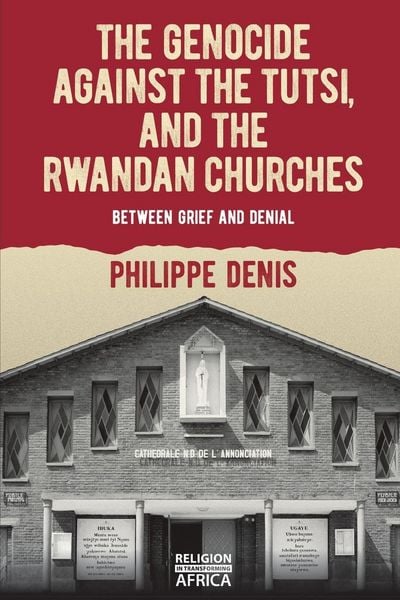
The Genocide against the Tutsi, and the Rwandan Churches Between Grief and Denial
-
- Hardcover
- Taschenbuch ausgewählt
-
Sprache:Englisch
Fr. 56.90
inkl. gesetzl. MwSt.,
Beschreibung
Produktdetails
Einband
Taschenbuch
Erscheinungsdatum
16.07.2024
Verlag
James CurreySeitenzahl
360
Maße (L/B/H)
23.4/15.6/1.9 cm
Gewicht
547 g
Sprache
Englisch
ISBN
978-1-84701-378-1
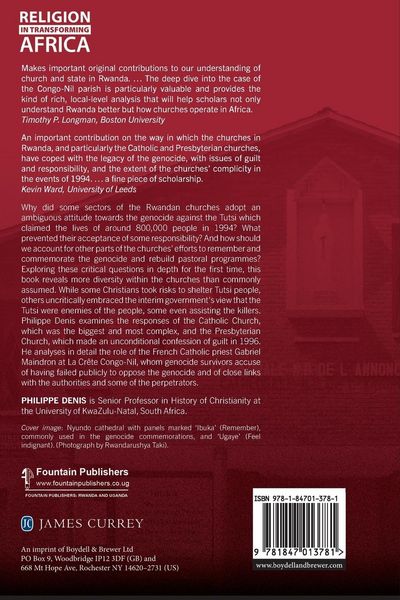
Pioneering study of the role of the Christian churches in the Rwandan genocide of the Tutsi; a key work for historians, memory studies scholars, religion scholars and Africanists. Why did some sectors of the Rwandan churches adopt an ambiguous attitude towards the genocide against the Tutsi which claimed the lives of around 800,000 people in three months between April and July 1994? What prevented the churches' acceptance that they may have had some responsibility? And how should we account for the efforts made by other sectors of the churches to remember and commemorate the genocide and rebuild pastoral programmes? Drawing on interviews with genocide survivors, Rwandans in exile, missionaries and government officials, as well as Church archives and other sources, this book is the first academic study on Christianity and the genocide against the Tutsi to explore these contentious questions in depth, and reveals more internal diversity within the Christian churches than is often assumed. While some Christians, Protestant as well as Catholic, took risks to shelter Tutsi people, others uncritically embraced the interim government's view that the Tutsi were enemies of the people and some, even priests and pastors, assisted the killers. The church leaders only condemned the war: they never actually denounced the genocide against the Tutsi. Focusing on the period of the genocide in 1994 and the subsequent years (up to 2000), Denis examines in detail the responses of two churches, the Catholic Church, the biggest and the most complex, and the Presbyterian Church in Rwanda, which made an unconditional confession of guilt in December 1996. A case study is devoted to the Catholic parish La Crête Congo-Nil in western Rwanda, led at the time by the French priest Gabriel Maindron, a man whom genocide survivors accuse of having failed publicly to oppose the genocide and of having close links with the authorities and some of the perpetrators. By 1997, the defensive attitude adopted by many Catholics had started to change. The Extraordinary Synod on Ethnocentricity in 1999-2000 was a milestone. Yet, especially in the immediate aftermath of the genocide, tension and suspicion persist. Fountain: Rwanda, Uganda
Kundinnen und Kunden meinen
Verfassen Sie die erste Bewertung zu diesem Artikel
Helfen Sie anderen Kund*innen durch Ihre Meinung