- 23%
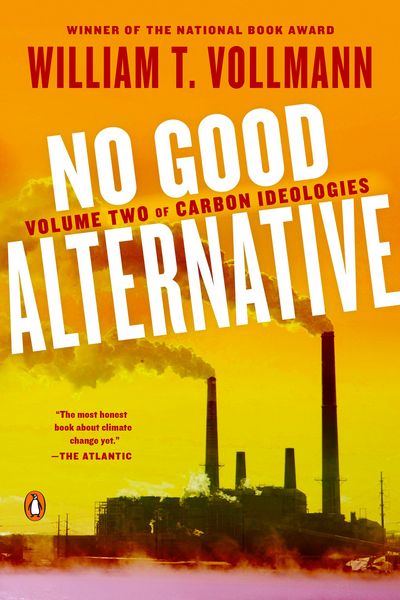
No Good Alternative Volume Two of Carbon Ideologies
-
- Hardcover
- Taschenbuch
- eBook ausgewählt
-
Form:Einzelkauf Download
-
Sprache:Englisch
23%
sparen
Fr. 9.90
Fr. 12.90
*
Beschreibung
Produktdetails
Format
ePUB 3
Kopierschutz
Ja
Family Sharing
Ja
Text-to-Speech
Ja
Erscheinungsdatum
05.06.2018
Verlag
Penguin Publishing GroupSeitenzahl
688 (Printausgabe)
Dateigröße
124560 KB
Sprache
Englisch
EAN
9780525558507
"The most honest book about climate change yet." -The Atlantic
"The Infinite Jest of climate books." -The Baffler
An eye-opening look at the consequences of coal mining and oil and natural gas production-the second of a two volume work by award-winning author William T. Vollmann on the ideologies of energy production and the causes of climate change
The second volume of William T. Vollmann's epic book about the factors and human actions that have led to global warming begins in the coal fields of West Virginia and Eastern Kentucky, where "America's best friend" is not merely a fuel, but a "heritage." Over the course of four years Vollmann finds hollowed out towns with coal-polluted streams and acidified drinking water; makes covert visits to mountaintop removal mines; and offers documented accounts of unpaid fines for federal health and safety violations and of miners who died because their bosses cut corners to make more money.
To write about natural gas, Vollmann journeys to Greeley, Colorado, where he interviews anti-fracking activists, a city planner, and a homeowner with serious health issues from fracking. Turning to oil production, he speaks with, among others, the former CEO of Conoco and a vice president of the Bank of Oklahoma in charge of energy loans, and conducts furtive roadside interviews of guest workers performing oil-related contract labor in the United Arab Emirates.
As with its predecessor, No Immediate Danger, this volume seeks to understand and listen, not to lay blame--except in a few corporate and political cases where outrage is clearly due. Vollmann is a carbon burner just like the rest of us; he describes and quantifies his own power use, then looks around him, trying to explain to the future why it was that we went against scientific consensus, continually increasing the demand for electric power and insisting that we had no good alternative.
"The Infinite Jest of climate books." -The Baffler
An eye-opening look at the consequences of coal mining and oil and natural gas production-the second of a two volume work by award-winning author William T. Vollmann on the ideologies of energy production and the causes of climate change
The second volume of William T. Vollmann's epic book about the factors and human actions that have led to global warming begins in the coal fields of West Virginia and Eastern Kentucky, where "America's best friend" is not merely a fuel, but a "heritage." Over the course of four years Vollmann finds hollowed out towns with coal-polluted streams and acidified drinking water; makes covert visits to mountaintop removal mines; and offers documented accounts of unpaid fines for federal health and safety violations and of miners who died because their bosses cut corners to make more money.
To write about natural gas, Vollmann journeys to Greeley, Colorado, where he interviews anti-fracking activists, a city planner, and a homeowner with serious health issues from fracking. Turning to oil production, he speaks with, among others, the former CEO of Conoco and a vice president of the Bank of Oklahoma in charge of energy loans, and conducts furtive roadside interviews of guest workers performing oil-related contract labor in the United Arab Emirates.
As with its predecessor, No Immediate Danger, this volume seeks to understand and listen, not to lay blame--except in a few corporate and political cases where outrage is clearly due. Vollmann is a carbon burner just like the rest of us; he describes and quantifies his own power use, then looks around him, trying to explain to the future why it was that we went against scientific consensus, continually increasing the demand for electric power and insisting that we had no good alternative.
Kundinnen und Kunden meinen
Verfassen Sie die erste Bewertung zu diesem Artikel
Helfen Sie anderen Kund*innen durch Ihre Meinung