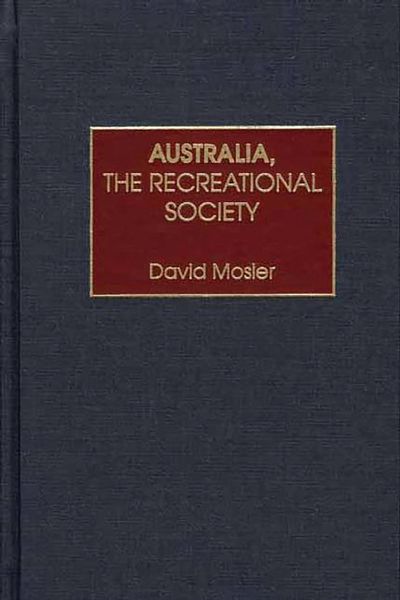
Australia, the Recreational Society
Fr. 103.90
inkl. gesetzl. MwSt.Beschreibung
Produktdetails
Format
Kopierschutz
Ja
Family Sharing
Nein
Text-to-Speech
Nein
Altersempfehlung
ab 7 Jahr(e)
Erscheinungsdatum
30.01.2002
Verlag
Bloomsbury eBooks USSeitenzahl
208 (Printausgabe)
Auflage
1. Auflage
Sprache
Englisch
EAN
9780313010736
From its very inception Australia has been a derivative society: First as part of the British Empire and then, soon after World War II, what Mosler considers the American Empire and the new end-of-century Americanized global culture. This has meant that Australia has struggled to attain its own identity. Mosler explores that struggle for national independence, a struggle that seems to be doomed to failure.
According to Mosler, the reasons for this failure lie in Australia's propensity to remain a recreational culture; a culture more attuned to pleasure and dependence than regimented hard work and the concomitant collective pattern of national assertiveness. The Australian economy, defense arrangements, culture, and psychology have been dominated by other nations and transnational forces. The prospects for the nation in the future appear to be somewhat grim unless this historical pattern of dependence and lack of respect, indeed almost contempt, for national institutions is reversed. A provocative analysis that will be of interest to scholars, students, researchers, and anyone interested in Australian history and contemporary life and culture.
According to Mosler, the reasons for this failure lie in Australia's propensity to remain a recreational culture; a culture more attuned to pleasure and dependence than regimented hard work and the concomitant collective pattern of national assertiveness. The Australian economy, defense arrangements, culture, and psychology have been dominated by other nations and transnational forces. The prospects for the nation in the future appear to be somewhat grim unless this historical pattern of dependence and lack of respect, indeed almost contempt, for national institutions is reversed. A provocative analysis that will be of interest to scholars, students, researchers, and anyone interested in Australian history and contemporary life and culture.
Kundinnen und Kunden meinen
Verfassen Sie die erste Bewertung zu diesem Artikel
Helfen Sie anderen Kund*innen durch Ihre Meinung