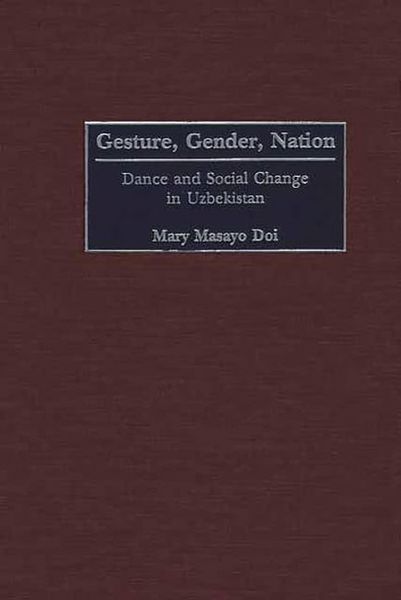
Gesture, Gender, Nation Dance and Social Change in Uzbekistan
Fr. 90.90
inkl. gesetzl. MwSt.Beschreibung
Produktdetails
Format
Kopierschutz
Ja
Family Sharing
Nein
Text-to-Speech
Nein
Altersempfehlung
ab 7 Jahr(e)
Erscheinungsdatum
30.11.2001
Verlag
Bloomsbury eBooks USSeitenzahl
168 (Printausgabe)
Auflage
1. Auflage
Sprache
Englisch
EAN
9780313074028
The national dancers of Uzbekistan are almost always female. In a society that has been Muslim for nearly seven hundred years, why and how did unveiled female dancers become a beloved national icon during the Soviet period? Also, why has their popularity continued after the Uzbek republic became independent? The author argues that dancers, as symbolic girls or unmarried females in the Uzbek kinship system, are effective mediators between extended kin groups, and the Uzbek nation-state. The female dancing body became a tabula rasa upon which the state inscribed, and reinscribed, constructions of Uzbek nationalism.
Doi describes the politics of gender in households as well as the dominant kinship idioms in Uzbek society. She traces the rise of national dance as a profession for women during the Soviet period, prior to which women wore veils and kept purdah. The final chapter examines emerging notions of Uzbek, as regional and national groups contest the notion through debates about what constitutes authentic Uzbek dance. Doi concludes with a comparative discussion of the power of marginality, which enabled Uzbeks to maintain a domain where Uzbek culture and history could be honored, within the Russocentric hegemony of the Soviet state.
Doi describes the politics of gender in households as well as the dominant kinship idioms in Uzbek society. She traces the rise of national dance as a profession for women during the Soviet period, prior to which women wore veils and kept purdah. The final chapter examines emerging notions of Uzbek, as regional and national groups contest the notion through debates about what constitutes authentic Uzbek dance. Doi concludes with a comparative discussion of the power of marginality, which enabled Uzbeks to maintain a domain where Uzbek culture and history could be honored, within the Russocentric hegemony of the Soviet state.
Kundinnen und Kunden meinen
Verfassen Sie die erste Bewertung zu diesem Artikel
Helfen Sie anderen Kund*innen durch Ihre Meinung