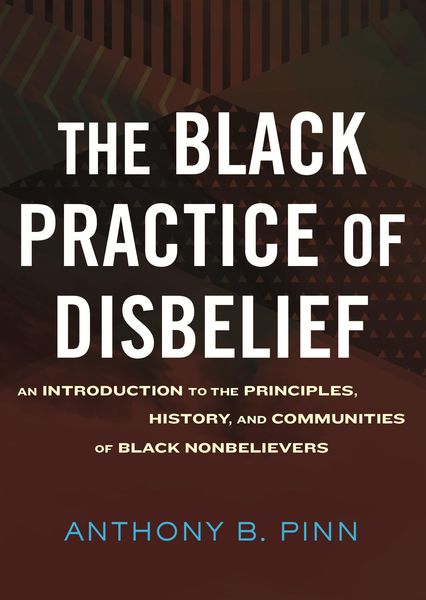
The Black Practice of Disbelief An Introduction to the Principles, History, and Communities of Black Nonbelievers
Fr. 26.90
inkl. gesetzl. MwSt.Beschreibung
Produktdetails
Format
ePUB 3
Kopierschutz
Ja
Family Sharing
Ja
Text-to-Speech
Ja
Erscheinungsdatum
21.05.2024
Verlag
Beacon PressSeitenzahl
144 (Printausgabe)
Dateigröße
852 KB
Sprache
Englisch
EAN
9780807045237
A short introduction to Black Humanism: its history, its present, and the rich cultural sensibilities that infuse it
In the United States, to be a Black American is to be a Black Christian. And there's something to this assumption in that the vast majority of African Americans are Christian. However, in recent years a growing number of African Americans have said they claim no particular religious affiliation-they are Black "nones." And of these Black "nones," the most public and vocal are those who claim to be humanists.
What does it mean to be a Black humanist? What do Black humanist believe, and what do they do? This slim volume answers these questions. Animated by 6 central principles, and discussed in terms of its history, practices, formations, and community rituals, this book argues that Black humanism can be understood as a religious movement. Pinn makes a distinction between theism and religion-which is simply a tool for examining, naming, and finding the meaning in human experience. Black humanism, based on this definition isn't theistic but it is a religious system used to explore human experience and foster life meaning. It infuses humanism with rich cultural sensibilities drawn from Black experience. As shown in these pages, thinking about Black humanism this way frees readers from making unfounded assumptions and enables them to better appreciate the secular "beliefs," ritual structures, and community formation constituted by Black humanists.
In the United States, to be a Black American is to be a Black Christian. And there's something to this assumption in that the vast majority of African Americans are Christian. However, in recent years a growing number of African Americans have said they claim no particular religious affiliation-they are Black "nones." And of these Black "nones," the most public and vocal are those who claim to be humanists.
What does it mean to be a Black humanist? What do Black humanist believe, and what do they do? This slim volume answers these questions. Animated by 6 central principles, and discussed in terms of its history, practices, formations, and community rituals, this book argues that Black humanism can be understood as a religious movement. Pinn makes a distinction between theism and religion-which is simply a tool for examining, naming, and finding the meaning in human experience. Black humanism, based on this definition isn't theistic but it is a religious system used to explore human experience and foster life meaning. It infuses humanism with rich cultural sensibilities drawn from Black experience. As shown in these pages, thinking about Black humanism this way frees readers from making unfounded assumptions and enables them to better appreciate the secular "beliefs," ritual structures, and community formation constituted by Black humanists.
Kundinnen und Kunden meinen
Verfassen Sie die erste Bewertung zu diesem Artikel
Helfen Sie anderen Kund*innen durch Ihre Meinung