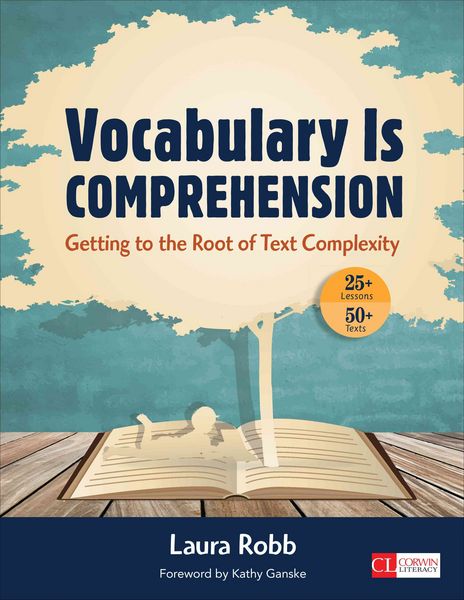
Produktbild: Robb, L: Vocabulary Is Comprehension

Robb, L: Vocabulary Is Comprehension Getting to the Root of Text Complexity

Fr. 51.90

inkl. gesetzl. MwSt., Versandkostenfrei


Beschreibung

Produktdetails

ISBN

978-1-4833-4580-2

Erscheinungsdatum

09.09.2014

Einband

Taschenbuch

Verlag

Sage Publications

Seitenzahl

200

Maße (L/B/H)

27.7/21.6/1.5 cm

Gewicht

570 g

Sprache

Englisch

Beschreibung

Produktdetails

ISBN

978-1-4833-4580-2

Erscheinungsdatum

09.09.2014

Einband

Taschenbuch

Verlag

Sage Publications

Seitenzahl

200

Maße (L/B/H)

27.7/21.6/1.5 cm

Gewicht

570 g

Sprache

Englisch

Kundinnen und Kunden meinen

0 Bewertungen

Informationen zu Bewertungen

Zur Abgabe einer Bewertung ist eine Anmeldung im Konto notwendig. Die Authentizität der Bewertungen wird von uns nicht überprüft. Wir behalten uns vor, Bewertungstexte, die unseren Richtlinien widersprechen, entsprechend zu kürzen oder zu löschen.

Die Bewertungen sind nach Format, Anzahl Sterne und Datum sortiert.

Verfassen Sie die erste Bewertung zu diesem Artikel

Helfen Sie anderen Kund*innen durch Ihre Meinung

Kundinnen und Kunden meinen

0 Bewertungen filtern

Weitere Artikel finden Sie in

  • Produktbild: Robb, L: Vocabulary Is Comprehension
  • Foreword by Kathy Ganske
    Acknowledgments
    Chapter 1. How the Common Core Has Changed the Rules of the Game Forever (Even If the Standards Go Away)
    Big Ambition: Vocabulary in the Context of All the ELA Standards
    Vocabulary in the Context of Complex Text Reading
    Research Highlights
    The Lesson Structure: 10 to 15 Minutes a Day
    The Big 10 Approach to Reading Words Closely
    The Big 10 and the Common Core Vocabulary Standards
    Collaborate and Learn
    Chapter 2. Ten Short Lessons for the Big 10
    Which Words Do I Teach?
    Laying Out the Lessons for the Big 10
    Elements of the Lesson
    Lesson 1: Understanding Descriptive Words to Visualize
    Lesson 2: Decode and Define Multisyllable Words
    Lesson 3: Understanding Personification
    Lesson 4: Write to Show Understanding of Words
    Lesson 5: Synonyms, Antonyms, and Multiple Meanings
    Lesson 6: Connecting Words to a Text¿s Concepts
    Lesson 7: Understanding Denotative and Connotative Meanings
    Lesson 8: Showing Word Knowledge via Twitter
    Lesson 9: Four Words to Respond to Texts
    Lesson 10: Multiple Forms, Multiple Meanings
    Collaborate and Learn
    Chapter 3. Figurative Language
    Helping Students Not to Be Cowed by Figurative Language
    Guidelines for Reading Poetry
    Lesson 1: Alliteration
    Lesson 2: Metaphor
    Lesson 3: Onomatopoeia
    Lesson 4: Repetition
    Lesson 5: Simile
    Lesson 6: Symbols and Symbolism
    Lesson 7: Idioms
    Using Discussions to Interpret Figurative Language
    Three Reproducibles for Discussing and Writing About Poems
    Discussions on Class Blogs
    Collaborate and Learn
    Chapter 4. Getting to the Root of Words
    What the Common Core State Standards Have to Say
    Review Lessons on Prefixes and Suffixes
    Lesson 1: Prefixes
    Lesson 2: Suffixes
    A Five-Day Routine for Teaching Roots
    Lesson 3: Expand Vocabulary With Roots, Prefixes, and Suffixes
    Lesson 4: Make Words With Prefixes, Suffixes, and Roots
    How to Link the Lessons to Students¿ Reading
    More Strategies That Use Roots, Prefixes, and Suffixes
    Lesson 5: Prefix Brainstorm
    Lesson 6: Denotation-Connotation Map
    Collaborate and Learn
    Chapter 5. General Academic and Domain-Specific Vocabulary
    The CCR Anchor Standards for Reading
    Quick Recap: How the Lessons in This Book Address the Anchor Standards
    Four Categories of Academic Vocabulary
    The Best Use of Word Lists
    Why General Academic Vocabulary Is Key
    Basic Elements of General Academic Vocabulary Lessons
    Lessons for Teaching General Academic Words
    Lesson 1: Rate Your Word Knowledge
    Lesson 2: ABC List and Link
    Lesson 3: Concept Map and Writing
    Lesson 4: Words in the World
    Lesson 5: Making Analogies on a Class Wiki or Blog
    Lesson 6: Tweeting for Word Learning
    Collaborate and Learn
    Chapter 6. Assessing Vocabulary
    So How Are They Reading Complex Texts?
    Informative Assessment and Responsive Teaching
    Why Final Tests Are Problematic
    Gathering Data Throughout the Lessons
    Making Instructional Decisions and Modifications
    Introducing Lessons: The First Day
    Practicing the Lessons: Second and Possibly Third Days
    Applying the Lessons: Completing Written Work
    Self-Evaluation
    How to Scaffold and Reteach
    Collaborate and Learn
    Concluding Thoughts on Vocabulary Instruction
    Ten Ways Students Can Expand Their Vocabularies
    References
    Index