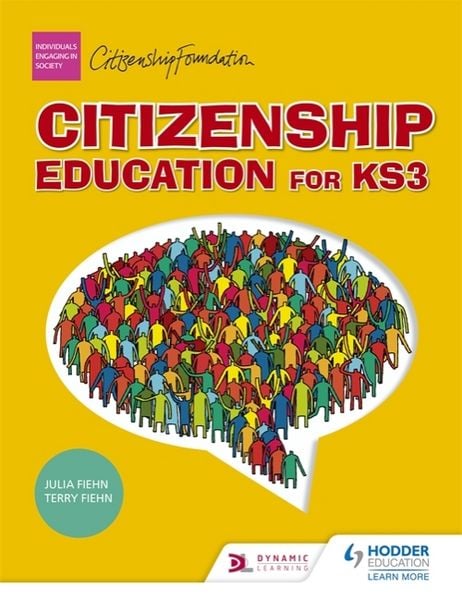
Produktbild: Citizenship Education for Key Stage 3

Citizenship Education for Key Stage 3

Fr. 41.90

inkl. gesetzl. MwSt., Versandkostenfrei


Beschreibung

Produktdetails

ISBN

978-1-4718-0694-0

Erscheinungsdatum

30.05.2014

Einband

Taschenbuch

Verlag

Hachette Learning

Seitenzahl

128

Maße (L/B/H)

27.4/21.2/1.2 cm

Gewicht

380 g

Sprache

Englisch

Beschreibung

Produktdetails

ISBN

978-1-4718-0694-0

Erscheinungsdatum

30.05.2014

Einband

Taschenbuch

Verlag

Hachette Learning

Seitenzahl

128

Maße (L/B/H)

27.4/21.2/1.2 cm

Gewicht

380 g

Sprache

Englisch

Noch keine Bewertungen vorhanden

Verfassen Sie die erste Bewertung zu diesem Artikel

Helfen Sie anderen Kundinnen und Kunden durch Ihre Meinung.

Kundinnen und Kunden meinen

Bewertungen (0)

Weitere Artikel finden Sie in

  • Produktbild: Citizenship Education for Key Stage 3
    • Section 1: Rules, fairness, rights and responsibilities
      • 1.1: The Excellent Community School
      • 1.2: Rules
      • 1.3: It’s not fair! Applying the rules
      • 1.4: It’s not fair! Who gets what?
      • 1.5: What rights should all children have?
      • 1.6: No man is an island…
      • 1.7: Having a say
      • 1.8: Ways of being involved in how the school is run
      • 1.9: Taking part in a debate
      • Skills: Developing your debating skills
    • Section 2: Communities and identities
      • 2.1: Communities and identities
      • 2.2: Identities
      • 2.3: Living together in communities
      • 2.4: How can communities get along better?
      • 2.5: Community services
      • 2.6: Are you a good or an active citizen?
      • 2.7: Can you change anything?
    • Section 3: Laws and the justice system
      • 3.1: How does the law affect young people?
      • 3.2: Youth crime
      • 3.3: Rights and the police - What advice would you give?
      • 3.4: What happens to young offenders?
      • 3.5: The Youth Court
      • 3.6: Sentencing
      • 3.7: Inside a young offenders’ institution
      • 3.8: Adult courts
      • 3.9: Punishment for adult criminals
    • Section 4: Managing money
      • 4.1: Why do we use money?
      • 4.2: What do you do with your money?
      • 4.3: What’s the best way to pay for things?
      • 4.4: Borrowing money
      • 4.5: Need some money quickly?
      • 4.6: How can I keep control of my money?
      • 4.7: Are you a saver or a spender?
      • 4.8: Where can you save money?
      • 4.9: Being a careful consumer
    • Section 5: Liberty and freedom
      • 5.1: What sort of country do you want to live in?
      • 5.2: Democracy and freedom
      • 5.3: Conflicting rights
      • 5.4: How free should the press be?
      • 5.5: When the press is not free
      • 5.6: The right to privacy
      • 5.7: The freedom to protest
      • 5.8: The right to education
    • Section 6: Parliamentary democracy
      • 6.1: A brief history of parliamentary democracy 1
      • 6.2: A brief history of parliamentary democracy 2
      • 6.3: What role does the monarchy play in the UK?
      • 6.4: Is it time for the monarchy to change?
      • Skills: Developing your arguing skills
      • 6.5: How does the system of parliamentary democracy fit together?
      • 6.6: Political parties
      • 6.7: Political parties in the UK
      • 6.8: How do you become a Member of Parliament?
      • 6.9: Should 16-year-olds be given the vote?
      • 6.10: What does an MP do?
      • 6.11: What’s going on in the Houses of Commons?
      • 6.12: How does Parliament make laws?
      • 6.13: How should the House of Lords be modernised?
      • 6.14: Influencing government: pressure groups, lobbying and internet campaigns
      • 6.15: How does the government work?