Gutscheinbedingungen

*Gültig bis 21.06.2026 auf (fast) alles. Ausgeschlossen sind Smartboxen, Zeitschriften, Tickets, Lebensmittel, Gaming-Elektroartikel, Tinte/Toner, Gutscheine, Geschenkkarten, Blumen und Abos | Einlösbar in allen Buchhandlungen von Orell Füssli, Barth Bücher, Buchladen Rapunzel, Schuler Orell Füssli, Stauffacher und ZAP unter Vorweisung des Gutscheins, auf www.orellfüssli.ch durch Eingabe des Gutscheincodes. Beim Service „eBooks verschenken“ und bei eBook-Käufen via eReader nicht einlösbar | Mindesteinkaufswert: Fr. 30.- | Nicht mit anderen Rabatten kumulierbar.

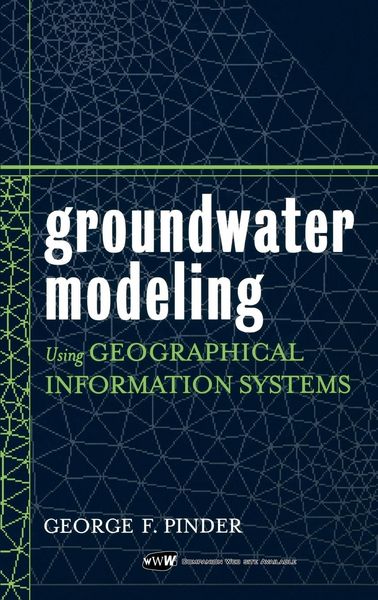
Produktbild: Groundwater Modeling Using Geographical Information Systems

Groundwater Modeling Using Geographical Information Systems

Fr. 203.00

inkl. gesetzl. MwSt., Versandkostenfrei


Beschreibung

Produktdetails

Einband

Gebundene Ausgabe

Erscheinungsdatum

01.07.2002

Verlag

John Wiley & Sons Inc

Seitenzahl

256

Maße (L/B/H)

24/16.1/1.8 cm

Gewicht

496 g

Auflage

1. Auflage

Sprache

Englisch

ISBN

978-0-471-08498-3

Beschreibung

Produktdetails

Einband

Gebundene Ausgabe

Erscheinungsdatum

01.07.2002

Verlag

John Wiley & Sons Inc

Seitenzahl

256

Maße (L/B/H)

24/16.1/1.8 cm

Gewicht

496 g

Auflage

1. Auflage

Sprache

Englisch

ISBN

978-0-471-08498-3

Herstelleradresse

Libri GmbH
Europaallee 1
36244 Bad Hersfeld
DE

Email: Libri GmbH

Kundinnen und Kunden meinen

0 Bewertungen

Informationen zu Bewertungen

Zur Abgabe einer Bewertung ist eine Anmeldung im Konto notwendig. Die Authentizität der Bewertungen wird von uns nicht überprüft. Wir behalten uns vor, Bewertungstexte, die unseren Richtlinien widersprechen, entsprechend zu kürzen oder zu löschen.

Die Bewertungen sind nach Format, Anzahl Sterne und Datum sortiert.

Verfassen Sie die erste Bewertung zu diesem Artikel

Helfen Sie anderen Kund*innen durch Ihre Meinung

Kundinnen und Kunden meinen

0 Bewertungen filtern

  • Produktbild: Groundwater Modeling Using Geographical Information Systems
  • Preface.

    1 Flow Modeling.

    1.1 Introduction.

    1.2 Areal Extent of a Model.

    1.3 Hydrological Boundaries to the Model.

    1.4 Compilation of Geological Information.

    1.4.1 Unconsolidated Environments.

    1.4.2 Consolidated Rocks.

    1.4.3 Metamorphic Rocks.

    1.4.4 Igneous Rocks.

    1.4.5 Representation of Geological Units.

    1.5 Compilation of Hydrological Information.

    1.5.1 Geohydrological Parameters.

    1.5.2 Boundary Conditions.

    1.5.3 Stresses.

    1.6 Water-Table Condition.

    1.6.1 Near-Surface Aquifer Zone.

    1.6.2 Sharp-Interface Approximation of the Water Table.

    1.6.3 Variably Saturated Water-Table Formulation.

    1.6.4 Comparison of the Sharp-Interface and Variably Saturated Formulations.

    1.7 Physical Dimensions of the Model.

    1.7.1 Vertical Integration of the Flow Equation.

    1.7.2 Free-Surface Condition.

    1.8 Model Size.

    1.9 Model Discretization.

    1.9.1 Finite-Difference Approximations.

    1.9.2 Finite-Element Approximations.

    1.9.3 Two-Space Dimensional Approximations.

    1.10 Finite-Difference Approximation to the Flow Equation.

    1.10.1 Model Boundary Conditions.

    1.10.2 Model Initial Conditions.

    1.11 Finite-Element Approximation to the Flow Equation.

    1.11.1 Boundary Conditions.

    1.11.2 Initial Conditions.

    1.12 Parameters.

    1.13 Fractured and Cavernous Media.

    1.14 Model Stresses.

    1.14.1 Well Discharge or Recharge.

    1.14.2 Rainfall.

    1.14.3 Multiple Stress Periods.

    1.15 Finite-Element Mesh.

    1.16 Simulation.

    1.16.1 Solution Algorithm.

    1.16.2 Bandwidth.

    1.16.3 Running PTC.

    1.17 Output.

    1.18 Calibration.

    1.18.1 Model Building Guidelines.

    1.18.2 Model Evaluation Guidelines.

    1.18.3 Additional Data-Collection and Model Development Guidelines.

    1.18.4 Uncertainty-Evaluation Guidelines.

    1.18.5 Some Rules of Thumb.

    1.19 Production Runs.

    1.20 Summary.

    References.

    2 Transport Modeling.

    2.1 Compilation of Water-Quality Information.

    2.2 Physical Dimensions.

    2.3 Model Size.

    2.4 Transport Equation.

    2.4.1 Equilibrium or Adsorption Isotherms.

    2.4.2 Mass Flux.

    2.4.3 Example of Retardation.

    2.5 Chemical Reactions.

    2.6 Model Boundary Conditions.

    2.7 Finite-Element Approximation.

    2.8 Boundary Conditions

    2.8.1 First-Type Boundary Condition.

    2.8.2 Second-Type Boundary Condition.

    2.8.3 Third-Type Boundary Condition.

    2.9 Initial Conditions.

    2.10 Model Parameters.

    2.11 Model Stresses.

    2.12 Running the Model.

    2.13 Output.

    2.14 Calibration.

    2.15 Production Runs.

    2.16 Summary.

    References.

    3 Finite-Element versus Finite-Difference Simulation.

    3.1 Elementary Application.

    3.1.1 Groundwater Flow.

    3.1.2 Groundwater Transport.

    3.2 Comparison of Methods.

    3.2.1 Graphical User Interfaces.

    3.2.2 Model Formulation and Implementation.

    3.2.3 Groundwater Flow.

    3.2.4 Groundwater Transport.

    3.3 Summary.

    Index.