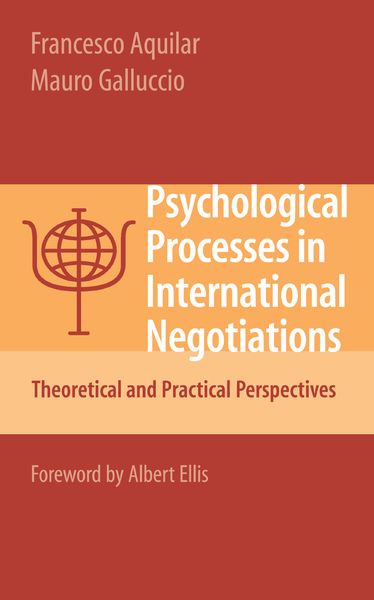
Psychological Processes in International Negotiations Theoretical and Practical Perspectives
Fr. 73.90
inkl. gesetzl. MwSt.,
Beschreibung
Produktdetails
Einband
Gebundene Ausgabe
Erscheinungsdatum
10.10.2007
Abbildungen
XX, 33 schwarzweisse Abbildungen, 9 Tabellen, 23 Abbildungenton-Abb., 1 schwarzweisse Zeichnungen 235 mm
Verlag
Springer UsSeitenzahl
172
Maße (L/B/H)
24.4/16.5/1.9 cm
Gewicht
416 g
Auflage
2008
Sprache
Englisch
ISBN
978-0-387-71378-6
Global interests are at stake at the treaty table. But personalities on either side can create difficulties apart from the issues. A skilled negotiator needs to be able to defuse the tensions and misperceptions that can derail progress. There are few sources that combine the psychological knowledge with the skills of persuasion.
Now, a unique collaboration between experts in cognitive psychotherapy and political science, Psychological Processes in International Negotiations provides such a resource. Drawing on a wide range of theory and data, from neuroscientific findings and historical events to Albert Ellis’ rational-emotive model of behavior, the book explains how the negotiation process works, under both adverse and optimum conditions. The authors identify psychological elements (in participants and in negotiators themselves) that have the greatest effect on negotiation outcomes, including group identity and groupthink, egocentrism, emotional awareness and competence, and the various interpersonal and communication skills, as well as steps readers can take to improve their performance. With this book, negotiators have the tools to come to clear judgments and creative, non-aggressive solutions.
Highlights of the coverage: Cognition and emotion in the context of negotiation; Characteristics/traits of successful, proactive negotiators; Cognitive views of war and international crisis; Meta-communications and the working relationship; Emotive keys to coping with stalemates; Summaries of a 15-session cognitive/emotional training program for negotiators, and the proposed European Cognitive School of International Negotiation; “Practical guide” ections linking theoretical and practical material.
This synthesis of scientific insights and real-world applications makes Psychological Processes in International Negotiations necessary reading for negotiators, mediators, and conflict managers, as well as for students and researchers in thisfield. The authors’ premise is clear: peace and stability create winners on all sides.
Noch keine Bewertungen vorhanden
Verfassen Sie die erste Bewertung zu diesem Artikel
Helfen Sie anderen Kundinnen und Kunden durch Ihre Meinung.