
• Produktbild: The Human Oncogenic Viruses
  • Produktbild: The Human Oncogenic Viruses

The Human Oncogenic Viruses Molecular Analysis and Diagnosis

Aus der Reihe The Oncogenes

Fr. 139.00

inkl. gesetzl. MwSt., Versandkostenfrei


Beschreibung

Produktdetails

Einband

Gebundene Ausgabe

Erscheinungsdatum

21.08.1986

Verlag

Humana Press

Seitenzahl

281

Maße (L/B/H)

23.4/15.6/1.8 cm

Gewicht

594 g

Auflage

1986 edition

Sprache

Englisch

ISBN

978-0-89603-088-6

Beschreibung

Produktdetails

Einband

Gebundene Ausgabe

Erscheinungsdatum

21.08.1986

Verlag

Humana Press

Seitenzahl

281

Maße (L/B/H)

23.4/15.6/1.8 cm

Gewicht

594 g

Auflage

1986 edition

Sprache

Englisch

ISBN

978-0-89603-088-6

Herstelleradresse

Libri GmbH
Europaallee 1
36244 Bad Hersfeld
DE

Email: gpsr@libri.de

Noch keine Bewertungen vorhanden

Verfassen Sie die erste Bewertung zu diesem Artikel

Helfen Sie anderen Kundinnen und Kunden durch Ihre Meinung.

Kundinnen und Kunden meinen

Bewertungen (0)

  • Produktbild: The Human Oncogenic Viruses
  • Produktbild: The Human Oncogenic Viruses
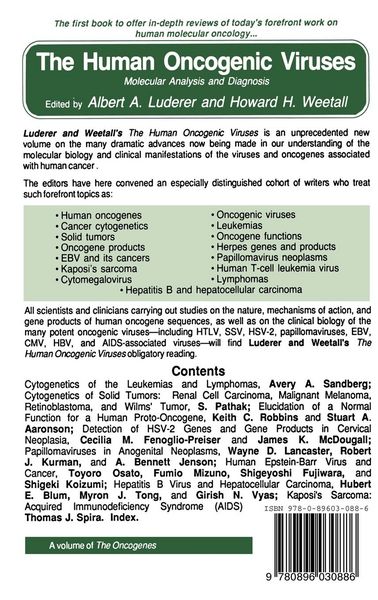
  • Cytogenetics of the Leukemias and Lymphomas.- 1. Introduction.- 2. Methodologie Background and Considerations.- 3. Chromosome Changes in Chronic Myelocytic Leukemia (CML).- 3.1. The Philadelphia (Ph) Chromosome.- 3.2. Cytogenetics of the Blastic Phase.- 4. Oncogenes, the Ph, and CML.- 5. Karyotypic Aspects of the Acute Leukemias.- 5.1. Acute Nonlymphocytic Leukemia (ANLL).- 5.2. Acute Lymphoblastic Leukemia (ALL).- 6. Preleukemia and Myelodysplastic Disorders.- 7. Cytogenetic Changes in Chronic Lymphocytic Leukemia (CLL).- 7.1. B- and T-Cell Mitogenic Stimulants.- 7.2. B- and T-Cell CLL.- 7.3. Prolymphocytic Leukemia.- 8. Cytogenetic Aspects of Lymphoma.- 8.1. Burkitt’s Lymphoma.- 8.2. Malignant Lymphomas (Other Than Burkitt’s).- 9. Diagnostic and Prognostic Aspects of Chromosome Changes in Leukemia and Lymphoma.- 9.1. Specific (Primary) Changes.- 9.2. Primary vs Secondary Chromosome Changes.- References.- Cytogenetics of Solid Tumors: Renal Cell Carcinoma, Malignant Melanoma, Retinoblastoma, and Wilms’ Tumor.- 1. Introduction.- 2. Materials and Procedures.- 2.1. Tissue Culture Techniques.- 2.2. Harvesting and Chromosome Preparation.- 2.3. Chromosome Banding Techniques.- 3. Renal Cell Carcinoma (RCC).- 3.1. General Description.- 3.2. Chromosome Anomalies in RCC.- 4. Malignant Melanoma (MM).- 4.1. General Description.- 4.2. Chromosome Anomalies in MM.- 5. Retinoblastoma (RB).- 5.1. General Description.- 5.2. Chromosome Anomalies in RB.- 6. Wilms’ Tumor (WT).- 6.1. General Description.- 6.2. Chromosome Anomalies in WT.- 7. Discussion.- 7.1. General Discussion.- 7.2. Double Minutes and Homogeneously Staining Regions.- 8. Concluding Remarks.- References.- Elucidation of a Normal Function for a Human Proto-Oncogene.- 1. Introduction.- 2. A Primate Sarcoma Virus with Novel Properties.- 3. Molecular Cloning of the Biologically Active SSV Genome.- 4. Molecular Organization of the SSV Genome.- 5. Detection and Localization of a Non-SSAV-Related Region of SSV.- 6. v-sis Is Cell Derived and Required for SSV Transforming Activity.- 7. Predicted Coding Sequence of the SSV Transforming Gene.- 8. Detection of the SSV Transforming Gene Product.- 9. p28sis Is Related to Human Platelet-Derived Growth Factor.- 10. Close Structural and Conformational Similarity Between the SSV Transforming Gene Product and Biologically Active PDGF.- 11. Anti-PDGF Serum Recognizes SSV Transforming Gene Products.- 12. The Human c-sis Locus.- 13. Mechanism of SSV Transformation.- References.- Detection of HSV-2 Genes and Gene Products in Cervical Neoplasia.- 1. Introduction.- 2. Etiologic Factors.- 2.1. Sexual Factors.- 2.2. Epidemiologic Factors.- 2.3. Male Role.- 2.4. Hereditary Factors.- 2.5. Chemical Factors.- 2.6. Radiation.- 2.7. Infectious Agents.- 3. Herpes Genitalis Infections.- 3.1. Productive Infections.- 3.2. Latent Infections.- 4. Pathologic Features of Cervical Neoplasia.- 5. Seroepidemiologic Studies Linking HSV-2 to Cervical Neoplasia.- 6. Herpes-Specific Antigens in Cervical Neoplasia.- 7. HSV Genetic Sequences in Cervical Neoplasia.- 8. Postulated Mechanisms of Oncogenesis for Cervical Neoplasia.- References.- Papillomaviruses in Anogenital Neoplasms.- 1. Introduction.- 2. Papillomavirus Properties.- 2.1. Chemical Composition.- 2.2. Papillomavirus Plurality.- 2.3. Evolutionary Relatedness.- 2.4. Papillomavirus Genome Function.- 2.5. Virus Host-Cell Interactions.- 3. Evidence for the Association of HPV with Anogenital Neoplasia.- 3.1. Immunological Studies.- 3.2. DNA Hybridization.- 4. Detection of HPV Structural Antigens.- 4.1. Method of Analysis.- 4.2. Interpretation of Results.- 5. Detection of HPV DNA Sequences.- 5.1. Methods of Analysis.- 5.2. Interpretation of Results.- 6. Papillomaviruses and Cancer.- References.- Human Epstein-Barr Virus and Cancer.- 1. Introduction.- 2. EBV Virion, Antigens, and Genome.- 2.1. EBV Virion.- 2.2. EBV-Related Antigens.- 2.3. EBV Genome.- 3. Oncogenicity of EBV.- 3.1. Oncogenicity Properties of EBV.- 3.2. In Vitro Transformation of Human Lymphocytes of EBV.- 3.3. Experimental Tumorigenesis In Vivo by EBV.- 4. Ubiquity of EBV in Humans.- 4.1. Natural History of EBV Infections in Humans.- 4.2. Abnormality in Natural History of EBV Infection.- 5. Epstein-Barr Virus and Human Cancer.- 5.1. Burkitt’s Lymphoma and EBV.- 5.2. EBV and Nasopharyngeal Carcinoma.- 5.3. EBV and Opportunistic Lymphoma.- 6. Protection Against EBV-Induced Oncogenesis.- 6.1. Possible Defense Mechanism.- 6.2. EBV Vaccine.- 7. Summary.- References.- Hepatitis B Virus and Hepatocellular Carcinoma.- 1. Introduction.- 2. Structure and Biology of Hepatitis B Virus.- 2.1. Structure of the Hepatitis B Virus.- 2.2. Structure of the Hepatitis B Virus Genome.- 2.3. Genetic Organization of the Hepatitis B Virus Genome.- 2.4. Replication of the Hepatitis B Virus Genome.- 3. Molecular Analyses of Hepatitis B Virus Infection and Hepatocellular Carcinoma.- 3.1. Immunochemical Detection of Viral Antigens.- 3.2. Molecular Hybridization Analyses.- 4. Presence of Hepatitis B Virus DNA in Nonhepatocytes.- 5. Presence, State, and Molecular Structure of Hepatitis B Viral DNA in Hepatocellular Carcinoma.- 5.1. Presence of Viral DNA in Hepatocellular Carcinoma.- 5.2. State of Viral DNA in Hepatocellular Carcinoma.- 5.3. Molecular Structure of Intregrated Viral DNA Sequences and Relation to Host Cellular Genome.- 6. Expression of Viral Genes in Hepatocellular Carcinoma.- 7. Molecular Mechanisms of Malignant Transformation of Hepatocytes.- 8. Epidemiology of Hepatocellular Carcinoma.- 8.1. Geographic Distribution.- 8.2. Role of HBV and Cirrhosis.- 8.3. Sex, Genetic, and Host Factors.- 8.4. Aflatoxin B1 and HBV in Hepatocellular Carcinoma.- 9. Clinical Aspects of Hepatocellular Carcinoma.- 9.1. Presenting Signs and Symptoms.- 9.2. Paraneoplastic Manifestations.- 9.3. Laboratory Tests.- 9.4. Diagnosis.- 9.5. Treatment.- 9.6. Natural History and Prognosis.- 9.7. Strategies of Prophylaxis Against HBV and Prevention of Hepatocellular Carcinoma.- 10. Summary and Conclusions.- References.- Kaposi’s Sarcoma: Acquired Immunodeficiency Syndrome (AIDS) and Associated Viruses.- 1. Introduction.- 2. Kaposi’s Sarcoma.- 2.1. Description.- 2.2. Epidemiology.- 2.3. Relation to Immunosuppression.- 3. Kaposi’s Sarcoma and AIDS.- 3.1. Introduction.- 3.2. Epidemiology.- 4. KS and HLA.- 4.1. DR5 Association.- 4.2. Other Associations.- 4.3. HLA-DR Associated Diseases.- 5. KS and CMV.- 5.1. Viral Particles and Antigen.- 5.2. Seroepidemiology.- 5.3. CMV Genomic Material.- 5.4. AIDS-Associated KS and CMV.- 6. AIDS-Etiologic Agent.- 6.1. Background.- 6.2. CMV.- 6.3. Retroviruse.- 7. African KS and AIDS.- 8. Summary.- References.