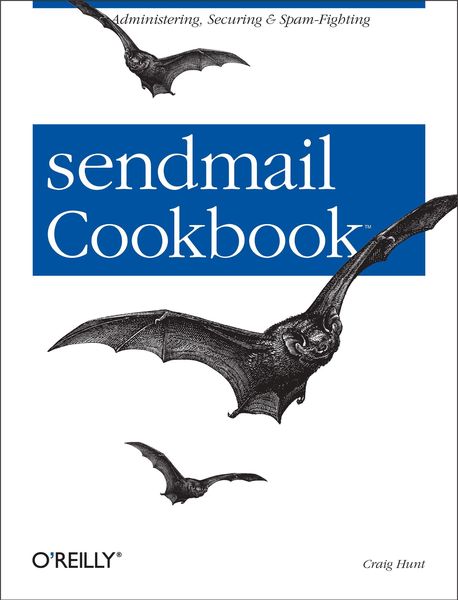
Sendmail Cookbook Administering, Securing & Spam-Fighting
-
- Taschenbuch ausgewählt
- eBook
-
Sprache:Englisch
Fr. 75.90
inkl. gesetzl. MwSt.,
Beschreibung
Produktdetails
Einband
Taschenbuch
Erscheinungsdatum
20.01.2004
Verlag
O'Reilly MediaSeitenzahl
388
Maße (L/B/H)
23.4/18/2.9 cm
Gewicht
634 g
Auflage
1. Auflage
Sprache
Englisch
ISBN
978-0-596-00471-2
More often than not, the words "sendmail configuration" strike dread in the hearts of sendmail and system administrators--and not without reason. sendmail configuration languages are as complex as any other programming languages, but used much more infrequently--only when sendmail is installed or configured. The average system administrator doesn't get enough practice to truly master this inscrutable technology.Fortunately, there's help. The sendmail Cookbook provides step-by-step solutions for the administrator who needs to solve configuration problems fast. Say you need to configure sendmail to relay mail for your clients without creating an open relay that will be abused by spammers. A recipe in the Cookbook shows you how to do just that. No more wading through pages of dense documentation and tutorials and creating your own custom solution--just go directly to the recipe that addresses your specific problem.Each recipe in the sendmail Cookbook outlines a configuration problem, presents the configuration code that solves that problem, and then explains the code in detail. The discussion of the code is critical because it provides the insight you need to tweak the code for your own circumstances.The sendmail Cookbook begins with an overview of the configuration languages, offering a quick how-to for downloading and compiling the sendmail distribution. Next, you'll find a baseline configuration recipe upon which many of the subsequent configurations, or recipes, in the book are based. Recipes in the following chapters stand on their own and offer solutions for properly configuring important sendmail functions such as:
* Delivering and forwarding mail
* Relaying
* Masquerading
* Routing mail
* Controlling spam
* Strong authentication
* Securing the mail transport
* Managing the queue
* Securing sendmail
sendmail Cookbook is more than just a new approach to discussing sendmail configuration. The book also provides lots of new material that doesn't get much coverage elsewhere--STARTTLS and AUTH are given entire chapters, and LDAP is covered in recipes throughout the book. But most of all, this book is about saving time--something that most system administrators have in short supply. Pick up the sendmail Cookbook and say good-bye to sendmail dread.
* Delivering and forwarding mail
* Relaying
* Masquerading
* Routing mail
* Controlling spam
* Strong authentication
* Securing the mail transport
* Managing the queue
* Securing sendmail
sendmail Cookbook is more than just a new approach to discussing sendmail configuration. The book also provides lots of new material that doesn't get much coverage elsewhere--STARTTLS and AUTH are given entire chapters, and LDAP is covered in recipes throughout the book. But most of all, this book is about saving time--something that most system administrators have in short supply. Pick up the sendmail Cookbook and say good-bye to sendmail dread.
Noch keine Bewertungen vorhanden
Verfassen Sie die erste Bewertung zu diesem Artikel
Helfen Sie anderen Kundinnen und Kunden durch Ihre Meinung.