Produktbild: Security Supervision & Mgmt 3/

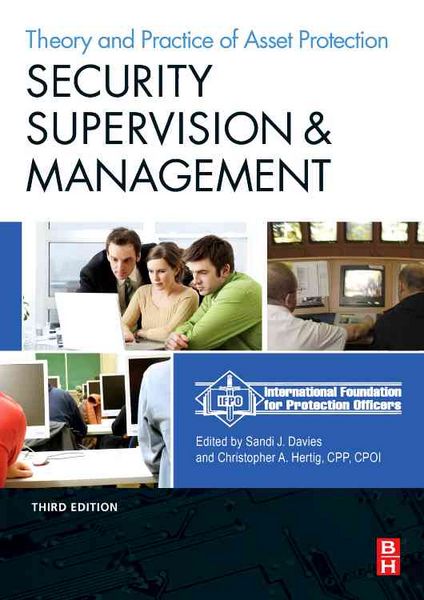
Security Supervision & Mgmt 3/ The Theory and Practice of Asset Protection. By IFPO

Fr. 81.90

inkl. gesetzl. MwSt., Versandkostenfrei


Beschreibung

Produktdetails

Einband

Taschenbuch

Erscheinungsdatum

01.11.2007

Herausgeber

Sandi J. Davies

Verlag

Elsevier LTD, Oxford

Seitenzahl

584

Maße (L/B/H)

25.8/18.7/2.9 cm

Gewicht

1070 g

Auflage

3. Auflage von 2000

Sprache

Englisch

ISBN

978-0-7506-8436-1

Beschreibung

Produktdetails

Einband

Taschenbuch

Erscheinungsdatum

01.11.2007

Herausgeber

Sandi J. Davies

Verlag

Elsevier LTD, Oxford

Seitenzahl

584

Maße (L/B/H)

25.8/18.7/2.9 cm

Gewicht

1070 g

Auflage

3. Auflage von 2000

Sprache

Englisch

ISBN

978-0-7506-8436-1

Kundinnen und Kunden meinen

0 Bewertungen

Informationen zu Bewertungen

Zur Abgabe einer Bewertung ist eine Anmeldung im Konto notwendig. Die Authentizität der Bewertungen wird von uns nicht überprüft. Wir behalten uns vor, Bewertungstexte, die unseren Richtlinien widersprechen, entsprechend zu kürzen oder zu löschen.

Die Bewertungen sind nach Format, Anzahl Sterne und Datum sortiert.

Verfassen Sie die erste Bewertung zu diesem Artikel

Helfen Sie anderen Kund*innen durch Ihre Meinung

Kundinnen und Kunden meinen

0 Bewertungen filtern

Die Leseprobe wird geladen.
  • Produktbild: Security Supervision & Mgmt 3/
  • Introduction
    Table of Contents
    Writer's Gallery-profiles of the contributors
    Dedication to IFPO Founder Ron Minion, MS, CPP, CPO
    Forward by Louis Tyska, CPP-former ASIS International President and Lawrence J. Fennelly, CPO-author of 24 textbooks. The forward discusses Supervision, Management, Professional Development and New Supervisors/Managers.
    Acknowledgements
    Introduction-a discussion of the history of the text and the Security Supervision and Management Program.
    Protection Officer Code of Ethics-a discussion of the IFPO Code of Ethics
    Unit I Security and Asset Protection Principles
    Unit I-1 Evolving a Discipline of Security
    Unit I-2 The Future of Security
    Unit I-2 Appendix: The Future of Security Training
    Unit I-3 Key Terms and Concepts
    Unit I-4 Explaining Crime: Contemporary Criminological Theory
    Unit II Human Rescource Management
    Unit II-1 Recruitment and Retention of Security Personnel: Understanding and Meeting the Challenge
    Unit II-2 Security Personnel Selection
    Unit II-3 Supervisory Characteristics and Expectations
    Unit II-4 Evaluation of Uniformed Protection Officers
    Unit II-5 Employee Motivation Theory and Application
    Unit II-6 Employee Discipline: Policy and Practice
    Unit II-7 Human Reliability
    Unit III Supervision
    Unit III-1 Personnel Deployment
    Unit III-2 Dealing with Difficult Employees
    Unit III-3 The Supervisor's Role in Handling Complaints and Grievances
    Unit III-4 Unethical Acts by Security Officers
    Unit III-5 Interpersonal Communications
    Unit IV Training and Development
    Unit IV-1 Training: Strategies, Tactics, and Challenges for Protection Managers
    Unit IV-2 Orientation for Security Officers
    Unit IV-3 Staff Training and Development
    Unit IV-4 Curriculum design
    Unit IV-5 Professional Certifications: Milestones of Professionalism
    Unit V Management and Leadership
    Unit V-1 Evolution of Management
    Unit V-2 Time and Stress Management
    Unit V-3 Project Management: An Overview
    Unit V-4 Company Policy and Procedures: The Security Supervisor's Primer
    Unit V-5 Total Quality Management
    Unit V-6 Leadership for Protection Professionals
    Unit VI Risk Management and Emergency Management
    Unit VI-1 Risk Management
    Unit VI-2 Why Accidents Happen: The Theories of Causation
    Unit VI-3 The Supervisor's Role in Safety
    Unit VI-4 Workplace Violence
    Unit VI-5 Critical Incident Management in the Post-9/11 Era
    Unit VI-6 Supervising During Emergencies
    Unit VI-7 Supervising During Special Events
    Unit VI-8 Security and Medical Response
    Unit VI-9 Outsourcing in Security
    Unit VI-10 Internal Loss
    Unit VII Physical Security and Technology
    Unit VII-1 Security Systems Design and Evaluation
    Unit VII-2 Statistical Analysis
    Unit VII-3 Security Technologies
    Unit VII-4 High-Technology Theft
    Unit VII-5 Designing Operations Control Centers
    Unit VIII Investigation
    Unit VIII-1 Managing Investigations
    Unit VIII-2 Developing Report Writing Ability in Subordinates
    Unit VIII-3 Testifying in Court
    Unit IX Customer, Client and Community Relations
    Unit IX-1 Customer Service and the Protection Officer: Guidelines to Achieving Excellence
    Unit IX-2 The Supervisor's Role in Improving Customer Service
    Unit IX-3 Tenant Relations
    Unit IX-4 Uniforms and Image Projection for Protection Forces
    Unit IX-5 The Relationship Between Marketing and the Security Function
    Unit IX-6 Crime Prevention and Community Relations Strategies
    Unit IX-7 Public-Private Sector Liaison Programs
    Unit X Legal Aspects
    Unit X-1 Legal Aspects of Security
    Unit X-2 Managing/Supervising to Reduce Liability
    Unit X-3 Sexual Harassment
    Quizzes at the end of each chapter allow for self testing or enhanced classroom work