• Produktbild: Teach More and Discipline Less
  • Produktbild: Teach More and Discipline Less

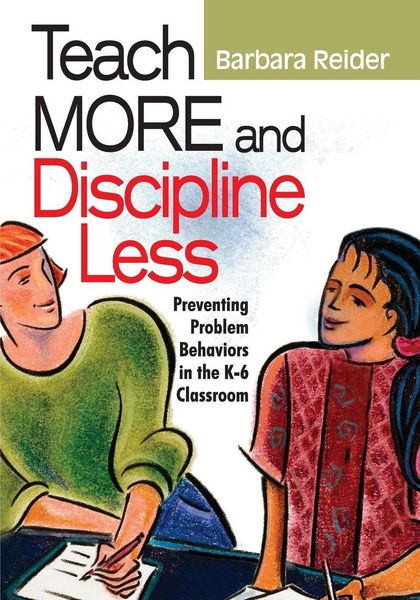
Teach More and Discipline Less Preventing Problem Behaviors in the K-6 Classroom

Fr. 53.90

inkl. gesetzl. MwSt., Versandkostenfrei


Beschreibung

Produktdetails

Einband

Taschenbuch

Erscheinungsdatum

07.12.2004

Verlag

Corwin

Seitenzahl

160

Maße (L/B/H)

25.4/17.8/0.9 cm

Gewicht

315 g

Sprache

Englisch

ISBN

978-0-7619-8893-9

Beschreibung

Produktdetails

Einband

Taschenbuch

Erscheinungsdatum

07.12.2004

Verlag

Corwin

Seitenzahl

160

Maße (L/B/H)

25.4/17.8/0.9 cm

Gewicht

315 g

Sprache

Englisch

ISBN

978-0-7619-8893-9

Herstelleradresse

Libri GmbH
Europaallee 1
36244 Bad Hersfeld
DE

Email: gpsr@libri.de

Kundinnen und Kunden meinen

0 Bewertungen

Informationen zu Bewertungen

Zur Abgabe einer Bewertung ist eine Anmeldung im Konto notwendig. Die Authentizität der Bewertungen wird von uns nicht überprüft. Wir behalten uns vor, Bewertungstexte, die unseren Richtlinien widersprechen, entsprechend zu kürzen oder zu löschen.

Die Bewertungen sind nach Format, Anzahl Sterne und Datum sortiert.

Verfassen Sie die erste Bewertung zu diesem Artikel

Helfen Sie anderen Kund*innen durch Ihre Meinung

Kundinnen und Kunden meinen

0 Bewertungen filtern

  • Produktbild: Teach More and Discipline Less
  • Produktbild: Teach More and Discipline Less
  • Preface: A Focus on Prevention
    Note to the New Guys
    Acknowledgments
    About the Author
    1. Set Yourself Up for Success
    Delivering an Unequivocal Message
    Survival Skill Number 1: Classroom Management
    Kids Don¿t Care How Much You Know Until They Know How Much You Care
    Basic Techniques of Positive Teachers
    Standard Procedures: The Unwritten Rules
    Suggested Standard Procedures
    Together We Make a Difference
    Minimize Problems as You Arrange Desks
    The Power of a Quiet Voice
    Minimize Problems as You Arrange Desks
    "Teacher, What Do I Do Now?"
    Classroom Rules Are Set Cooperatively
    Reminders About Rules
    Recognition and Reinforcement
    Roundup of Chapter 1
    2. Build Rapport With Kids
    The Secrets to Their Success
    Common Denominators
    Two Letters of Welcome
    Getting to Know You
    The News Begins the Day
    An Important 15 Minutes
    Can You Risk Sharing Yourself?
    Classroom Climate
    Yes, You Are a Counselor
    The Characteristics of High Self-Esteem
    Three Components of Self-Esteem
    Building a Sense of Connectedness
    Building a Sense of Uniqueness
    Building a Sense of Power
    Roundup of Chapter 2
    3. Develop Effective Strategies
    Love Alone Does Not a Classroom Manage
    Planning: The Key to Good Teaching
    Effective Classroom Planning
    Enhance Your Environment
    A Better Class Because of Their Ownership
    Promote a Sense of Class Pride
    Kids Must Risk in Order to Succeed
    Mistakes: Wonderful Opportunities to Learn
    Look at Something Another Way
    A Time to Talk, a Time to Be Quiet
    Captain of the Week
    Nothing Like a Good Laugh!
    Roundup of Chapter 3
    4. Promote a Feeling of Cohesiveness
    Grouping for Cooperation
    Community Circle: Simple But Powerful
    Incidental Discussions as Problem Solvers
    A Scheduled Classroom Meeting
    Kids Suggest Topics for Discussion
    Activities to Build a Feeling of Belonging
    Kids Discuss Misbehavior
    Ready to Work in Small Cooperative Groups
    Setting the Stage
    Practice Working Together in Groups
    Teams in Competition
    Roundup of Chapter 4
    5. Minimize Problems With Proven Techniques
    The Art of Asking Good Questions
    Orchestrate Smooth Transitions
    The Good and Bad Sides of Praise
    Praise the Deed, Encourage the Child
    Negative and Positive Intervention
    Parents Make a Difference
    Guidelines to Send to Parents
    Unique Techniques
    Rx: Take One Sponge When Needed
    "My Best Teacher"
    Roundup of Chapter 5
    6. Respond to Misbehavior
    A Few Inevitable Behavior Problems
    Stop a Problem Before It Happens
    A Positive Look at Misbehavior
    Temporary Compliance
    The "Teacher Look" for Small Violations
    The Democratic Approach to Misbehavior
    When "No" Means "Maybe"
    The Downside of Rewards
    Beyond Praise and Rewards
    Three Workable Systems
    Motivating Students to Learn
    Excellence in Teaching
    Roundup of Chapter 6
    References and Suggested Readings
    Index