• Produktbild: Cardiovascular Psychophysiology
  • Produktbild: Cardiovascular Psychophysiology

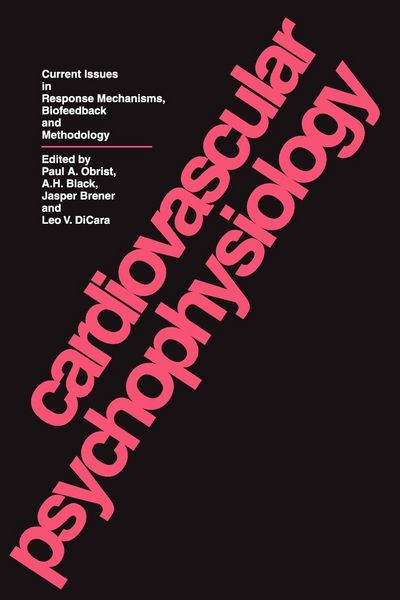
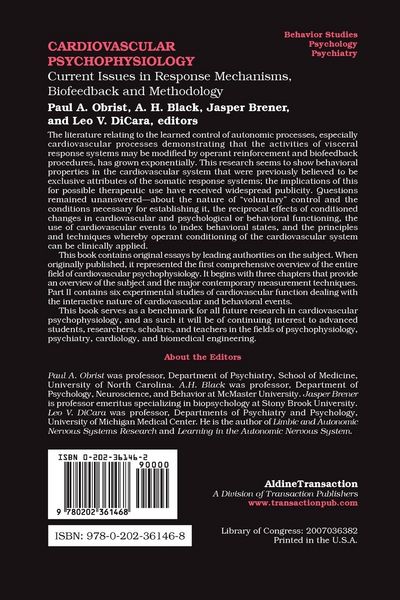
Cardiovascular Psychophysiology Current Issues in Response Mechanisms, Biofeedback and Methodology

Fr. 93.90

inkl. gesetzl. MwSt., Versandkostenfrei


Beschreibung

Produktdetails

Einband

Taschenbuch

Erscheinungsdatum

30.12.2007

Verlag

Taylor & Francis

Seitenzahl

676

Maße (L/B/H)

22.9/15.2/4 cm

Gewicht

861 g

Sprache

Englisch

ISBN

978-0-202-36146-8

Beschreibung

Produktdetails

Einband

Taschenbuch

Erscheinungsdatum

30.12.2007

Verlag

Taylor & Francis

Seitenzahl

676

Maße (L/B/H)

22.9/15.2/4 cm

Gewicht

861 g

Sprache

Englisch

ISBN

978-0-202-36146-8

Herstelleradresse

Libri GmbH
Europaallee 1
36244 Bad Hersfeld
DE

Email: gpsr@libri.de

Kundinnen und Kunden meinen

0 Bewertungen

Informationen zu Bewertungen

Zur Abgabe einer Bewertung ist eine Anmeldung im Konto notwendig. Die Authentizität der Bewertungen wird von uns nicht überprüft. Wir behalten uns vor, Bewertungstexte, die unseren Richtlinien widersprechen, entsprechend zu kürzen oder zu löschen.

Die Bewertungen sind nach Format, Anzahl Sterne und Datum sortiert.

Verfassen Sie die erste Bewertung zu diesem Artikel

Helfen Sie anderen Kund*innen durch Ihre Meinung

Kundinnen und Kunden meinen

0 Bewertungen filtern

Die Leseprobe wird geladen.
  • Produktbild: Cardiovascular Psychophysiology
  • Produktbild: Cardiovascular Psychophysiology
  • I: Cardiovascular Function and Measurement; 1: Mechanisms of the Cardiovascular Responses to Environmental Stressors; 2: A Selective Review of Central Neural Pathways Involved in Cardiovascular Control; 3: Psychophysiology of Peripheral Vascular Changes; 4: Indirect Indices of Contractile Force; 5: The Indirect Recording of Human Blood Pressure; 6: Techniques for Long-Term Direct Measurements of Cardiovascular Variables; II: Cardiovascular Function — Experimental Studies; 7: Analysis of the Final Common Path for Heart Rate Conditioning; 8: The Cardiac-Somatic Interaction; 9: Comparative Psychophysiology of the Electrodermal and Cardiac Control Systems; 10: The Relationship Between Learned and Unlearned Cardiovascular Responses; 11: Sympathetic and Parasympathetic Activity During Behavioral Hypertension in the Squirrel Monkey; III: Animal Operant Conditioning; 12: Operant Autonomic Conditioning: The Analysis of Response Mechanisms; 13: Respiratory and Somatomotor Factors Associated with Operant Conditioning of Cardiovascular Responses in Curarized Rats; 14: Some Critical Methodological Variables Involved in Visceral Learning; 15: The Learning of Autonomie Responses by Curarized Animals; 16: Visceral Learning: Recent Difficulties with Curarized Rats and Significant Problems for Human Research; 17: Comparative Studies of Operant Electrodermal and Heart Rate Conditioning in Curarized Rats; 18: Some Problems in the Use of Neuromuscular Blockade; IV: Human Operant Conditioning; 19: A General Model of Voluntary Control Applied to the Phenomena of Learned Cardiovascular Change; 20: Learned Control of Human Heart Rate in a Computer Directed Environment; 21: Toward a Theory of Voluntary Control of Response Patterns in the Cardiovascular System; 22: Opérant-Feedback Control of Human Blood Pressure: Some Clinical Issues; 23: Application of Operant Conditioning Techniques to the Control of the Cardiac Arrhythmias; V: Heart Rate — Attentional and Motivational Processes; 24: Cardiac Conditioning and Orienting in the Infant; 25: The Motivational Significance of Heart Rate; 26: Studies of Heart Rate and Other Bodily Processes in Sensorimotor Behavior; Summary