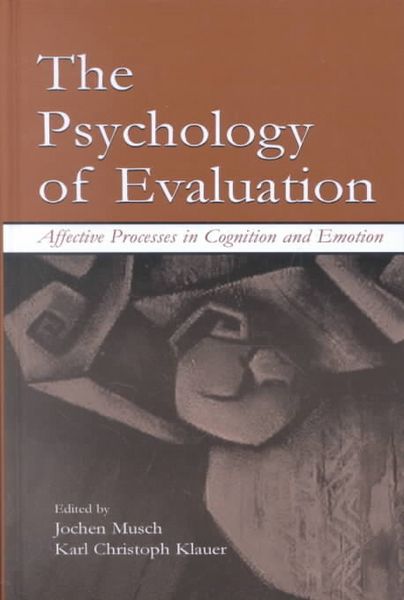
The Psychology of Evaluation Affective Processes in Cognition and Emotion
-
- Englisch ausgewählt
Fr. 238.00
inkl. gesetzl. MwSt.,
Beschreibung
Produktdetails
Einband
Gebundene Ausgabe
Erscheinungsdatum
01.11.2002
Abbildungen
mit Illustrationen
Herausgeber
Musch Jochen + weitereVerlag
Taylor and FrancisSeitenzahl
432
Maße (L/B/H)
23.9/15.3/2.9 cm
Gewicht
960 g
Sprache
Englisch
ISBN
978-0-8058-4047-6
The affective connotations of environmental stimuli are evaluated spontaneously and with minimal cognitive processing. The activated evaluations influence subsequent emotional and cognitive processes. This book reviews and integrates contemporary research and theories on this topic.
Noch keine Bewertungen vorhanden
Verfassen Sie die erste Bewertung zu diesem Artikel
Helfen Sie anderen Kundinnen und Kunden durch Ihre Meinung.