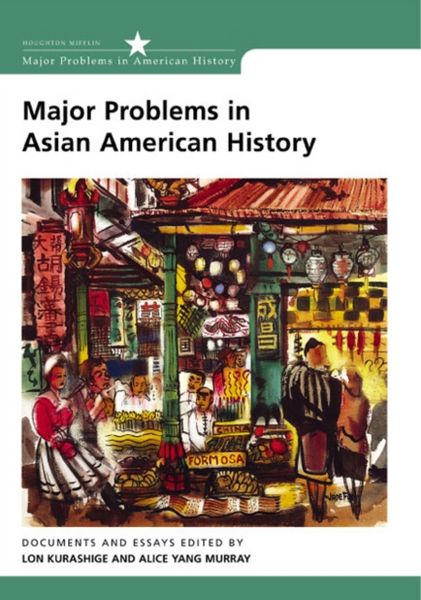
Produktbild: Yang, A: Major Problems in Asian American History

Yang, A: Major Problems in Asian American History Documents and Essays

Fr. 32.90

inkl. gesetzl. MwSt., Versandkostenfrei


Beschreibung

Produktdetails

Einband

Taschenbuch

Erscheinungsdatum

08.10.2002

Abbildungen

mit Illustrationen

Verlag

Cengage Learning

Seitenzahl

544

Maße (L/B/H)

23.5/16.5/1.5 cm

Gewicht

734 g

Sprache

Englisch

ISBN

978-0-618-07734-2

Beschreibung

Produktdetails

Einband

Taschenbuch

Erscheinungsdatum

08.10.2002

Abbildungen

mit Illustrationen

Verlag

Cengage Learning

Seitenzahl

544

Maße (L/B/H)

23.5/16.5/1.5 cm

Gewicht

734 g

Sprache

Englisch

ISBN

978-0-618-07734-2

Kundinnen und Kunden meinen

0 Bewertungen

Informationen zu Bewertungen

Zur Abgabe einer Bewertung ist eine Anmeldung im Konto notwendig. Die Authentizität der Bewertungen wird von uns nicht überprüft. Wir behalten uns vor, Bewertungstexte, die unseren Richtlinien widersprechen, entsprechend zu kürzen oder zu löschen.

Die Bewertungen sind nach Format, Anzahl Sterne und Datum sortiert.

Verfassen Sie die erste Bewertung zu diesem Artikel

Helfen Sie anderen Kund*innen durch Ihre Meinung

Kundinnen und Kunden meinen

0 Bewertungen filtern

  • Produktbild: Yang, A: Major Problems in Asian American History
  • 1. Framing Asian American History
    ESSAYS
    Roger Daniels, Neglect and Distortion of Asian Americans by American Historians
    Ronald Takaki, The Centrality of Racism in Asian American History
    Sylvia Yanagisako, Rethinking the Centrality of Racism in Asian American History
    Paul Ong, Edna Bonacich, and Lucie Cheng, Capitalist Restructuring and the New Asian Immigration
    Bill Ong Hing, What Does It Mean to Be Asian American?
    2. Colonization, Pacific Markets, and Asian Labor Migration to the United States Before the Civil War
    DOCUMENTS
    Chinese Emperor Decries Market Expansion in South China, 1727
    An American Trader Recommends a Route from California to China, 1850
    Writer Ralph Waldo Emerson Excoriates Chinese Civilization, 1824
    Hawaiians Petition the Privy Council to Halt Foreign Influence in the Islands, and the Council Replies, 1845
    A Foreigner Speculates on Hawaiian Land Acquisition, 1849
    American Commodore M.C. Perry Opens Up the Japanese Market, 1856
    New York Times Heralds New Trade with China and Japan, 1858
    Researcher Traces Early Nineteenth-Century Origins of Filipino American Family, 1988
    ESSAYS
    Yong Chen, Origins of Chinese Emigration to California
    Ronald Takaki, Native and Asian Labor in the Colonization of Hawai''i
    3. The Work of National Expansion in the American West, 1848-1908
    DOCUMENTS
    Writer J. D. Borthwick Observes Chinese Miners in California, 1857
    Chinese Laborers Report on a Race Riot at Rock Springs, Wyoming Territory, 1885
    Journalist Helen Grey Exposes the Activities of a Chinese Brothel Owner, 1899
    Chinese Merchant Lee Wong Hing''s Store in Holyoke, Massachusetts, 1904
    Leading Japanese Intellectual Encourages Westernization, 1875
    Japanese Newspaper Jiji Shimpo Views Emigration as a Sign of Japan''s Military Power, 1896
    Japanese Government Criteria for Emigrants to Hawai''i, 1885
    Japanese Official Condemns Brutal Working Conditions on Hawaiian Plantations, 1885
    ESSAYS
    Sucheng Chan, Shifting Chinese Immigrant Employment
    Akira Iriye, Japanese Expansion in California
    4. Confronting Immigration Exclusion, 1860s-1920s
    DOCUMENTS
    Editor Henry George Supports Chinese Exclusion on Economic and Racial Grounds, 1869
    "The Tables Turned: You Sabe Him? Kealney [Kearney] Must Go!," 1877/1878
    Senator George Hoar Declares Chinese Exclusion Un-American, 1882
    Chinese Exclusion Act Suspends Immigration to the United States for Ten Years, 1882
    New York Chinese Merchants Oppose Renewal of Chinese Exclusion Act, 1892
    Wong Kim Ark, 1904
    Asiatic Exclusion League Argues for Excluding Japanese and Korean Immigration, 1908
    Spokane Labor Union Derides Anti-Japanese Prejudice, 1909
    Tokyo Government Protests Exclusion of Japanese Immigrants, 1924
    Ray E. Chase and S.G. Pandit Critique Supreme Court Ruling Excluding East Indians from Citizenship, 1926
    ESSAYS
    Andrew Gyory, The Significance of Chinese Exclusion
    K. Scott Wong, Chinese Responses to Exclusion
    Mae M. Ngai, The Immigration Act of 1924
    5. Imperialism and Anti-Imperialism in the Early Twentieth Century
    DOCUMENTS
    Senator Albert Beveridge Champions Philippine Colonization, 1900
    Theodore Roosevelt Justifies Philippine Colonization on the Basis of America''s History of Westward Expansion, 1900
    Filipino Soldiers Pray Before Surrendering to Americans, 1900
    American Troops Fight in the Philippines, 1910
    Filipinos Demand Independence, 1908
    Indian Nationalists and American Journalist Disagree Over the Route to India''s Independence, 1923
    Indian Immigrant Mohan Singh Recounts His Education in the United States, circa 1924
    Korean Congress Declares Independence from Japanese Rule, 1919
    Korean Immigrant Margaret Pai Joins the Korean Independence Movement, 1919
    ESSAYS
    Stefi San Buenaventura, The Colors of Manifest Destiny in the Philippines
    Joan M. Jensen, Exporting Independence to Colonial India
    Lili Kim, Korean Independence Movement in Hawai''i and the Continental United States
    6. Orientalism and Popular Culture, 1904-1930s
    DOCUMENTS
    Writer Jack London Decries the New Yellow Peril, 1904
    Dance of the Igorrotes, Louisiana Purchase Exposition, St. Louis, 1904
    Filipino Immigrant Condemns Representation of Group, circa 1924
    Anti-Japanese Monologue in Wallace Irwin''s Seed of the Son, 1926
    Writer Sui Seen [Sin] Far Reveals Private Lives of Chinese Merchant Wives, 1897
    Sociology Graduate Student Rose Hum Lee Lists American Beliefs About the Chinese, 1927
    MGM Studios Strategizes Advertisement for The Painted Veil, 1934
    Harold R. Issacs Addresses the Historical Significance of Pearl Buck''s Portrayal of the Chinese, 1958
    ESSAYS
    Robert Rydell, The Filipino Village at the 1904 World''s Fair
    Karen Janis Leong, The Radicalized Image of Anna May Wong
    7. Interethnic Tensions and Alliances in the 1920s and 1930s
    DOCUMENTS
    A Chinese American Woman Identifies with Japanese American Marriage Practices, circa 1924
    A White American Woman Compares Marriage to Chinese and Japanese Husbands, circa 1924
    Indian Immigrant Inder Singh Discusses His Marriage with a Mexican Woman, 1924
    A Filipino Immigrant Is Shocked by Sexual Freedom in the United States, circa 1924
    Sociologist Emory Bogardus Analyzes an Anti-Filipino Riot, 1930
    Time Magazine Reveals Sexual Basis for Filipino Repatriation, 1936
    White Landowner Dr. E.E. Chandler Describes an East Indian Agricultural Community, 1924
    Writer Carlos Bulosan Conveys the Dangers of Filipino Labor Organizing (1930s), 1943
    Labor Leader Karl Yoneda Recalls Japanese Interethnic Organizing (1930s), 1978
    ESSAYS
    Eiichiro Azuma, Labor Conflict Between Japanese and Filipinos in the California Delta
    Rhacel Salazar Parrenas, Alliances Between White Working-Class Women and Filipino Immigrant Men
    8. Americanization and the Second Generation, 1920-1942
    DOCUMENTS
    Flora Belle Jan Longs for Unconventionality and Freedom, 1924
    Connie Tirona Recalls Growing Up Filipino American (1930s and 1940s), 1995
    Dora Yum Kim Recalls Growing Up Korean American in Chinatown (1920s, 1930s, and 1940s), 1999
    Taishi Matsumoto Bemoans Limited Employment Opportunities for Nisei, 1937
    Tokutaro Slocum Debates the Nisei Stand on Sino-Japanese War, 1938
    Japanese American Newspaper Kashu Mainichi Heralds Biculturalism of Beauty Queen, 1940
    American Intelligence Officer Promotes Nisei Americanization, 1942
    San Francisco Japantown, 1942
    Middle-Class Japanese American Family Before Evacuation, 1942
    ESSAYS
    Judy Yung, Second-Generation Chinese American Women
    Lon Kurashige, The Problem of Nisei Biculturalism
    9. War, Race, and the Meaning of Citizenship, 1941-1988
    DOCUMENTS
    Sociology Graduate Student Rose Hum Lee Describes How World War II Changed the Lives of Chinese Americans, 1942
    Filipino Regiment Member Manuel Buaken Fights for Freedom, 1943
    Lieutenant General John L. DeWitt Recommends the Removal of Japanese Americans from the West Coast, 1942
    Japanese American Mike Masaoka Vows to Cooperate with Government Removal Plans, 1942
    Journalist James M. Omura Condemns the Mass Exclusion of Japanese Americans, 1942
    The Fair Play Committee Calls on Nisei, Second-Generation Japanese Americans, to Resist the Draft Within the Heart Mountain Internment Camp, 1944
    Justice Frank Murphy Criticizes the Supreme Court''s "Legalization of Racism," 1944
    A Government Commission Proclaims Internment a "Grave Injustice," 1982
    A District Court Acknowledges Government Misconduct Before the Supreme Court During World War II, 1984
    ESSAYS
    Theo Gonzalves, Filipino Veterans of World War II on Citizenship and Political Obligation
    Alice Yang Murray, The Internment of Japanese Americans
    10. Asian Americans and the Cold War, 1945-1965
    DOCUMENTS
    Novelist James Michener Portrays Romance Between Japanese Women and White Soldiers in Sayonara, 1953
    A Hollywood Poster Sells Interracial Love and the Exoticism of Japan in the Film Sayonara, 1957
    Social Worker Bok-Lim C. Kim Describes the Social Isolation and Alienation of War Brides (1947), 1979
    President Harry S Truman Vetoes an Immigration and Naturalization Bill, 1952
    Congress Expands Immigration and Naturalization Rights for Asian Immigrants, 1952
    Former Communist Party Member Ichiro Izuka Denounces Communists in Hawai''i, 1947
    Honolulu Record Editor and Labor Leader Koji Ariyoshi Describes the Arrest of Seven Suspected Communists in Hawai''i (1951), 2000
    Franklin Woo Remembers Attacks on Chinese Immigrant Leftists Who Supported Communist China (1950s), 1973
    Pei Chi Liu Recalls Why He Campaigned Against Communism as a Leader of the San Francisco Chinatown Branch of the Kuomintang Party (1950s), 1973
    ESSAYS
    Paul R. Spickard, Marriages Between American Men and Japanese Women After World War II
    Arlene de Vera, The United States Government Tries to Deport Filipino Labor Leaders
    Xiaojian Zhao, The Immigration and Naturalization Service''s Campaign Against Chinese Americans During the Cold War
    11. Post-1965 Immigration and Asian America
    DOCUMENTS
    The Immigration and Nationality Act of 1965 Repeals Discriminatory Policies Toward Asian Immigrants, 1965
    Statistics on Immigration Trends: Immigration Trends by Race and Decade, 1820-1980; Immigration by Country of Origin, 1820-1980
    Perla Rabor Rigor Compares Life as a Nurse in the Philippines and America, 1987
    The Supreme Court Endorses Bilingual Education, 1974
    Asian Americans Debate the Pros and Cons of Bilingual Education, 1998
    Asian Immigrants Transplant Religious Institutions, 1994
    Korean American Professor Elaine Kim Discusses Problems in Building Coalitions Between Asian Immigrants and Other Communities of Color, 1998
    Indian Immigrant Sarita Sarvate Criticizes the "Brain Drain" from the Third World, 2000
    ESSAYS
    Catherine Ceniza Choy, A Transnational History of Filipino Nurse Migration
    Edward J.W. Park, The Los Angeles Civil Unrest Transforms Korean American Politics
    12. Refugees and Their Struggles in Asia and America, 1975-2000
    DOCUMENTS
    Lang Ngan, a First-Wave Refugee, Compares Life in Vietnam and the United States (1975), 1991
    Cambodian Refugee Bun Thab Remembers the Atrocities of the Khmer Rouge, 1993
    Le Tan Si Writes a College Essay About His Terrifying Escape by Boat from Vietnam (1979), 1989
    An Account of Cultural and Religious Conflict Between American Doctors and Hmong Refugees in a Thai Refugee Camp, 1982
    Xang Mao Xion Tells His Daughter of the Problems Hmong Parents Face in America, 1994
    Golden Venture Refugees Wage a Hunger Strike to Protest Their Detention, 1995
    Business Consultant George P. Koo Criticizes Harry Wu''s Campaign Against the Chinese Government, 1996
    Chinese Refugee and Human Rights Activist Harry Wu Criticizes U.S. Trade Policies Toward China, 2000
    ESSAYS
    Gail Paradise Kelly, Education and Sex Role Socialization of Vietnamese Immigrant Women
    James M. Freeman and Usha Welaratna, Vietnamese and Cambodian Views of "Successful" Adjustment in America
    13. Panethnicity, Asian American Activism, and Identity, 1965-2000
    DOCUMENTS
    Activist Amy Uyematsu Proclaims the Emergence of "Yellow Power," 1969
    Asian Americans Protest Against the Vietnam War in Los Angeles, late 1960s
    A Skit on Sexism Within the Asian American Movement, 1971
    A Song of Struggle and Solidarity by A Grain of Sand, 1973
    A Government Report on the Murders of Vincent Chin and Jim Loo, 1992
    Professor Dana Takagi Notes How Sexuality Complicates Definitions of "Asian America," 1999
    Hawaiian Sovereignty Leader Haunani-Kay Trask Criticizes Asian "Settler" Privilege and Collaboration with Colonialism, 2000
    Captain Ted W. Lieu Is Asked If He Is in the Chinese Air Force, 1999
    Lawyer Angela E. Oh Describes the Significance of the Government Prosecution of Los Alamos Scientist Wen Ho Lee, 2000
    Accused Spy Wen Ho Lee Describes His First Month of Imprisonment, 2000
    Judge James A. Parker Apologizes to Wen Ho Lee for the Way He Was Treated by the Executive Branch, 2000
    ESSAYS
    Yen Le Espiritu, Panethnicity and Asian American Activism
    L. Ling-chi Wang, Asian Americans and Debates About Affirmative Action
    14. New Formations of Asian American Culture, 1990-2001
    DOCUMENTS
    A Journalist Recounts the Battle Between Writers Frank Chin and Maxine Hong Kingston over the Soul of Asian American Literature, 1990
    Vietnamese Americans Condemn Depictions of South Vietnam by Le Ly Hayslip and Oliver Stone, 1994
    Asian American Hip-Hop and Rap Artists Gain Recognition (1990s), 1998
    The Association of Asian American Studies Rescinds a Fiction Award to Lois-Ann Yamanaka Because of Her Portrayals of Filipino Americans in Hawai''i, 1998
    Silent Protest Against a Fiction Award Presented to Lois-Ann Yamanaka by the Association for Asian American Studies, 1998
    A New York City Parade Celebrates India''s Independence, 2000
    The Media Action Network for Asian Americans Condemns Hollywood Stereotypes, 2000
    Hollywood Recruits Asian Stars from the Hong Kong Cinema Industry, 2001
    ESSAYS
    Candace Fujikane, Racism, Censorship, and Lois-Ann Yamanaka''s Blu''s Hanging
    Sandhya Shukla, Transnational Community, Culture, and Little India
    Peter Feng, Defining Asian American Cinema
    15. Erasing Borders and Boundaries: Asian Americans in the Twenty-First Century
    DOCUMENTS
    Activist Mallika Dutt Organizes Migrant Women in Seven Countries (1995), 1997
    Residents of New Elmhurst, New York, Develop Multiracial and Multiethnic Coalitions to Improve Their Neighborhood (1992), 1998
    Psychologist Maria P.P. Root Proclaims a Bill of Rights for Racially Mixed People, 1996
    South Asians Unite Against Bigotry Following the 9-11 Attack on the World Trade Center, 2001
    ESSAYS
    K. Connie Kang, At a Crossroads: California''s Diverse and Changing Asian American Population
    Cynthia L. Nakashima, Approaches to Multiraciality