Gutscheinbedingungen

*Gültig bis 21.06.2026 auf (fast) alles. Ausgeschlossen sind Smartboxen, Zeitschriften, Tickets, Lebensmittel, Gaming-Elektroartikel, Tinte/Toner, Gutscheine, Geschenkkarten, Blumen und Abos | Einlösbar in allen Buchhandlungen von Orell Füssli, Barth Bücher, Buchladen Rapunzel, Schuler Orell Füssli, Stauffacher und ZAP unter Vorweisung des Gutscheins, auf www.orellfüssli.ch durch Eingabe des Gutscheincodes. Beim Service „eBooks verschenken“ und bei eBook-Käufen via eReader nicht einlösbar | Mindesteinkaufswert: Fr. 30.- | Nicht mit anderen Rabatten kumulierbar.

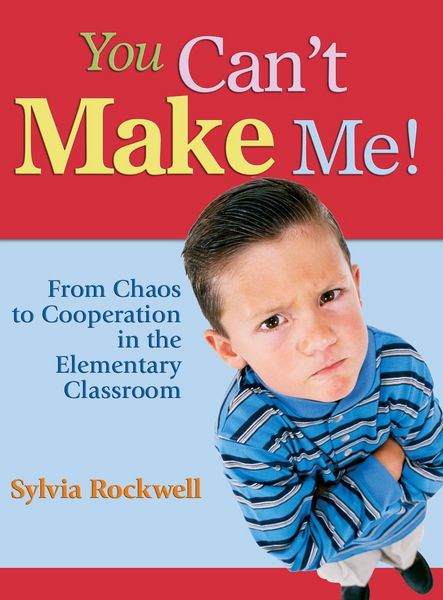
  • Produktbild: You Can't Make Me!
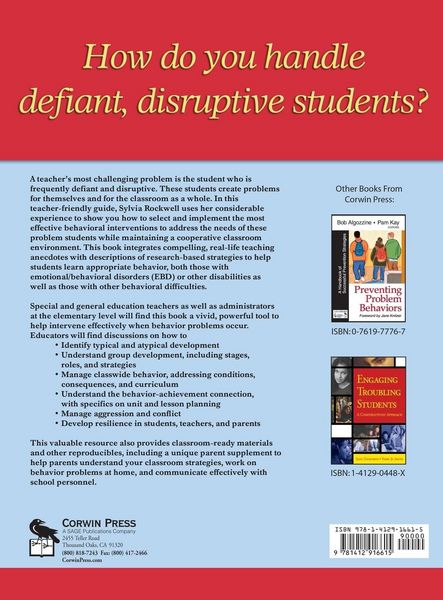
  • Produktbild: You Can't Make Me!

You Can't Make Me! From Chaos to Cooperation in the Elementary Classroom

Fr. 124.00

inkl. gesetzl. MwSt., Versandkostenfrei


Beschreibung

Produktdetails

Einband

Gebundene Ausgabe

Erscheinungsdatum

26.09.2006

Verlag

Sage Publications

Seitenzahl

320

Maße (L/B/H)

28.6/22.1/2.2 cm

Gewicht

960 g

Sprache

Englisch

ISBN

978-1-4129-1661-5

Beschreibung

Produktdetails

Einband

Gebundene Ausgabe

Erscheinungsdatum

26.09.2006

Verlag

Sage Publications

Seitenzahl

320

Maße (L/B/H)

28.6/22.1/2.2 cm

Gewicht

960 g

Sprache

Englisch

ISBN

978-1-4129-1661-5

Herstelleradresse

Libri GmbH
Europaallee 1
36244 Bad Hersfeld
DE

Email: gpsr@libri.de

Kundinnen und Kunden meinen

0 Bewertungen

Informationen zu Bewertungen

Zur Abgabe einer Bewertung ist eine Anmeldung im Konto notwendig. Die Authentizität der Bewertungen wird von uns nicht überprüft. Wir behalten uns vor, Bewertungstexte, die unseren Richtlinien widersprechen, entsprechend zu kürzen oder zu löschen.

Die Bewertungen sind nach Format, Anzahl Sterne und Datum sortiert.

Verfassen Sie die erste Bewertung zu diesem Artikel

Helfen Sie anderen Kund*innen durch Ihre Meinung

Kundinnen und Kunden meinen

0 Bewertungen filtern

  • Produktbild: You Can't Make Me!
  • Produktbild: You Can't Make Me!
  • List of Figures
    Preface
    Acknowledgments
    About the Author
    1. Foundations and Frameworks
    Introduction
    Foundational Principles
    Theoretical Approaches to Behavior Management
    A Rationale for Integrating the Theoretical Approaches
    Conclusion
    2. Typical and Atypical Development
    Introduction
    Typical Development
    Atypical Development
    Assessment
    Conclusion
    3. Group Development
    Introduction
    Group Formation: Characteristics and Processes
    Stages of Group Development
    Roles That Students Play
    Roles That Teachers Play
    The Pecking Order
    Strategies for Building Community
    Conclusion
    4. Classwide Behavior Management
    Introduction
    Conditions
    Consequences
    Curriculum
    Conclusion
    5. The Behavior-Achievement Connections
    Introduction
    Learners Who Are at Risk
    A Strategy Selection Framework
    A Multifaceted Approach in Action
    The Role of Assessment
    Reading Instruction
    Algebraic Thinking
    Unit Planning
    Elements That Facilitate Learning for Students Who Are at Risk
    Conclusion
    Chapter 6. Managing the "You Can¿t Make Me!" Moments
    Introduction
    Four Components of Behavior
    The Anatomy of a Conflict
    Stages of Aggression
    Prevention and Early Intervention
    Passive Aggressive Behavior
    Learned Behavior Versus Manifestations of Mental Illness
    Conclusion
    Chapter 7. Special Case Interventions
    A Note to General Education Teachers
    Introduction
    The Process
    Jesse
    Brad
    Behavior Reduction Techniques
    Additional Interventios and Resources
    Methods for Intregrating Individual Plans With the Group Plan
    The Ethics of Intervention Selection and Implementation
    Conclusion
    8. Resilience
    Introduction
    Research on Resilience
    Facilitating Resilience in Schools
    Ryan¿s Story
    A Professional Response to Difficult Parents
    A Rationale for Strengthening Elementary Programs for Children With Emotional and Behavioral Disorders
    Facilitating Educators¿ Resilience
    Characteristics of Effective Behavior Managers
    Conclusion
    Appendix A: Forms
    Appendix B: Notes to Parents
    References
    Index