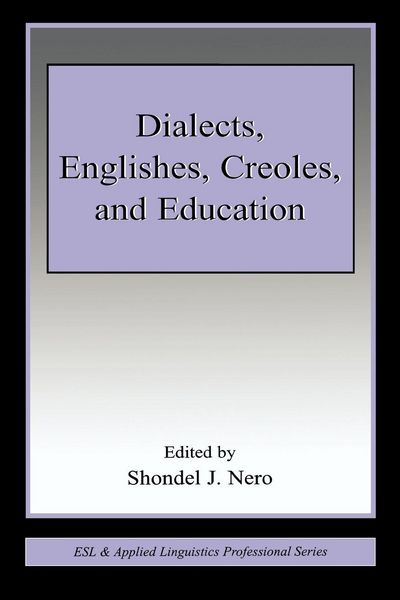
Dialects, Englishes, Creoles, and Education
-
- Taschenbuch ausgewählt
- eBook
-
Sprache:Englisch
Fr. 93.90
inkl. gesetzl. MwSt.,
Beschreibung
Produktdetails
Einband
Taschenbuch
Erscheinungsdatum
03.03.2006
Herausgeber
Nero Shondel J.Verlag
Taylor and FrancisSeitenzahl
368
Maße (L/B/H)
22.9/15.2/1.8 cm
Gewicht
630 g
Sprache
Englisch
ISBN
978-0-8058-4659-1
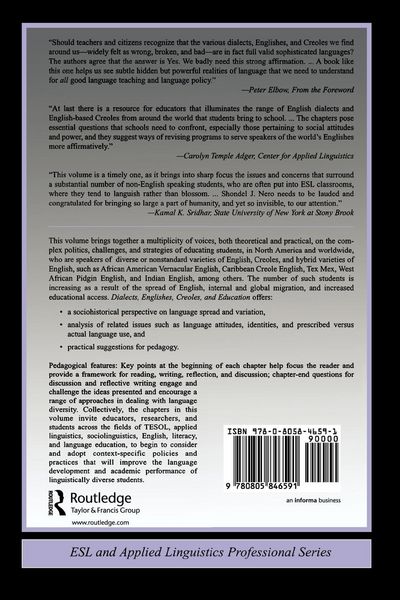
This volume brings together a multiplicity of voices, both theoretical and practical, on the complex politics, challenges, and strategies of educating students, in North America and worldwide, who are speakers of diverse or nonstandard varieties of Engli
Kundinnen und Kunden meinen
Verfassen Sie die erste Bewertung zu diesem Artikel
Helfen Sie anderen Kund*innen durch Ihre Meinung