Gutscheinbedingungen

*Gültig bis 05.07.2026 auf (fast) alles. Ausgeschlossen sind Smartboxen, Zeitschriften, Tickets, Lebensmittel, Gaming-Elektroartikel, Tinte/Toner, Gutscheine, Geschenkkarten, Blumen und Abos | Einlösbar in allen Buchhandlungen von Orell Füssli, Barth Bücher, Buchladen Rapunzel, Papeterie Köhler, Schuler Orell Füssli, Stauffacher und ZAP unter Vorweisung des Gutscheins, auf www.orellfüssli.ch durch Eingabe des Gutscheincodes. Beim Service „eBooks verschenken“ und bei eBook-Käufen via eReader nicht einlösbar | Mindesteinkaufswert: Fr. 30.- | Nicht mit anderen Rabatten kumulierbar.

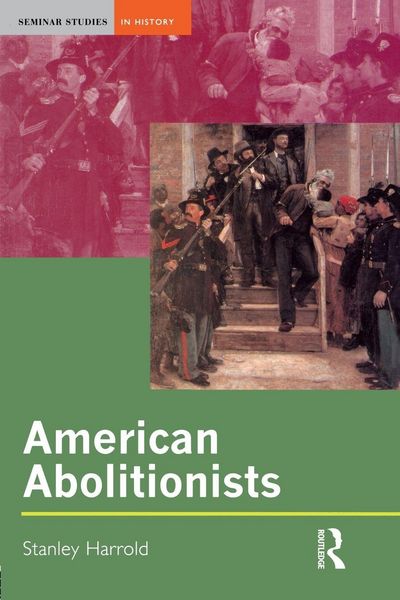
  • Produktbild: American Abolitionists
  • Produktbild: American Abolitionists

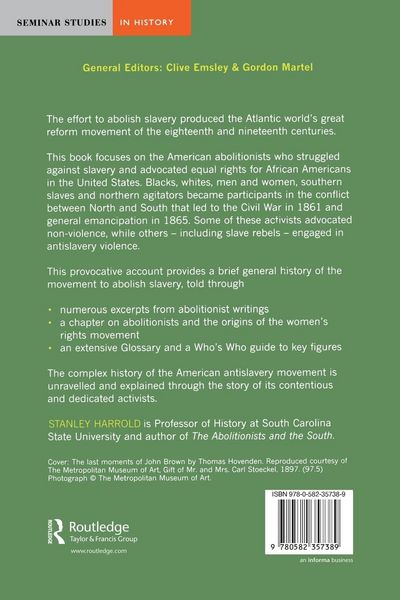
American Abolitionists

Fr. 81.90

inkl. gesetzl. MwSt., Versandkostenfrei


Beschreibung

Produktdetails

Einband

Taschenbuch

Erscheinungsdatum

16.02.2001

Verlag

Routledge

Seitenzahl

196

Maße (L/B/H)

23.4/15.6/1.1 cm

Gewicht

307 g

Sprache

Englisch

ISBN

978-0-582-35738-9

Beschreibung

Produktdetails

Einband

Taschenbuch

Erscheinungsdatum

16.02.2001

Verlag

Routledge

Seitenzahl

196

Maße (L/B/H)

23.4/15.6/1.1 cm

Gewicht

307 g

Sprache

Englisch

ISBN

978-0-582-35738-9

Herstelleradresse

Libri GmbH
Europaallee 1
36244 Bad Hersfeld
DE

Email: gpsr@libri.de

Noch keine Bewertungen vorhanden

Verfassen Sie die erste Bewertung zu diesem Artikel

Helfen Sie anderen Kundinnen und Kunden durch Ihre Meinung.

Kundinnen und Kunden meinen

Bewertungen (0)

Die Leseprobe wird geladen.
  • Produktbild: American Abolitionists
  • Produktbild: American Abolitionists
  • Part 1 Introduction; Chapter 1 The Abolitionists in American History; Part 2 Analysis; Chapter 2 Early Abolitionism; Chapter 3 The Rise of Immediatism; Chapter 4 Abolitionists and Gender; Chapter 5 Abolitionists and Race; Chapter 6 A More Aggressive Abolitionism; Chapter 7 Violent Abolitionism; Chapter 8 Abolitionists and Black Freedom; Part 3 Assessment; Chapter 9 Abolitionists and the Reform Tradition; Part 4 Documents; Chapter 10 Document 1 John Woolman Warns Slaveholders, 1762; Chapter 11 Document 2 Boston Slaves Petition Foe Feeedom, 1773; Chapter 12 Document 3 A Black Abolitionist Calls on Congress to Take Action Against Slavery, 1797; Chapter 13 Document 4 David Walker Calls on African Americans to Seek Freedom, 1829; Chapter 14 Document 5 William Lloyd Gaeeisom Begins the Liberator, 1831; Chapter 15 Document 6 Declaration of Sentiments of the American Anti-Slavery Society, 1833; Chapter 16 Document 7 Lydia Maria Child on the Impact of Abolitionism on the South, 1833; Chapter 17 Document 8 Angelina Grimke Appeals to White Women of the South on Behalf of Emancipation, 1836; Chapter 18 Document 9 Elijah P. Lovejoy Advocates Defensive Violence, 1837; Chapter 19 Document 10 Gerrit Smith Calls on Slaves to Escape and on Abolitionists to Help Them, 1842; Chapter 20 Document 11 Henry Highland Garnet Calls on Slaves to Challenge Their Masters, 1843; Chapter 21 Document 12 Cassius M. Clay on the Sinfulness of Slavery, 1845; Chapter 22 Document 13 Gamaliel Bailey Introduces His National Era to a Southern White Audience, 1847; Chapter 23 Document 14 Frederick Douglass Comments on the First Women’s Rights Convention, 1848; Chapter 24 Document 15 Sojourner Truth on Women’s Rights, 1851; Chapter 25 Document 16 Franklim B. Sanborn Presents John Brown’s Violent Commitment to Equal Rights, 1857-59; Chapter 26 Document 17 Wendell Phillips Reflects on the Election of Abraham Lincoln, 1860; Chapter 27 Document 18 Frederick Douglass Urges Black Men to Enlist in a Union War for Emancipation, 1863;