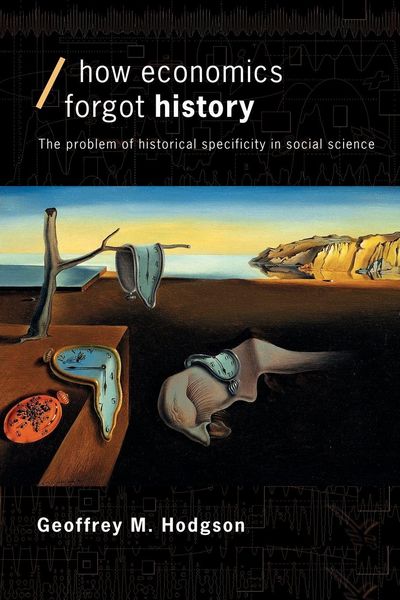
How Economics Forgot History The Problem of Historical Specificity in Social Science
-
- Taschenbuch ausgewählt
- eBook
-
Sprache:Englisch
Fr. 73.90
inkl. gesetzl. MwSt.,
Beschreibung
Produktdetails
Einband
Taschenbuch
Erscheinungsdatum
23.08.2001
Verlag
Taylor & FrancisSeitenzahl
444
Maße (L/B/H)
23.4/15.6/2.4 cm
Gewicht
820 g
Sprache
Englisch
ISBN
978-0-415-25717-6
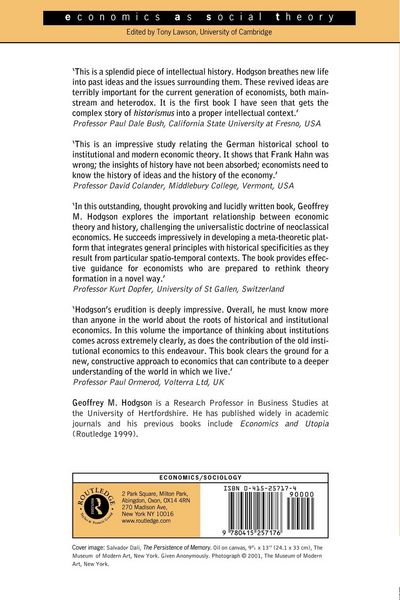
In arguably his most important book to date, Hodgson calls into question the tendency of economic method to try and explain all economic phenomena by using the same catch-all theories and dealing in universal truths. He argues that you need different theories to analyze different economic phenomena and systems and that historical context must be taken into account.
Hodgson argues that the German Historical School was key in laying the foundations for the work of the pioneer institutional economists, who themselves are gaining currency today; and that the growing interest in this school of thought is contributing to a more complete understanding of socio-economic theory.
Hodgson argues that the German Historical School was key in laying the foundations for the work of the pioneer institutional economists, who themselves are gaining currency today; and that the growing interest in this school of thought is contributing to a more complete understanding of socio-economic theory.
Kundinnen und Kunden meinen
Verfassen Sie die erste Bewertung zu diesem Artikel
Helfen Sie anderen Kund*innen durch Ihre Meinung