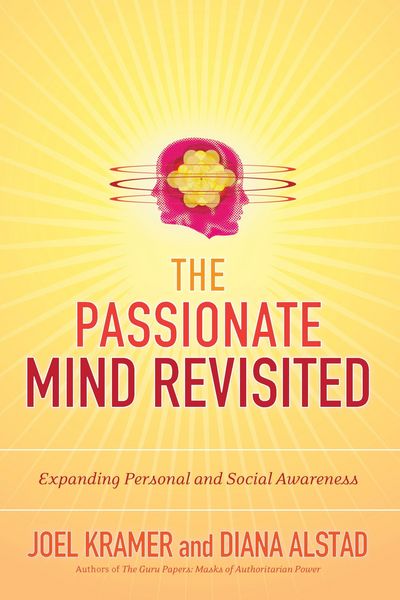
The Passionate Mind Revisited Expanding Personal and Social Awareness
-
- Taschenbuch ausgewählt
- eBook
-
Sprache:Englisch
Fr. 24.90
inkl. gesetzl. MwSt.,
-
Kostenlose Lieferung ab Fr. 30 Einkaufswert
Schweiz & Liechtenstein:
Versandkostenfrei ab Fr. 30.00
Versandkosten bis Fr. 30.00: Fr. 3.50Andere Lieferländer
Fr. 18.00 unabhängig vom Warenwert
Beschreibung
Produktdetails
Einband
Taschenbuch
Erscheinungsdatum
14.07.2009
Verlag
Random House USASeitenzahl
400
Maße (L/B/H)
22.7/15.1/2.9 cm
Gewicht
581 g
Sprache
Englisch
ISBN
978-1-55643-807-3
The Passionate Mind Revisited takes readers on a liberating inner journey into the workings of their mind that can transform the way people look at themselves and the world. This expanded inquiry reflects the authors’ own and the world’s evolution since The Passionate Mind came out in 1974. The original book focusing on the individual is now extended to social and philosophical spheres and global challenges, exploring how the world’s life-threatening dramas are largely a function of people’s genetic and cultural conditioning, worldviews, beliefs, and values.
Kramer and Alstad assert that humanity is on an evolutionary cusp requiring further awareness and conscious social evolution. Worldviews can create rigid beliefs and narrow identities that are destructive in a world of global impact. While acknowledging the fallibility of any mental construction, the book offers an evolutionary worldview deemed more likely than traditional worldviews or scientific materialism.
In exploring what it is to be a human social animal, The Passionate Mind Revisited offers fresh vantage points on life’s core issues: the nature of thought, authority and belief, pleasure and pain, desire and fear, identity, love and care, freedom, power, gender, time, meditation, violence, and evolution. By demonstrating how to inwardly see and break through one’s conditioning, the authors delve deeply into the nature and processes of the mind, including how subjectivity filters perception. This approach to self-inquiry can help free people from mechanical responses that develop from unexamined beliefs and habits. Dysfunctional worldviews and their values inhibit the creative solutions much needed in a perilous world of runaway change. This book, through its discussion and methodology, fosters curiosity and truth-seeking. Kramer and Alstad offer new insights on personal and global issues that can facilitate a necessary shift to conscious social evolution.
Noch keine Bewertungen vorhanden
Verfassen Sie die erste Bewertung zu diesem Artikel
Helfen Sie anderen Kundinnen und Kunden durch Ihre Meinung.