Gutscheinbedingungen

*Gültig bis 21.06.2026 auf (fast) alles. Ausgeschlossen sind Smartboxen, Zeitschriften, Tickets, Lebensmittel, Gaming-Elektroartikel, Tinte/Toner, Gutscheine, Geschenkkarten, Blumen und Abos | Einlösbar in allen Buchhandlungen von Orell Füssli, Barth Bücher, Buchladen Rapunzel, Schuler Orell Füssli, Stauffacher und ZAP unter Vorweisung des Gutscheins, auf www.orellfüssli.ch durch Eingabe des Gutscheincodes. Beim Service „eBooks verschenken“ und bei eBook-Käufen via eReader nicht einlösbar | Mindesteinkaufswert: Fr. 30.- | Nicht mit anderen Rabatten kumulierbar.

  • Produktbild: Distress Investing
  • Produktbild: Distress Investing

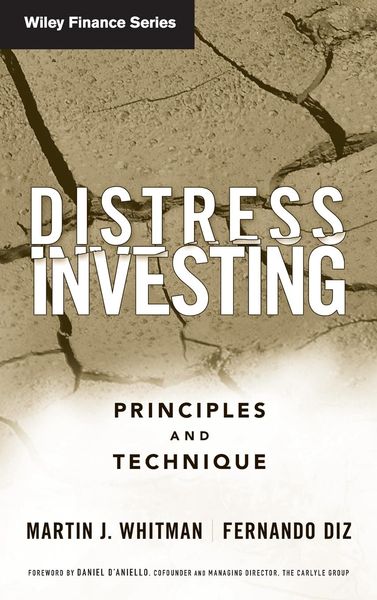
Distress Investing Principles and Technique

Aus der Reihe Wiley Finance Editions

Fr. 79.90

inkl. gesetzl. MwSt., Versandkostenfrei


Beschreibung

Produktdetails

Einband

Gebundene Ausgabe

Erscheinungsdatum

13.04.2009

Verlag

John Wiley & Sons Inc

Seitenzahl

272

Maße (L/B/H)

23.5/15.7/1.9 cm

Gewicht

554 g

Auflage

1. Auflage

Sprache

Englisch

ISBN

978-0-470-11767-5

Beschreibung

Rezension

this is the best book that I have read since The Black Swan do yourself a favor and pick up a copy; you d be crazy not to. ( SeekingAlpha.com , June 11, 2009)

Produktdetails

Einband

Gebundene Ausgabe

Erscheinungsdatum

13.04.2009

Verlag

John Wiley & Sons Inc

Seitenzahl

272

Maße (L/B/H)

23.5/15.7/1.9 cm

Gewicht

554 g

Auflage

1. Auflage

Sprache

Englisch

ISBN

978-0-470-11767-5

Herstelleradresse

Libri GmbH
Europaallee 1
36244 Bad Hersfeld
DE

Email: gpsr@libri.de

Kundinnen und Kunden meinen

0 Bewertungen

Informationen zu Bewertungen

Zur Abgabe einer Bewertung ist eine Anmeldung im Konto notwendig. Die Authentizität der Bewertungen wird von uns nicht überprüft. Wir behalten uns vor, Bewertungstexte, die unseren Richtlinien widersprechen, entsprechend zu kürzen oder zu löschen.

Die Bewertungen sind nach Format, Anzahl Sterne und Datum sortiert.

Verfassen Sie die erste Bewertung zu diesem Artikel

Helfen Sie anderen Kund*innen durch Ihre Meinung

Kundinnen und Kunden meinen

0 Bewertungen filtern

Die Leseprobe wird geladen.
  • Produktbild: Distress Investing
  • Produktbild: Distress Investing
  • Foreword xiii

    Preface xv

    Acknowledgments xxii

    Part One The General Landscape Of Distress Investing

    Chapter 1 The Changed Environment 3

    Trends in Corporate Debt Growth and Leverage before the Financial Meltdown of 2007-2008 4

    Junk Bonds and the Levering-Up Period 6

    The Syndicated Loan Market and Leveraged Loans 12

    Financial Meltdown of 2007-2008 16

    Principal Provisions of the 2005 Bankruptcy Act as They Affect Chapter 11 Reorganizations of Businesses 22

    Chapter 2 The Theoretical Underpinning 27

    What Market? 27

    Toward a General Theory of Market Efficiency 29

    External Forces Influencing Markets Explained 32

    What Risk? 34

    Capital Structure and Credit Risk 38

    Valuation 39

    The Company as a Stand-Alone Entity 41

    Control and Its Vital Importance 42

    Chapter 3 The Causes of Financial Distress 43

    Lack of Access to Capital Markets 44

    Deterioration of Operating Performance 46

    Deterioration of GAAP Performance 48

    Large Off-Balance-Sheet Contingent Liabilities 51

    Chapter 4 Deal Expenses and Who Bears Them 53

    Attorneys and Financial Advisers' Compensation Structure and the Distribution of the Fee Pie 54

    Time in Chapter 11 and Number of Legal Firms Retained 66

    Determinants of Legal Fees and Expenses 67

    Determinants of Financial Advisers' Fees and Expenses 68

    Can Professional Costs Be Excessive? 68

    Appendix 69

    Chapter 5 Other Important Issues 71

    Management Compensation and Entrenchment 71

    Tax and Political Disadvantages 73

    Chapter 6 The Five Basic Truths of Distress Investing 77

    Truth 1: No One Can Take Away a Corporate Creditor's Right to a Money Payment Outside of Chapter 11 or Chapter 7 78

    Truth 2: Chapter 11 Rules Influence All Reorganizations 82

    Truth 3: Substantive Characteristics of Securities 84

    Truth 4: Restructurings Are Costly for Creditors 86

    Truth 5: Creditors Have Only Contractual Rights 87

    Part Two Restructuring Troubled Issuers

    Chapter 7 Voluntary Exchanges 91

    Problems with Voluntary Exchanges 92

    The Holdout Problem Illustrated 93

    Making a Voluntary Exchange Work 94

    Tax Disadvantages of a Voluntary Exchange versus Chapter 11 Reorganization 95

    Chapter 8 A Brief Review of Chapter 11 99

    Liquidations and Reorganizations 100

    Starting a Case: Voluntary versus Involuntary Petitions 100

    Forum Shopping 101

    Parties in a Chapter 11 Case 101

    Administration of a Chapter 11 Case 103

    The Chapter 11 Plan 109

    Chapter 9 The Workout Process 117

    Parties and Their Differing Needs and Desires 117

    Types of Chapter 11 Cases 120

    Leverage Factors in Chapter 11 125

    Part Three The Investment Process

    Chapter 10 How to Analyze: Valuation 133

    Strict Going Concern Valuation 134

    Resource Conversion Valuation 146

    Liquidation Valuations 148

    Chapter 11 Due Diligence for Distressed Issues 151

    Chapter 12 Distress Investing Risks 157

    Risks Associated with the Alteration of Priorities 158

    Risks Associated with Collateral or Enterprise Valuation 165

    Reorganization Risks 168

    Other Risks 168

    Chapter 13 Form of Consideration Versus Amount Of Consideration 171

    Part Four Cases and Implications for Public Policy

    Chapter 14 Brief Case Studies of Distressed Securities, 2008-2009 177

    Performing Loans Likely to Remain Performing Loans 178

    Small Cases 182

    Large Cases 184

    Capital Infusions into Troubled Companies 184

    Chapter 15 A Small Case : Home Products International 187

    The Early Years 188

    Growth by Acquisitions 189

    Retail Industry Woes 192

    The Fight for Control 195

    Amendment of Indenture and Event of Default 196

    The Decision: Prepackaged Chapter 11 197

    Treatment of Impaired Classes under the Plan 198

    Financial Means for Implementation of the Plan 199

    Going-Concern and Liquidation Valuations 199

    Chapter 16 A Large Reorganization Case: Kmart Corporation 203

    Landlords and Unexpired Leases 204

    Vendors and Critical Vendor Motions 206

    Management and KERPs Pre-2005 BAPCPA 208

    Fraudulent Transfers 209

    Subsidiary Guarantees and Substantive Consolidation 210

    Chapter 11 Committees and Out-of-Control Professional Costs 211

    Blocking Positions 211

    Buying Claims in Chapter 11 214

    Debtor-in-Possession Financing 215

    Kmart's Plan of Reorganization and Plan Investors 218

    Investment Performance 222

    Chapter 17 An Ideal Restructuring System 225

    Feasibility and Cash Bailouts 226

    Good Enough Rather Than Ideal 226

    Highly Beneficial Elements in the U.S. Restructuring System 226

    Goals of an Ideal Restructuring System 228

    Suggested Reforms 229

    Notes 233

    About the Authors 238

    Index 239