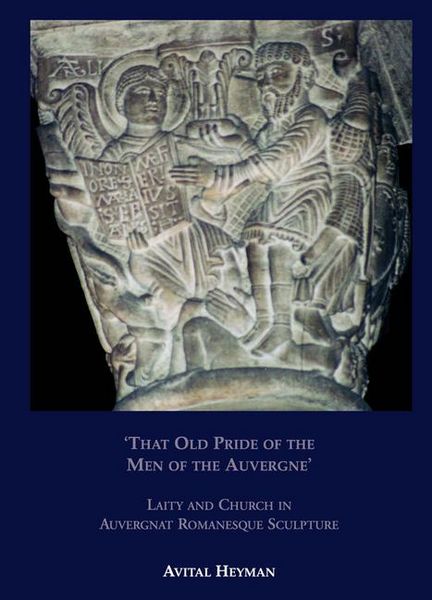
'That Old Pride of the Men of the Auvergne' - Laity and Church in Auvergnat Romanesque Sculpture Auvergnat Romanesque Sculptur
-
- Englisch ausgewählt
Fr. 84.90
inkl. gesetzl. MwSt.,
Beschreibung
Produktdetails
Einband
Gebundene Ausgabe
Erscheinungsdatum
31.12.2005
Verlag
ISD International - IPSUKSeitenzahl
438
Maße (L/B/H)
24/17/2.3 cm
Gewicht
1307 g
Sprache
Englisch
ISBN
978-1-899828-97-5
The title is an allusion to the description by Suger, Abbot of St. Denis, of the men of the Auvergne. Suger depicts that old pride in a chapter of his Deeds of Louis the Fat, which chronicles the arrival of King Louis VI in the region (1122 and 1126), to succor Eimeric I, the Bishop of Clermont, obliged to flee his episcopal town after its seizure by the Count of Auvergne. The citation provides a frame of reference for the subject of this study: the Auvergnat laity and its relations with the Church as they can be deduced from the abundant representations of secular figures in Romanesque Auvergne. A wide-ranging interdisciplinary approach is brought into play in dealing with the art historical, historical, social, political, legal, theological, and liturgical aspects of the theme. The first three chapters treat the various contexts in which secular characters appear. Chapter 1 distinguishes between two series, of lay donors and of avaricious persons, Chapter 2 discusses figures of warriors in enigmatic contexts in the churches of Brioude and Riom-¿Montagnes. Chapter 3 is concerned with non-noble figures, namely a group of rustic shepherds. Chapter 4 examines the ecclesiastical condition in the province through a case study of the monastic community of Mozac. The description of the peculiarities of Auvergnat Romanesque sculpture, and the inquiry into the imagery as a product of the rival forces of Church and laity, offers a new reading of such matters as property, social hierarchy, law, liturgy, and theology, as they are reflected in stone. The unrecorded past of the figures in various contexts of giving or of indulging in avarice, war, and bloodshed, is perhaps compensated by this sculptural abundance.
Kundinnen und Kunden meinen
Verfassen Sie die erste Bewertung zu diesem Artikel
Helfen Sie anderen Kund*innen durch Ihre Meinung