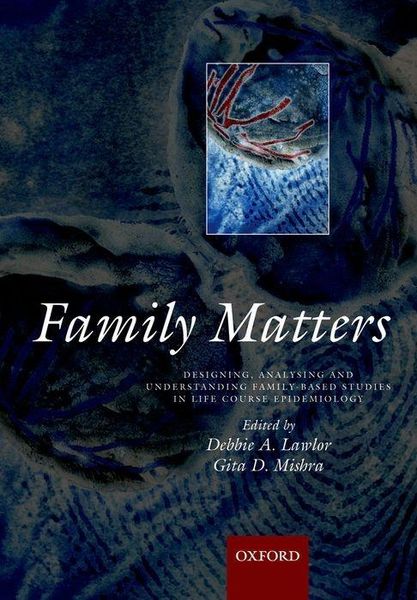
Produktbild: Family Matters

Family Matters Designing, analysing and understanding family based studies in life course epidemiology

Fr. 73.90

inkl. gesetzl. MwSt., Versandkostenfrei


Beschreibung

Produktdetails

Einband

Taschenbuch

Erscheinungsdatum

01.11.2009

Herausgeber

Lawlor Deborah A. + weitere

Verlag

Oxford University Press

Seitenzahl

352

Maße (L/B/H)

24.3/17.2/2.3 cm

Gewicht

635 g

Sprache

Englisch

ISBN

978-0-19-923103-4

Beschreibung

Produktdetails

Einband

Taschenbuch

Erscheinungsdatum

01.11.2009

Herausgeber

Verlag

Oxford University Press

Seitenzahl

352

Maße (L/B/H)

24.3/17.2/2.3 cm

Gewicht

635 g

Sprache

Englisch

ISBN

978-0-19-923103-4

Kundinnen und Kunden meinen

0 Bewertungen

Informationen zu Bewertungen

Zur Abgabe einer Bewertung ist eine Anmeldung im Konto notwendig. Die Authentizität der Bewertungen wird von uns nicht überprüft. Wir behalten uns vor, Bewertungstexte, die unseren Richtlinien widersprechen, entsprechend zu kürzen oder zu löschen.

Die Bewertungen sind nach Format, Anzahl Sterne und Datum sortiert.

Verfassen Sie die erste Bewertung zu diesem Artikel

Helfen Sie anderen Kund*innen durch Ihre Meinung

Kundinnen und Kunden meinen

0 Bewertungen filtern

  • Produktbild: Family Matters
  • 1. Why family matters - an introduction ; SECTION 1: WHAT CAN FAMILY-BASED STUDIES TELL US ABOUT LIFE COURSE EPIDEMIOLOGY? ; 2. Theoretical underpinning for the use of intergenerational studies in life course epidemiology ; 3. Theoretical underpinning for the use of sibling studies in life course epidemiology ; 4. Theoretical underpinning for the use of twin studies in life course epidemiology ; 5. Discussant chapter: summary of the theoretical approaches to family-based studies in life course epidemiology ; SECTION 2: THE PRACTICALITIES OF UNDERTAKING FAMILY-BASED STUDIES ; 6. Theoretical underpinning for the use of intergenerational studies in life birth cohorts: a resource for life course studies ; 7. Family-based life course studies in low- and middle-income countries ; 8. Using available family members as proxies to provide information on other family members who are difficult to reach ; 9. Discussant chapter: the practicalities of undertaking family-based studies ; SECTION 3: HOW TO UNDERTAKE STATISTICAL ANALYSES OF FAMILY-BASED STUDIES ; 10. Statistical considerations in intergenerational studies ; 11. Random effects models for sibling and twin-based studies in life course epidemiology ; 12. Discussant chapter: statistical considerations in family-based life course studies ; SECTION 4: USE OF FAMILY-BASED STUDIES IN LIFE COURSE EPIDEMIOLOGY ; 13. Family-based studies applied to the influence of early life factors on cardiovascular disease ; 14. How family-based studies have added to the understanding of life course epidemiology of mental health ; 15. How family-based studies have added to understanding the life course epidemiology of reproductive health ; 16. Discussant chapter: using family-based designs in life course epidemiology ; 17. The future of family-based studies in life course epidemiology: challenges and opportunities