Gutscheinbedingungen

*Gültig bis 21.06.2026 auf (fast) alles. Ausgeschlossen sind Smartboxen, Zeitschriften, Tickets, Lebensmittel, Gaming-Elektroartikel, Tinte/Toner, Gutscheine, Geschenkkarten, Blumen und Abos | Einlösbar in allen Buchhandlungen von Orell Füssli, Barth Bücher, Buchladen Rapunzel, Schuler Orell Füssli, Stauffacher und ZAP unter Vorweisung des Gutscheins, auf www.orellfüssli.ch durch Eingabe des Gutscheincodes. Beim Service „eBooks verschenken“ und bei eBook-Käufen via eReader nicht einlösbar | Mindesteinkaufswert: Fr. 30.- | Nicht mit anderen Rabatten kumulierbar.

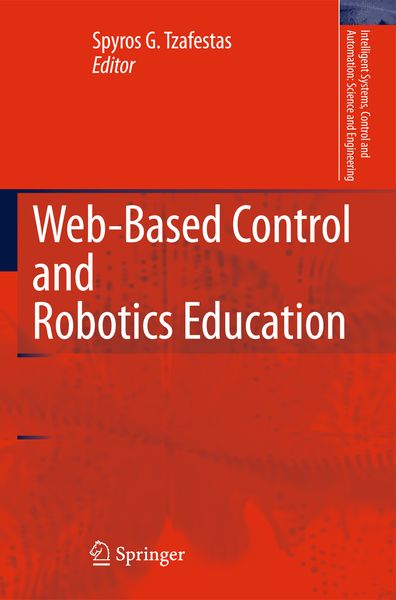
Produktbild: Web-Based Control and Robotics Education
Band 38

Web-Based Control and Robotics Education

Fr. 138.00

inkl. gesetzl. MwSt., Versandkostenfrei


Beschreibung

Produktdetails

Einband

Gebundene Ausgabe

Erscheinungsdatum

27.08.2009

Herausgeber

Spyros G. Tzafestas

Verlag

Springer Netherland

Seitenzahl

346

Maße (L/B/H)

24.2/16.7/3 cm

Gewicht

679 g

Auflage

1. Auflage

Sprache

Englisch

ISBN

978-90-481-2504-3

Beschreibung

Produktdetails

Einband

Gebundene Ausgabe

Erscheinungsdatum

27.08.2009

Herausgeber

Spyros G. Tzafestas

Verlag

Springer Netherland

Seitenzahl

346

Maße (L/B/H)

24.2/16.7/3 cm

Gewicht

679 g

Auflage

1. Auflage

Sprache

Englisch

ISBN

978-90-481-2504-3

Herstelleradresse

Libri GmbH
Europaallee 1
36244 Bad Hersfeld
DE

Email: gpsr@libri.de

Kundinnen und Kunden meinen

0 Bewertungen

Informationen zu Bewertungen

Zur Abgabe einer Bewertung ist eine Anmeldung im Konto notwendig. Die Authentizität der Bewertungen wird von uns nicht überprüft. Wir behalten uns vor, Bewertungstexte, die unseren Richtlinien widersprechen, entsprechend zu kürzen oder zu löschen.

Die Bewertungen sind nach Format, Anzahl Sterne und Datum sortiert.

Verfassen Sie die erste Bewertung zu diesem Artikel

Helfen Sie anderen Kund*innen durch Ihre Meinung

Kundinnen und Kunden meinen

0 Bewertungen filtern

  • Produktbild: Web-Based Control and Robotics Education
  • Preface; Contributors ; Outline of the Book; Terminology; Chapter 1: Teaching Control and Robotics Using the Web, by Spyros G. Tzafestas; Introduction; Review of the Web-Based Control and Robotics Educational Platforms ; Web Telerobotics and Internet Delay; General Characteristics of Web-based Virtual Laboratories; General Characteristics of Web-Based Remote Laboratories; Some Examples; Concluding Remarks; Appendix : Software Environments for Developing Web-based Educational Platforms; References; Chapter 2: Control System Design and Analysis Education via the Web, by Harry H. Cheng, Bo Chen and David Ko; Introduction; Ch Control Systems Toolkit; Web Based Control Design and Analysis; Customized Design and Implementation of Web-Based Control Systems Conclusion; References; 65Chapter 3: Web Based Control Teaching, by Suzana Uran and Riko Šafaric; Introduction; Motivation for Web Based Control Teaching; Virtual Control Design Laboratory ; A DSP-based Remote Control Laboratory; Conclusion; References; Chapter 4: Web-based Control Education in Matlab, by Katarína Žáková; Introduction; Standard Solutions ; Alternative Solutions; Client Applications; Conclusions; References; Chapter 5: Object-Oriented Modelling of Virtual-Laboratories for Control Educationby Carla Martin-Villalba, Alfonso Urquia and Sebastian Dormido; Introduction; Implementation of Virtual-labs with Batch Interactivity; Implementation of Virtual-labs with Runtime Interactivity; Case study I: Control of a Double-pipe Heat Exchanger; Case study II: Control of an Industrial Boiler ; Case study III: Solar House; Conclusions; References ; Chapter 6: A Matlab-Based Remote Lab for Control and Robotics Education, by Marco Casini, Domenico Prattichizzo and Antonio Vicino; Introduction; Automatic Control Telelab; ACT Experiments Description ; The ACT Architecture; The Robotics and Automatic Control Telelab; Conclusions; References; Chapter 7: Implementation of a Remote Laboratory Accessible through theWeb, by Giuseppe Carnevali and Giorgio Buttazzo; Introduction; Examples of Existing Virtual Labs; Interface ; Software Architecture; Hardware Architecture; Experiments; Conclusions; References ; Chapter 8: Teaching of Robot Control with Remote Experiments, by Andreja Rojko and Darko Hercog; Introduction; Educational Strategy; The DSP-based Remote Control Laboratory; Control of a Mechanism with Spring ; Control of the SCARA Robot; Students’ Feedback; Conclusions ; References; Chapter 9: Web-Based Laboratory on Robotics: Remote vs. Virtual Training in Programming Manipulators, by Costas S. Tzafestas; Introduction; Remote Labs: Literature Survey ; Research Motivation and Objectives; Design of a Virtual and Remote Robot Laboratory Platform; Pilot Study: Research Methodology and Conclusion – Future Research Directions; References; Chapter 10: Design and Educational Issues within the UJI Robotics Telelaboratory: A User Interface Approach, by R. Wirz, R. Marín and P. J. Sanz; Introduction; System Description: The Architecture; System Description: The User Interface; A New Network Protocol: SNRP; Teaching Experiences with the Tele-laboratory Conclusions and Work in Progress; References; Chapter 11: Web-Based Industrial Robot Teleoperation: An Application, by Gianni Ferretti, Gianantonio Magnani and Paolo Rocco; Introduction; System Architecture; Teleprogramming and Supervisory Control Functions; Software Architecture; Teleoperation User Interface; Conclusions; References ; Chapter 12: Teleworkbench: A Teleoperated Platform for Experiments in Multi-Robotics, by Andry Tanoto, Ulrich Rückert and Ulf Witkowski; Introduction; The Teleworkbench System; Robot Platform; Application Scenarios in Research and Education; Challenges for a Teleoperated Robotic Laboratory in Research and Education; Summary and Future Work; References; Chapter 13: Web-Based Control of Mobile Manipulation Platforms via Sensor Fusion, by Ayssam Elkady and Tarek Sobh; Introduction; Prior Work; Design