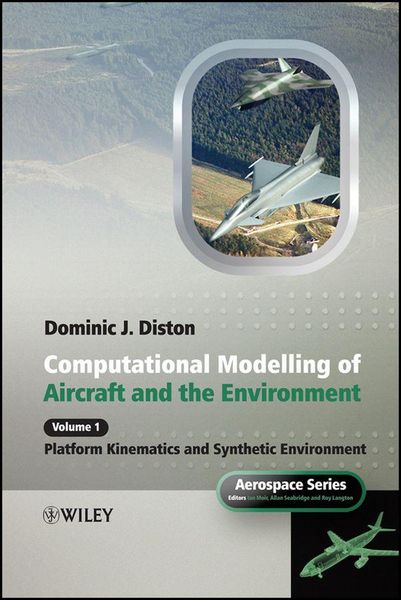
Produktbild: Computational Modelling and Simulation of Aircraft and the Environment, Volume 1

Computational Modelling and Simulation of Aircraft and the Environment, Volume 1 Platform Kinematics and Synthetic Environment

Fr. 163.00

inkl. gesetzl. MwSt., Versandkostenfrei


Beschreibung

Produktdetails

Einband

Gebundene Ausgabe

Erscheinungsdatum

26.05.2009

Herausgeber

Ian Moir + weitere

Verlag

WILEY

Seitenzahl

382

Maße (L/B/H)

24.9/17/2.5 cm

Gewicht

798 g

Sprache

Englisch

ISBN

978-0-470-01840-8

Beschreibung

Produktdetails

Einband

Gebundene Ausgabe

Erscheinungsdatum

26.05.2009

Herausgeber

Verlag

WILEY

Seitenzahl

382

Maße (L/B/H)

24.9/17/2.5 cm

Gewicht

798 g

Sprache

Englisch

ISBN

978-0-470-01840-8

Kundinnen und Kunden meinen

0 Bewertungen

Informationen zu Bewertungen

Zur Abgabe einer Bewertung ist eine Anmeldung im Konto notwendig. Die Authentizität der Bewertungen wird von uns nicht überprüft. Wir behalten uns vor, Bewertungstexte, die unseren Richtlinien widersprechen, entsprechend zu kürzen oder zu löschen.

Die Bewertungen sind nach Format, Anzahl Sterne und Datum sortiert.

Verfassen Sie die erste Bewertung zu diesem Artikel

Helfen Sie anderen Kund*innen durch Ihre Meinung

Kundinnen und Kunden meinen

0 Bewertungen filtern

  • Produktbild: Computational Modelling and Simulation of Aircraft and the Environment, Volume 1
  • Preface.

    Acknowledgements.

    List of Abbreviations.

    How To Use This Book.

    Series Preface.

    Chapter 1: Introduction.

    1.1 Computational Modelling.

    1.2 Modelling and Simulation (M&S).

    1.3 Development Processes.

    1.4 Models.

    1.5 Meta-models.

    1.6 Aerospace Applications.

    1.7 Integration and Interoperability.

    1.8 The End of the Beginning.

    Chapter 2: Platform Kinematics.

    2.1 Axis Systems.

    2.2 Changing Position and Orientation.

    2.3 Rotating Axis Systems.

    2.4 Quaternions.

    2.5 Line of Sight.

    Chapter 3: Geospatial Reference Model.

    3.1 Spherical Earth.

    3.2 Spherical Trigonometry.

    3.3 Great Circle Navigation.

    3.4 Rhumb Line Navigation.

    3.5 Reference Ellipsoids.

    3.6 Coordinate Systems.

    3.7 Navigation on an Ellipsoidal Earth.

    3.8 Mapping.

    3.9 General Principles of Map Projection.

    3.10 Mercator Projection .

    3.11 Transverse Mercator Projection.

    3.12 Conformal Latitude.

    3.13 Polar Stereographic Projection.

    3.14 Three-Dimensional Mapping.

    3.15 Actual Latitudes, Longitudes and Altitudes.

    Chapter 4: Positional Astronomy.

    4.1 Earth and Sun.

    4.2 Observational Reference Frames.

    4.3 Measurement of Time.

    4.4 Calendars and the J2000 Reference Epoch.

    4.5 Chronological Scale.

    4.6 Astrometric Reference Frames.

    4.7 Orbital Mechanics.

    4.8 Solar System Orbit Models.

    4.9 GPS Orbit Models.

    4.10 Night Sky.

    Chapter 5: Geopotential Fields.

    5.1 Potential Fields.

    5.2 Gravitation.

    5.3 Geomagnetism.

    5.4 Geopotential Computation.

    5.5 Final Comment on Geopotential Models.

    Chapter 6: Atmosphere.

    6.1 Overview.

    6.2 Standard Atmosphere Models.

    6.3 ISA Constants and Relationships.

    6.4 Geopotential Altitude.

    6.5 Vertical Structure of the Atmosphere.

    6.6 Pressure Altitude.

    6.7 Reference Atmospheres.

    6.8 Seasonal Variation.

    6.9 Climatic Regions.

    6.10 Air Density.

    6.11 Water Vapour.

    6.12 Weather Systems.

    Appendix A: Introduction to MATLAB.

    A. 1 MATLAB.

    A. 2 The MATLAB Product Family.

    A. 3 Getting Started.

    A. 4 Getting Help.

    A. 5 Where?

    A. 6 Numbers: Variables and Literals.

    A. 7 Arithmetic.

    A. 8 Logic.

    A. 9 M-Files and Functions.

    A.10 Built-in Functions.

    A.11 Constants.

    A.12 Creating Graphs.

    A.13 Summary of Appendix A.

    Appendix B: Data and Function.

    B.1 Types of Data.

    B.2 Data Type Descriptions.

    B.2.1 'double'.

    B.2.2 'logical'.

    B.2.3 'char'.

    B.2.4 'cell'.

    B.2.5 'struct'.

    B.2.6 'function_handle'.

    B.3 Program Structure.

    B.3.1 Syntax.

    B.3.2 Conditional Execution.

    B.3.3 Iterative Execution.

    B.3.4 Exception Handling.

    B.3.5 Omissions.

    B.4 User-defined Functions.

    B.4.1 Interfacing.

    B.4.2 Generic Functions.

    B.4.3 Recursive Functions.

    B.4.4 Private Functions.

    B.5 User-defined Classes.

    B.6 Practical Implementation.

    B.6.1 Naming Convention.

    B.6.2 Program Architecture.

    B.6.3 Precedence.

    B.6.4 Preferences.

    B.7 Summary of Appendix B

    Appendix C: Organisations.

    C.1 Specialist Agencies of the United Nations.

    C.2 International Organisations.

    C.3 US Government Organisations.

    C.4 UK Government Organisations.

    C.5 European Organisations.

    C.6 Open Projects and Consortia.

    Bibliography.

    Index.