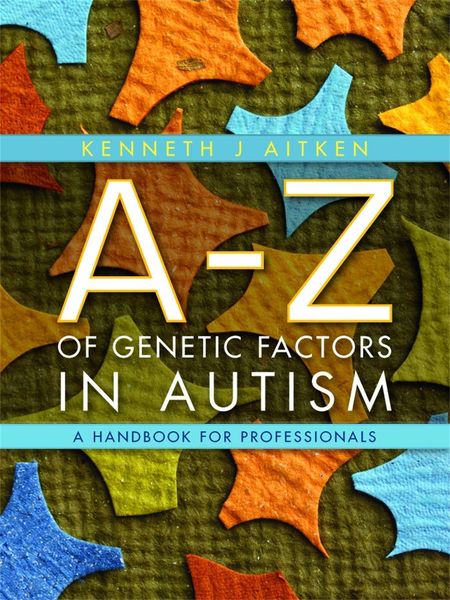
Produktbild: An A-Z of Genetic Factors in Autism

An A-Z of Genetic Factors in Autism A Handbook for Professionals

Fr. 168.00

inkl. gesetzl. MwSt., Versandkostenfrei


Beschreibung

Produktdetails

Einband

Gebundene Ausgabe

Erscheinungsdatum

15.11.2010

Verlag

Jessica Kingsley Publishers Ltd

Seitenzahl

496

Maße (L/B/H)

25.4/19.6/4.3 cm

Gewicht

1238 g

Sprache

Englisch

ISBN

978-1-84310-976-1

Beschreibung

Produktdetails

Einband

Gebundene Ausgabe

Erscheinungsdatum

15.11.2010

Verlag

Jessica Kingsley Publishers Ltd

Seitenzahl

496

Maße (L/B/H)

25.4/19.6/4.3 cm

Gewicht

1238 g

Sprache

Englisch

ISBN

978-1-84310-976-1

Herstelleradresse

Libri GmbH
Europaallee 1
36244 Bad Hersfeld
DE

Email: gpsr@libri.de

Kundinnen und Kunden meinen

0 Bewertungen

Informationen zu Bewertungen

Zur Abgabe einer Bewertung ist eine Anmeldung im Konto notwendig. Die Authentizität der Bewertungen wird von uns nicht überprüft. Wir behalten uns vor, Bewertungstexte, die unseren Richtlinien widersprechen, entsprechend zu kürzen oder zu löschen.

Die Bewertungen sind nach Format, Anzahl Sterne und Datum sortiert.

Verfassen Sie die erste Bewertung zu diesem Artikel

Helfen Sie anderen Kund*innen durch Ihre Meinung

Kundinnen und Kunden meinen

0 Bewertungen filtern

Die Leseprobe wird geladen.
  • Produktbild: An A-Z of Genetic Factors in Autism
  • Prelude. Acknowledgements. Introduction. List of Tables. List of Figures. SECTION A. Why you might need a book like this. Does one size fit all as far as help/treatment goes? 'Alternative' Approaches. ASD and 'Inborn errors of Metabolism'. Biochemical Individuality. Is ASD getting more common? A brief history of the ASDs. Consideration of some strongly held views: That autism is one thing; That autism is psychogenic in origin; That autism is outside the area of interest, knowledge and expertise of specialties other than psychiatry; That biological factors do not contribute to its genesis nor to its development. That autism is largely an interest of child psychiatry, and of limited interest to adult services. Early Presenting Features. What sorts of things should give rise to early concerns? Parental age; Parental health; The At-Risk Pregnancy; The at-risk infant. Physical Checklist. Increased Head Circumference; General physical overgrowth; Obesity; Skin Pigmentation differences; Café-au-lait spots (Skin hyperpigmentation); 'Mongolian' spots: 'Chicken skin'; Other skin differences; 'Cupid's Bow' shape to upper lip (AKA 'Mobius mouth'); Thumb adduction, External ear rotation, Upper limb malformation and 6th and 7th Cranial Nerve abnormalities; Muscular Involvement; Hemifacial microsomia. Immune Dysfunction. Gastrointestinal Disturbance. Seizures, Fits and Epilepsy. Anxiety, Overrarousal, Self-Injury, Aggression, Sleep and Behaviour Problems. Abnormal Sterol Metabolism. Methylmalonic Acidaemia. Abnormal Glutamate Metabolism. Vitamin B6 and Magnesium. SECTION B. Clinical Disorders seen in the ASDs. 1. 15q11-q13 duplication. 2. Chromosome 2q37 deletion. 3. XXY syndrome. 4. XYY syndrome. 5. 10p terminal deletion. 6. 45,X/46,XY mosaicism. 7. 22q13 deletion syndrome. 8. Aarskog syndrome. 9. Adenylosuccinate lyase (ADSL) deficiency. 10. Adrenomyeloneuropathy. 11. Angelman syndrome. 12. Apert syndrome. 13. ARX gene mutations. 14. Autism secondary to autoimmune lymphoproliferative syndrome (ALPS). 15. Bannayan-Riley-Ruvalcaba syndrome. 16. Basal cell nevus syndrome. 17. Biedl-Bardet syndrome. 18. CATCH 22. 19. Cortical Dysplasia-Focal Epilepsy (CDFE) syndrome. 20. CHARGE syndrome. 21. Coffin-Lowry syndrome. 22. Coffin-Siris syndrome. 23. Cohen syndrome. 24. Cole-Hughes macrocephaly syndrome. 25. Congenital adrenal hyperplasia. 26. Cowden syndrome. 27. de Lange syndrome. 28. Juvenile dentatorubral-pallidoluysian atrophy. 29a. DiGeorge syndrome I. 29b. DiGeorge syndrome II. 30. Dihydropyrimidine dehydrogenase (DPYS) deficiency . 31. Down syndrome. 32. Dravet's syndrome. 33. Duchenne and Becker muscular dystrophy. 34. Ehlers-Danlos syndrome. 35. Fragile X syndrome. 36. Fragile X permutation (partial methylation defects). 37. GAMT deficiency (guanidinoacetate methyltransferase deficiency). 38. Goldenhar syndrome. 39. HEADD syndrome. 40. L-2-Hydroxyglutaric aciduria. 41. Hyper IgE syndrome with autism. 42. Hypomelanosis of Ito. 43. Hypothyroidism. 44. Joubert syndrome. 45. Kleine-Levin syndrome. 46. Lujan-Fryns syndrome. 47. 2-methylbutyryl-CoA dehydrogenase deficiency. 48. Mobius syndrome. 49. Myhre syndrome. 50. Myotonic Dystrophy (MD1). 51. Neurofibromatosis type 1. 52. Noonan syndrome. 53. NAPDD. 54. Ornithine carbamyltransferase deficiency. 55. Oculocutaneous albinism. 56. Orstavik 1997 syndrome. 57. Phenylketonuria. 58. Pituitary deficiency. 59. Port-Wine facial staining and autism. 60. Potocki-Lupski syndrome. 61. Prader-Willi syndrome. 62. Proteus syndrome. 63a. Rett syndrome. 63b. Rett syndrome (Hanefeld variant). 64. Rubinstein-Taybi syndrome. 65. Schindler disease. 66. Smith-Lemli-Opitz syndrome. 67. Smith-Magenis syndrome. 68. Sotos syndrome. 69. Succinic semialdehyde dehydrogenase (SSADH) de?ciency. 70. Timothy syndrome. 71. Tourette syndrome. 72. Trichothiodystrophy. 73. Tuberous sclerosis. 74. Turner syndrome. 75. Unilateral cerebellar hypoplasia syndrome. 76. Velocardiofacial syndrome. 77. Williams syndrome. 78. Hereditary Xanthinuria type II. 79. Xeroderma pigmentosa. 80. X-linked Ichthyosis. SECTION C. Some Similar Conditions. 81. Weaver syndrome. 82. Simpson-Golabi-Behmel syndrome Type 1. 83. Hemihyperplasia. 84. Sturge-Weber syndrome. 85. PEHO syndrome (Progressive Hypsarrythmia and Optic Atrophy). 86. Methylenetetrahydrofolate reductase deficiency (+/- homocystinuria). 87. Alpha-Thalassemia/Mental Retardation syndrome, Nondeletion type. 88. Gurrieri syndrome. 89. Carbohydrate-deficient glycoconjugate syndrome 1A. SECTION D. 90. Some Promising Developments. a) Mitochondrial defects. b) Gene markers. c) Potential correction of nonsense mutations. d) Differences in the Gastrin-Releasing Peptide Receptor (GRPR) Gene. e) Differences in glutamate mechanisms and metabolism. f) Differences in Oxytocin and Vasopressin. g) Ghrelin differences. h) Ciliopathies. i) Aquaporins. SECTION E. Appendices. i) Further Genetic Information and supprt: ii) Sites provide information on particular aspects of ASD; iii) Autism Research Charities; iv) Relevant organizations and charities. v) Relevant Professional Organizations. vi) General Information on Rare Biomedical Conditions. vii) Searching for further Information. viii) Some Relevant Clinical Journals. Bibliography. Index.