Gutscheinbedingungen

*Gültig bis 21.06.2026 auf (fast) alles. Ausgeschlossen sind Smartboxen, Zeitschriften, Tickets, Lebensmittel, Gaming-Elektroartikel, Tinte/Toner, Gutscheine, Geschenkkarten, Blumen und Abos | Einlösbar in allen Buchhandlungen von Orell Füssli, Barth Bücher, Buchladen Rapunzel, Schuler Orell Füssli, Stauffacher und ZAP unter Vorweisung des Gutscheins, auf www.orellfüssli.ch durch Eingabe des Gutscheincodes. Beim Service „eBooks verschenken“ und bei eBook-Käufen via eReader nicht einlösbar | Mindesteinkaufswert: Fr. 30.- | Nicht mit anderen Rabatten kumulierbar.

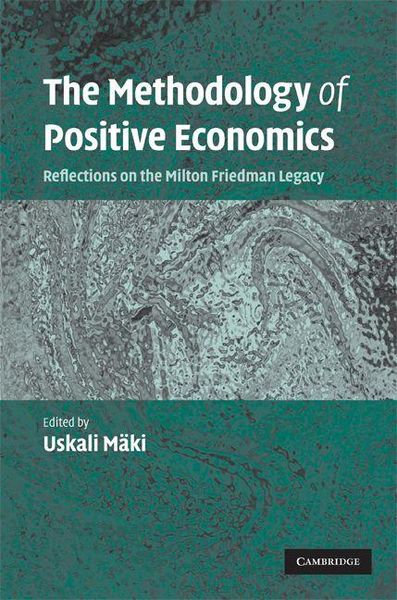
  • Produktbild: The Methodology of Positive Economics
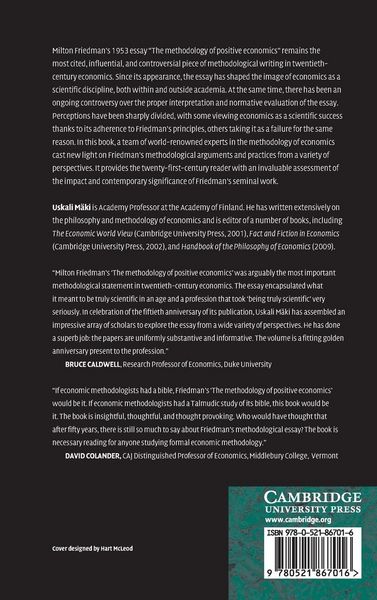
  • Produktbild: The Methodology of Positive Economics

The Methodology of Positive Economics Reflections on the Milton Friedman Legacy

Fr. 188.00

inkl. gesetzl. MwSt., Versandkostenfrei


Beschreibung

Produktdetails

Einband

Gebundene Ausgabe

Erscheinungsdatum

28.05.2009

Herausgeber

Uskali Mäki

Verlag

Cambridge Academic

Seitenzahl

382

Maße (L/B/H)

23.5/15.7/2.5 cm

Gewicht

720 g

Sprache

Englisch

ISBN

978-0-521-86701-6

Beschreibung

Portrait

Uskali Mäki is Academy Professor at the Academy of Finland. He has written extensively on the philosophy and methodology of economics and is editor of a number of books, including The Economic World View (Cambridge University Press, 2001), Fact and Fiction in Economics (Cambridge University Press, 2002), and Handbook of the Philosophy of Economics (2008).

Produktdetails

Einband

Gebundene Ausgabe

Erscheinungsdatum

28.05.2009

Herausgeber

Uskali Mäki

Verlag

Cambridge Academic

Seitenzahl

382

Maße (L/B/H)

23.5/15.7/2.5 cm

Gewicht

720 g

Sprache

Englisch

ISBN

978-0-521-86701-6

Herstelleradresse

Libri GmbH
Europaallee 1
36244 Bad Hersfeld
DE

Email: Libri GmbH

Kundinnen und Kunden meinen

0 Bewertungen

Informationen zu Bewertungen

Zur Abgabe einer Bewertung ist eine Anmeldung im Konto notwendig. Die Authentizität der Bewertungen wird von uns nicht überprüft. Wir behalten uns vor, Bewertungstexte, die unseren Richtlinien widersprechen, entsprechend zu kürzen oder zu löschen.

Die Bewertungen sind nach Format, Anzahl Sterne und Datum sortiert.

Verfassen Sie die erste Bewertung zu diesem Artikel

Helfen Sie anderen Kund*innen durch Ihre Meinung

Kundinnen und Kunden meinen

0 Bewertungen filtern

  • Produktbild: The Methodology of Positive Economics
  • Produktbild: The Methodology of Positive Economics
  • List of figures; List of tables; List of contributors; Preface; Part I. The Classical Essay in 20th Century Economic Methodology: The methodology of positive economics (1953) Milton Friedman; Part II. Reading and Writing a Classic: 1. Reading the methodological essay in twentieth century economics: map of multiple perspectives Uskali Mäki; 2. Early drafts of Friedman's methodology essay J. Daniel Hammond; 3. Unrealistic assumptions and unnecessary confusions: rereading and rewriting F53 as a realist statement Uskali Mäki; Part III. Models, Assumptions, Predictions, Evidence: 4. The influence of Friedman's methodological essay on economics Tom Mayer; 5. Did Milton Friedman's methodology license the formalist revolution? D. Wade Hands; 6. Appraisal of evidence in economic methodology Melvin Reder; 7. The politics of positivism: disinterested predictions from interested agents David Teira Serrano and Jesús Zamora Bonilla; Part IV. Theoretical Context: Firm, Money, Expected Utility, Walras and Marshall: 8. Friedman's 1953 essay and the marginalist controversy Roger Backhouse; 9. Friedman (1953) in relation to theories of the firm Oliver Williamson; 10. Friedman's selection argument revisited Jack Vromen; 11. Expected utility and Friedman's risky methodology Chris Starmer; 12. Friedman's methodological stance: causal realism Kevin D. Hoover; 13. On the right side for the wrong reason: Friedman on the Marshall-Walras divide Michel De Vroey; Part V. Concluding Perspectives: 14. The debate over F53 after 50 years Mark Blaug; 15. Final word Milton Friedman; References; Index.