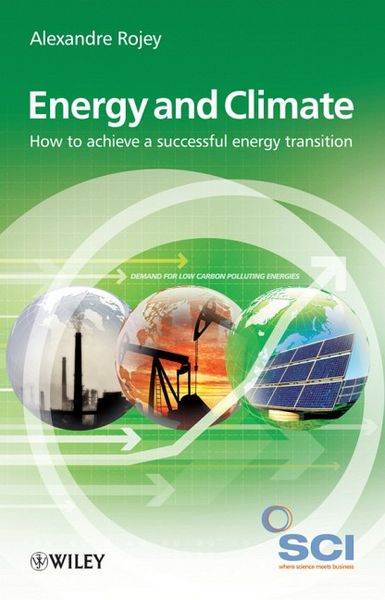
Energy and Climate How to achieve a successful energy transition
-
- Taschenbuch ausgewählt
- eBook
-
Sprache:Englisch
Fr. 77.90
inkl. gesetzl. MwSt.,
Beschreibung
Produktdetails
Einband
Taschenbuch
Erscheinungsdatum
01.06.2009
Verlag
John Wiley & SonsSeitenzahl
168
Maße (L/B/H)
22.7/15.1/1.4 cm
Gewicht
269 g
Auflage
1. Auflage
Sprache
Englisch
ISBN
978-0-470-74427-7
Despite global concerns over dwindling resources, climate change and carbon dioxide emissions, fossil fuels still account for more than 80% of the world's energy demands. As resources diminish and demand increases from rapidly developing nations such as China and India, the threat to both our environment and the security of our energy supply continues to grow. There is an immediate need to move towards a clean and more sustainable energy model, and this transition will require unprecedented innovation.
Energy & Climate: How to achieve a successful energy transition covers all the technology options available and summarises key information from the International Energy Agency and other leading organisations, providing a detailed technological roadmap for this transition which aims to avoid both ecological and economic disaster. Topics that are analysed and discussed in this edition are:
* More energy efficient technologies
* New developments in fossil fuels
* Renewable energy sources such as solar and wind energy and biofuels
* Hydrogen as an energy vector
* New energy storage systems
* Hybrid vehicles
* Capture and long-term storage of carbon dioxide
Written and translated by the former Director for Sustainable Development at IFP, Energy & Climate: How to achieve a successful energy transition is an essential introductory book for scientists and researchers working in energy and climate-related topics as well as all those interested in how to manage a sustainable energy supply while still reducing harmful carbon dioxide emissions.
Energy & Climate: How to achieve a successful energy transition covers all the technology options available and summarises key information from the International Energy Agency and other leading organisations, providing a detailed technological roadmap for this transition which aims to avoid both ecological and economic disaster. Topics that are analysed and discussed in this edition are:
* More energy efficient technologies
* New developments in fossil fuels
* Renewable energy sources such as solar and wind energy and biofuels
* Hydrogen as an energy vector
* New energy storage systems
* Hybrid vehicles
* Capture and long-term storage of carbon dioxide
Written and translated by the former Director for Sustainable Development at IFP, Energy & Climate: How to achieve a successful energy transition is an essential introductory book for scientists and researchers working in energy and climate-related topics as well as all those interested in how to manage a sustainable energy supply while still reducing harmful carbon dioxide emissions.
Kundinnen und Kunden meinen
Verfassen Sie die erste Bewertung zu diesem Artikel
Helfen Sie anderen Kund*innen durch Ihre Meinung