Gutscheinbedingungen

*Gültig bis 20.07.2026 auf alle Bücher. Ausgeschlossen sind Zeitschriften, Prozentbücher und Abos | Einlösbar in allen Buchhandlungen von Orell Füssli, Barth Bücher, Buchladen Rapunzel, Papeterie Köhler, Schuler Orell Füssli, Stauffacher und ZAP unter Vorweisung des Gutscheins, auf www.orellfüssli.ch durch Eingabe des Gutscheincodes. Beim Service „eBooks verschenken“ und bei eBook-Käufen via eReader nicht einlösbar | Mindesteinkaufswert: Fr. 30.- | Nicht mit anderen Rabatten kumulierbar.

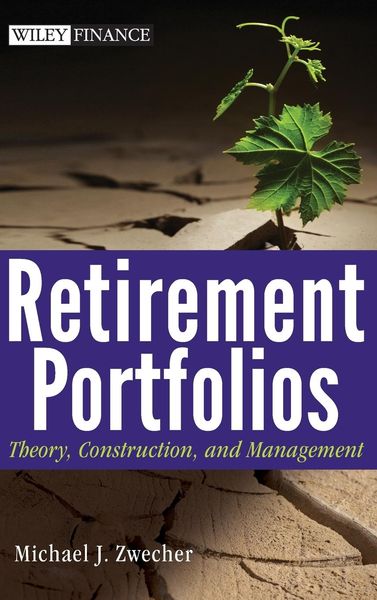
Produktbild: Retirement Portfolios

Retirement Portfolios Theory, Construction and Management

Aus der Reihe Wiley Finance Editions

Fr. 113.00

inkl. gesetzl. MwSt., Versandkostenfrei


Beschreibung

Produktdetails

Einband

Gebundene Ausgabe

Erscheinungsdatum

01.01.2010

Verlag

John Wiley & Sons

Seitenzahl

304

Maße (L/B/H)

23.5/15.7/2.1 cm

Gewicht

596 g

Auflage

1. Auflage

Sprache

Englisch

ISBN

978-0-470-55681-8

Beschreibung

Rezension

A very practical and well argued philosophy for retirement funding that will make sense to practitioners. (Journal of Pensions, Economics and Finance, July 2011).

Produktdetails

Einband

Gebundene Ausgabe

Erscheinungsdatum

01.01.2010

Verlag

John Wiley & Sons

Seitenzahl

304

Maße (L/B/H)

23.5/15.7/2.1 cm

Gewicht

596 g

Auflage

1. Auflage

Sprache

Englisch

ISBN

978-0-470-55681-8

Herstelleradresse

Libri GmbH
Europaallee 1
36244 Bad Hersfeld
DE

Email: gpsr@libri.de

Noch keine Bewertungen vorhanden

Verfassen Sie die erste Bewertung zu diesem Artikel

Helfen Sie anderen Kundinnen und Kunden durch Ihre Meinung.

Kundinnen und Kunden meinen

Bewertungen (0)

Die Leseprobe wird geladen.
  • Produktbild: Retirement Portfolios
  • Preface xiii

    Acknowledgments xxi

    PART ONE Framing the Problem

    CHAPTER 1 Portfolio Focus and Stage of Life 3

    A "Balanced" Portfolio Approach May Not Last Through Retirement 4

    Retirement Saving versus Retirement Income: An Illustration 10

    Products versus Solutions 11

    Summary 12

    CHAPTER 2 The Top-Down View

    A Short Primer on Economic Models of Retirement Income 13

    An Overview of Economic Models of Retirement Income 14

    Reconciling Retirement Income Portfolio Construction with Accumulation 15

    The Dynamics of Risk Aversion 19

    Separation between Flooring and Upside 21

    Fully Funded versus Underfunded Flooring 22

    Monetizing Mortality 23

    Taking Market Risk 23

    Risk Is Risk, Is It Not? 24

    Risk, Uncertainty, and Risk Aversion 25

    Summary 25

    CHAPTER 3 The Importance of Lifestyle Flooring 27

    Amount of Flooring: A Balance Sheet View 28

    Retirement Requires Outcomes, Not Just Expectations 30

    Consumption Needs 32

    Yes/No Planning 33

    The Window for Maintaining Lifestyle 34

    The Bedrock Floor 36

    The Aspirational Floor 37

    The Finished Floor 38

    Nominal versus Real Flooring 38

    Types of Flooring 42

    Choosing a Flooring Type 45

    Summary 48

    CHAPTER 4 Monetizing Mortality Annuities and Longevity Insurance 49

    Risk Pooling 50

    Pure Longevity Insurance 50

    Annuities 52

    Complex Annuities 54

    Credit Risk and Insurance 55

    Summary 57

    CHAPTER 5 Flooring with Capital Markets Products 59

    Government-Issued Securities 60

    Creating a Floor of Strips 61

    TIPS 63

    Municipal Securities 65

    Corporate Securities and Other Financial Products 66

    Summary 67

    PART TWO Adapting Portfolios for Retirement Income

    CHAPTER 6 Building Retirement Income Portfolios 71

    Portfolio Sleeves for Retirement Income 72

    Portfolio Intuition 76

    Basic Portfolio Constructs 77

    General Accumulation Plans for Retirement Income 81

    Taxes and Retirement Income Portfolios 81

    Summary 85

    CHAPTER 7 Creating Allocations for Constructing Practical Portfolios by Age and Lifestyle Needs 87

    Flooring Allocations 88

    Longevity Allocations 93

    Precautionary Allocations 96

    Discretionary Equity Allocations: Assets with Risk 97

    Summary of Allocations 99

    Summary 103

    PART THREE Managing Portfolios for Retirement Income

    CHAPTER 8 Rebalancing Retirement Income Portfolios 107

    Rebalancing the Discretionary Wealth Subportfolio 108

    Rebalancing the Functional Components 109

    Raising the Floor 111

    Summary 112

    CHAPTER 9 Active Risk Management for Retirement Income Portfolios 115

    Static Example 118

    The View from the Capital Markets Line 121

    Risk Management and Expected Returns 122

    Simple Rules: For Passive and Active Risk Management 122

    An Inelegant but Simple Plan 124

    High-Water Mark Flooring 125

    The Cushion 126

    Risk Rules: Periodic Rebalancing 128

    Risk Rules: More Active Rebalancing 130

    CPPI and Volatility 132

    Taxation and Active Management 133

    Locking in Flooring: Long End versus Short End 134

    A Quick Note on Usability, Scalability, and Approaches Other Than Liability Matching 135

    Playing with Fire in a Retirement Income Portfolio 135

    Summary 138

    PART FOUR Making It Happen

    CHAPTER 10 The Transition Phase 141

    What the Transition Is About 142

    The Order of Transition 144

    A Diffi cult Transition 146

    When to Transition 148

    Making the Transition Seamless 150

    Creating a Business Model that Includes a Natural Transition 152

    Sudden Transitions 153

    Summary 153

    CHAPTER 11 Putting Together the Proposal 155

    Laying Out Client's Assets to Show Current Status 156

    Minimally Invasive Surgery: Reconfi guration Proposal 158

    Lifestyle and Flooring Types 160

    Accumulation Plan Types 160

    Allocations 161

    Passive Versus Active Risk Management 163

    Summary 165

    CHAPTER 12 Market Segmentation 167

    Segmentation for Traditional Portfolios 168

    Segmentation for Retirement Income Portfolios 169

    Summary 175

    CHAPTER 13 Products and Example Portfolios 177

    Overview of Products Offered 177

    Managing Expectations around Outcomes 184

    Example Portfolios 185

    Summary 202

    CHAPTER 14 Preparing Your Client for a Retirement Income Portfolio 203

    Know Your Resources 207

    Lifestyle and Life Cycle 210

    Risks to Your Retirement Lifestyle 212

    Lifestyle and Flooring Types 214

    What the Adviser Needs from the Client 221

    Summary 221

    CHAPTER 15 Salvage Operations, Mistakes, and Fallacies 223

    Mistakes and Fallacies 224

    How to Dig Out of a Hole 228

    Summary 233

    APPENDIX A

    History of Theoretical Developments in Life-Cycle Planning 235

    The Model 235

    Rising Lifestyles and Habit Formation 238

    Empirical Studies of Life-Cycle Behavior 241

    APPENDIX B

    How Professionals Can Maximize the Usefulness of this Book 243

    Transaction-Oriented Salespeople 243

    Asset Gatherers 245

    Insurance Planners 246

    Financial Planners 247

    Portfolio Managers 248

    Notes 251

    Glossary 265

    References 271

    Index 275