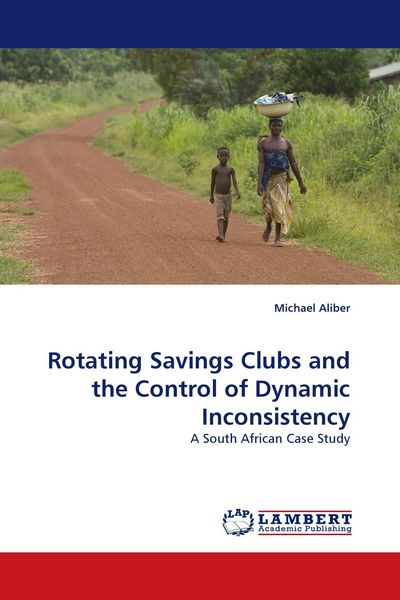
Rotating Savings Clubs and the Control of Dynamic Inconsistency A South African Case Study
-
- Englisch ausgewählt
Fr. 81.90
inkl. gesetzl. MwSt.,
Beschreibung
Produktdetails
Einband
Taschenbuch
Erscheinungsdatum
14.09.2010
Verlag
LAP LAMBERT Academic PublishingSeitenzahl
160
Maße (L/B/H)
22/15/1.1 cm
Gewicht
256 g
Auflage
1. Auflage
Sprache
Englisch
ISBN
978-3-8383-2808-9
The purpose of this study is to examine the economic function that rotating savings and credit associations (ROSCAs) serve in the lives of the poor. The proposition is that the primary function of ROSCAs is to assist their members to save money in the face of wavering self-discipline. Evidence to this effect is derived from data collected in two rural areas of South Africa. The issue of imperfect self-discipline is related to the concept of dynamic inconsistency, by which is meant the tendency to deviate from one's plans or intentions. In the context of ROSCAs, dynamic inconsistency means failing to save as much money as one needs or intends to save. It is proposed that people are susceptible to this type of dynamic inconsistency due to at least three factors: cognitive difficulty in identifying the optimal savings plan in the first place; vulnerability to impulse spending; and a high degree of impatience. ROSCAs serve as a potent antidote to dynamic inconsistency, because they establish a robust commitment to regimented behavior. People join ROSCAs precisely because ROSCAs promise to enforce a consistency in behavior that one may fail to achieve on one's own.
Kundinnen und Kunden meinen
Verfassen Sie die erste Bewertung zu diesem Artikel
Helfen Sie anderen Kund*innen durch Ihre Meinung