Gutscheinbedingungen

*Gültig bis 05.07.2026 auf (fast) alles. Ausgeschlossen sind Smartboxen, Zeitschriften, Tickets, Lebensmittel, Gaming-Elektroartikel, Tinte/Toner, Gutscheine, Geschenkkarten, Blumen und Abos | Einlösbar in allen Buchhandlungen von Orell Füssli, Barth Bücher, Buchladen Rapunzel, Papeterie Köhler, Schuler Orell Füssli, Stauffacher und ZAP unter Vorweisung des Gutscheins, auf www.orellfüssli.ch durch Eingabe des Gutscheincodes. Beim Service „eBooks verschenken“ und bei eBook-Käufen via eReader nicht einlösbar | Mindesteinkaufswert: Fr. 30.- | Nicht mit anderen Rabatten kumulierbar.

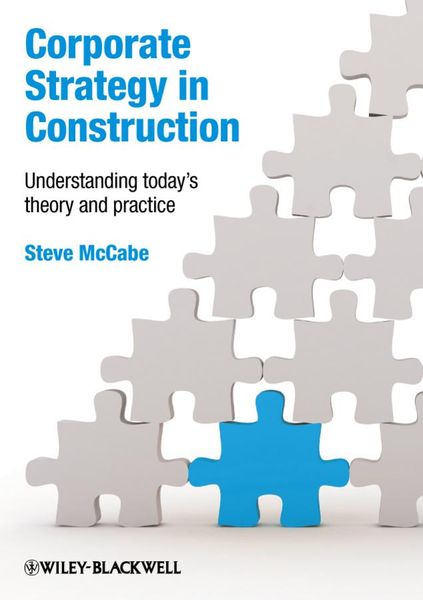
Produktbild: Corporate Strategy in Construction

Corporate Strategy in Construction Understanding Today's Theory and Practice

Fr. 109.00

inkl. gesetzl. MwSt., Versandkostenfrei


Beschreibung

Produktdetails

Einband

Taschenbuch

Erscheinungsdatum

29.03.2010

Verlag

John Wiley & Sons

Seitenzahl

336

Maße (L/B/H)

24.1/17/1.8 cm

Gewicht

576 g

Auflage

1. Auflage

Sprache

Englisch

ISBN

978-1-4051-5912-8

Beschreibung

Zitat

"This new text is a valiant effort by McCabe to present the main theories of corporate strategy and discuss their application to the construction industry--all in 11 chapters (plus a chapter of corporate case examples)." ( Construction Management and Economics , 1January 2012)

Produktdetails

Einband

Taschenbuch

Erscheinungsdatum

29.03.2010

Verlag

John Wiley & Sons

Seitenzahl

336

Maße (L/B/H)

24.1/17/1.8 cm

Gewicht

576 g

Auflage

1. Auflage

Sprache

Englisch

ISBN

978-1-4051-5912-8

Herstelleradresse

Libri GmbH
Europaallee 1
36244 Bad Hersfeld
DE

Email: GPSR Kontakt

Noch keine Bewertungen vorhanden

Verfassen Sie die erste Bewertung zu diesem Artikel

Helfen Sie anderen Kundinnen und Kunden durch Ihre Meinung.

Kundinnen und Kunden meinen

Bewertungen (0)

  • Produktbild: Corporate Strategy in Construction
  • Foreword

    Preface

    About the Author

    Acknowledgements

    Dedication

    Chapter 1 Introduction

    1.1 Trying to predict the future - a task fraught with risk

    1.2 A journey towards strategy: art or science?

    1.3 Strategy, a problem of expectation?

    1.4 The dilemmas of a formal definition of strategy

    1.5 The context of construction - a truly unique industry?

    1.6 Developing an understanding of who 'consumes' construction

    1.7 The structure of this book

    Chapter 2 Strategic management theory: its origins, development and relevance to contemporary organisations

    2.1 Objectives of this chapter

    2.2 Early origins

    2.3 The rise and rise of strategy as a corporate tool

    2.4 So what are the main concepts of strategy - back to the problems of definition?

    2.5 Mintzberg's 'Five Ps' conceptualisation of strategy

    2.6 The hierarchy of strategy

    2.7 Terms associated with strategy

    2.8 Attaining success: the importance of analysis, development and implementation

    2.9 The three essentials of strategic decision-making

    2.10 Lynch's text of 'good' strategy

    2.11 What will really work? An exploration of major theoretical perspectives

    2.12 The relevance of strategic theory and some considerations of Whittington's generic perspective

    2.13 Conclusion

    Chapter 3 A short socio-historical analysis of the development of the British construction industry

    3.1 Objectives of this chapter

    3.2 Early origins - the beginnings of civilisation

    3.3 The Roman influence

    3.4 Medieval organisation - the emergence of the guild system

    3.5 The malign influence of merchants

    3.6 The end of artisans and the emergence of alternative arrangements

    3.7 Contracting and its long-term effects on people, processes and production

    3.8 The rise and fall of trade unionism in construction

    3.9 The National Building Strike and its long-term consequences

    3.10 Time for change?

    3.11 Government intervention - the impact of the 'Latham' and Rethinking Construction reports

    3.12 So where is construction currently and what is next?

    3.13 Conclusion

    Chapter 4 Understanding the environment - markets and competition

    4.1 Objectives of this chapter

    4.2 Appreciating the context of construction

    4.3 How are markets considered?

    4.4 Appreciating the dynamics of markets and competition

    4.5 Overall analysis of the environment

    4.6 What are the dynamics of competition? 71

    4.7 Analysing competitive behaviour - a consideration of adaptive strategy

    4.8 How do markets grow?

    4.9 Competitive advantage

    4.10 Conclusion

    Chapter 5 Strategy and its connection with consumers and customers - the keys to success

    5.1 Objectives of this chapter

    5.2 Defining consumers and customers

    5.3 Customers - who are they and what do they want?

    5.4 The use of 'customer-profiling'

    5.5 Customer-competitor matrix

    5.6 Importance-performance analysis

    5.7 Market segmentation

    5.8 Revisiting Miles and Snow's analytical model of competitive behaviour

    5.9 Using the BCG matrix to analyse customers

    5.10 The McKinsey Directional Policy Matrix

    5.11 Considering the value of these matrices

    5.12 Making connections with consumers - the importance of communication and feedback

    5.13 The emergence of the concept of customer as 'king' - what the Japanese taught the west and how it has been developed

    5.14 Conclusion

    Chapter 6 Developing and maintaining organisational resources - the basis for delivering strategy

    6.1 Objectives of this chapter

    6.2 Resource usage - an overview

    6.3 A contemporary consideration of how organisations use resources

    6.4 The objective of adding value to resources

    6.5 How resources are valued - applying 'economic rent'

    6.6 How organisations develop capability based on their resources -an appreciation of the importance of the resource-based perspective (RBV)

    6.7 Resources and their place in the structure

    6.8 Using VRIO framework to decide on resource application

    6.9 The importance of resources, distinctive capability and core competences

    6.10 Developing an understanding of people, productive capability and finance

    6.11 Using integration as a tactic to obtain resources

    6.12 Conclusion

    Chapter 7 'Organisation[al] matters' - a strategic perspective of the importance of how to manage people

    7.1 Objectives of this chapter - what is organisation?

    7.2 Organisation and structure - a consideration of contemporary changes in perception

    7.3 Structure, processes and relationships - virtuous combinations?

    7.4 Purpose and organisation

    7.5 Setting objectives - the importance of mission

    7.6 Organisational configuration

    7.7 Leadership

    7.8 Getting the best from people - the 'secret' of really successful organisations

    7.9 The importance of organisational culture

    7.10 Conclusion

    Chapter 8 Knowledge, innovation and technology - the 'keys' to the future

    8.1 Objectives of this chapter

    8.2 Knowing and doing - linking them together to ensure appropriate action

    8.3 The context of construction

    8.4 Defining knowledge

    8.5 Learning as a way of organisational life

    8.6 What is innovation?

    8.7 The importance of technology

    8.8 Conclusion

    Chapter 9 Change - the only constant in strategy

    9.1 Objectives of this chapter

    9.2 The theoretical basis of change management

    9.3 Strategic change in organisations - deriving an understanding of what is involved

    9.4 Types of strategic change

    9.5 The causes of change

    9.6 How to manage change

    9.7 A change for the better? Challenging the assumptions of the planned approach

    9.8 Emergent models of change

    9.9 The role of managers in change

    9.10 Strategic leadership approaches

    9.11 Changing the way things are really done

    9.12 Communicating change

    9.13 Potential problems with change

    9.14 Conclusion

    Chapter 10 Considering the development of strategic options

    10.1 Objectives of this chapter

    10.2 What to do?

    10.3 The importance of resources in making choice

    10.4 Using the value chain to consider resources

    10.5 Andrews and SWOT

    10.6 The use of a resource-based view

    10.7 The importance of core competences

    10.8 Using the six criteria to judge strategy

    10.9 The ADL Matrix

    10.10 Who makes the decision?

    10.11 Using scenarios

    10.12 The importance of context

    10.13 Conclusion

    Chapter 11 Implementing the strategy - issues, dilemmas and delivery of strategic outcomes

    11.1 Objectives of this chapter 223

    11.2 Getting to the end - the difference between 'intended' and 'realised' strategy

    11.3 The influence of purpose and dynamics on resources used

    11.4 Planning for action

    11.5 Making it happen - the influence of Kaplan and Norton

    11.6 Communication and approaches

    11.7 Strategic control

    11.8 Dealing with failure

    11.9 How to recover

    11.10 Retrenchment strategies

    11.11 Turnaround strategies

    11.12 Managing in recession and decline

    11.13 What about turbulent markets?

    11.14 A general review of how to ensure that strategy remains coherent

    11.15 Conclusion

    Chapter 12 Turning theory into practice - some empirical examples of strategy in construction organisations

    12.1 Introduction to this chapter

    12.2 An overview of the contributions of strategic practice

    12.3 Continual improvement in Thomas Vale as a way of life

    12.4 Past, present and future - survival strategies in the face of a global downturn in construction work

    12.5 'Specialisation vs generalisation in the construction industry -a strategic overview': Adonis construction

    12.6 Interserve

    12.7 Innovation and creativity in Morgan Ashurst

    12.8 As safe as houses - the importance of the NHBC

    12.9 Strategic management and change in construction: 'The Argent Perspective'

    12.10 Wates Construction

    12.11 Strategic collaborative framework partnerships in Birmingham Urban Design

    12.12 Is it possible for a small quantity surveying consultancy to survive and thrive in an economic crisis?

    12.13 Strategic management in a micro-organisation

    References

    Further Reading

    Glossary

    Index