Gutscheinbedingungen

*Gültig bis 05.07.2026 auf (fast) alles. Ausgeschlossen sind Smartboxen, Zeitschriften, Tickets, Lebensmittel, Gaming-Elektroartikel, Tinte/Toner, Gutscheine, Geschenkkarten, Blumen und Abos | Einlösbar in allen Buchhandlungen von Orell Füssli, Barth Bücher, Buchladen Rapunzel, Papeterie Köhler, Schuler Orell Füssli, Stauffacher und ZAP unter Vorweisung des Gutscheins, auf www.orellfüssli.ch durch Eingabe des Gutscheincodes. Beim Service „eBooks verschenken“ und bei eBook-Käufen via eReader nicht einlösbar | Mindesteinkaufswert: Fr. 30.- | Nicht mit anderen Rabatten kumulierbar.

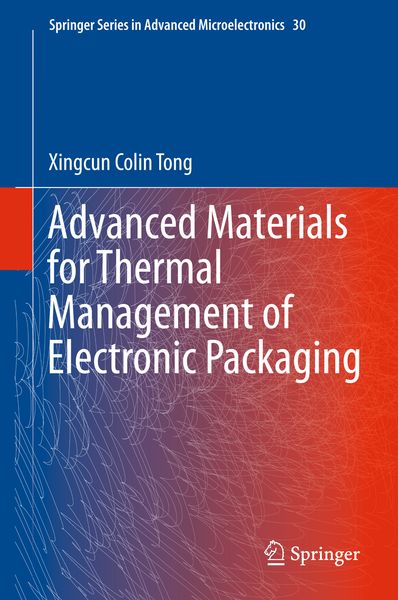
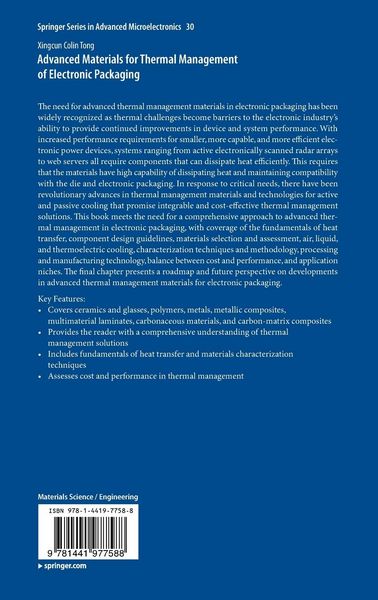
  • Produktbild: Advanced Materials for Thermal Management of Electronic Packaging
  • Produktbild: Advanced Materials for Thermal Management of Electronic Packaging
Band 30

Advanced Materials for Thermal Management of Electronic Packaging

Fr. 301.00

inkl. gesetzl. MwSt., Versandkostenfrei


Beschreibung

Produktdetails

Einband

Gebundene Ausgabe

Erscheinungsdatum

10.01.2011

Verlag

Springer Us

Seitenzahl

618

Maße (L/B/H)

24.1/16/3.8 cm

Gewicht

1115 g

Auflage

2011

Sprache

Englisch

ISBN

978-1-4419-7758-8

Beschreibung

Produktdetails

Einband

Gebundene Ausgabe

Erscheinungsdatum

10.01.2011

Verlag

Springer Us

Seitenzahl

618

Maße (L/B/H)

24.1/16/3.8 cm

Gewicht

1115 g

Auflage

2011

Sprache

Englisch

ISBN

978-1-4419-7758-8

Herstelleradresse

Springer-Verlag KG
Sachsenplatz 4-6
1201 Wien
AT

Email: GPSR Kontakt

Noch keine Bewertungen vorhanden

Verfassen Sie die erste Bewertung zu diesem Artikel

Helfen Sie anderen Kundinnen und Kunden durch Ihre Meinung.

Kundinnen und Kunden meinen

Bewertungen (0)

  • Produktbild: Advanced Materials for Thermal Management of Electronic Packaging
  • Produktbild: Advanced Materials for Thermal Management of Electronic Packaging
  • CH. 1. Thermal managing fundamentals and design guide in electronic packaging.- 1.1 Introduction.- 1.2 Thermal management challenges and common.- concerns.- 1.3 Fundamentals of heat transfer.- 1.4 Thermal management solutions.- 1.5 Design for advanced thermal management of electronic packaging.- 1.6 Materials selection for advanced thermal management.- 1.7 Environmental compliance of thermal managing materials.- CH. 2. Characterization methodology of thermal managing materials.- 2.1 Thermal properties and measurement techniques.- 2.2 Electrical properties and measurement techniques.- 2.3 Thermomechanical characterization.- 2.4 Analytical techniques for materials characterization.- 2.5 Surface finish and contact interface compatibility.- 2.6 Reliability analysis and environmental performance evaluation.- CH. 3. Electronic packaging materials and their thermal managements.- 3.1 Materials selection for electronic packaging.- 3.2 Ceramics and semiconductors.- 3.3 Electronic glasses.- 3.4 Polymers.- 3.5 Monolithic metals.- 3.6 Metallic composites.- 3.7 Multimaterial laminates.- 3.8 Printed Circuit Board (PCB) Materials.- 3.9 Thermal interface materials.- 3.10 Advanced thermally conductive materials.- CH. 4. THERMALLY conductive carbonaceous materials and carbon matrix composites.- 4.1 Introduction.- 4.2 Natural and industrial graphite.- 4.3 Pyrolytic graphite.- 4.4 Graphite/Carbon Foams.- 4.5 Thermally conductive carbon fibers.- 4.6 Diamond.- 4.7 Carbon Nanotubes.- 4.8 Carbon/carbon composites.- CH. 5. Thermally conductive polymer matrix composites.- 5.1 Introduction.- 5.2 Polymer matrix types.- 5.3 Reinforcements selection and its effect on thermal conductivity.- 5.4 General fabrication and manufacturing processes.- 5.5 Types and applications for thermal management.- CH. 6. High thermal conductivity metal matrix composites.- 6.1 Introduction.- 6.2 Processing of metal matrix composites.- 6.3 Aluminum matrix composites.- 6.4 Copper matrix composites.- 6.5 Other metal matrix composites.- CH. 7. Thermally conductive ceramic matrix composites.- 7.1 Introduction.- 7.2 Diamond-SiC composites.- 7.3 Carbon-SiC Composites.- 7.4 Reaction-Bonded SiC.- 7.5 Aluminum-toughened SiC.- 7.6 CNT/Ceramic- carbon nanotube composites.- CH. 8. Thermal interface materials in electronic packaging.- 8.1 Thermal contact conductance and requirement for thermal interface materials.- 8.2 Metallic thermal interface materials.- 8.3 Thermal grease.- 8.4 Thermally conductive elastomer materials.- 8.5 Phase change materials.- 8.6 Polymer solder hybrid materials.- 8.7 Fiber-reinforced thermal interface materials.- 8.8 Graphite based thermal interface material.- 8.9 Nanotechnology based thermal interface materials.- 8.10 Thermal interface materials selection.- CH. 9. Materials and design of advanced heat spreader and air cooling heat sink.- 9.1 Introduction.- 9.2 Spreading and constriction resistance.- 9.3 Type of heat spreaders and their materials selection.- 9.4 Air cooling heat sink.- 9.4.1 Heat sink design constraints and design parameters.- 9.5 Nanostructure heat sink and complex spreader sink.- CH. 10. Liquid cooling devices and materials selection.- 10.1 Introduction.- 10.2 Indirect single-phase liquid cooling.- 10.3 Direct immersion cooling.- 10.4 Spray cooling and jet impingement.- 10.5 Heat pipe cooling.- 10.6 Refrigeration cooling.- 10.7 High-flux cooling with phase-change heat transfer.- CH. 11. Thermoelectric cooling through thermoelectric materials.- 11.1 Introduction.- 11.2 Thermoelectric effects.- 11.3 Design and architecture of thermoelectric cooling devices.- 11.4 Thermoelectric materials and future development trends.- CH. 12. Development and applications of advanced thermal managing materials.- 12.1 Materials development routine and methodology.- 12.2 Smart composites and multifunctional materials for thermal management.- 12.3 Thermal managing materials with enhanced EMI shielding and absorbing performance.- 12.4 Applications.- 12.5 Future trends.-