Gutscheinbedingungen

*Gültig bis 20.07.2026 auf alle Bücher. Ausgeschlossen sind Zeitschriften, Prozentbücher und Abos | Einlösbar in allen Buchhandlungen von Orell Füssli, Barth Bücher, Buchladen Rapunzel, Papeterie Köhler, Schuler Orell Füssli, Stauffacher und ZAP unter Vorweisung des Gutscheins, auf www.orellfüssli.ch durch Eingabe des Gutscheincodes. Beim Service „eBooks verschenken“ und bei eBook-Käufen via eReader nicht einlösbar | Mindesteinkaufswert: Fr. 30.- | Nicht mit anderen Rabatten kumulierbar.

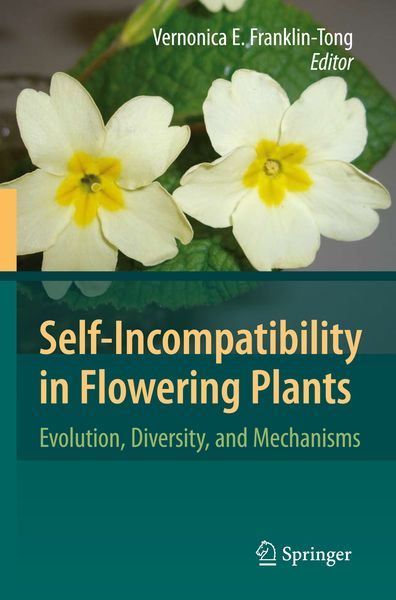
Produktbild: Self-Incompatibility in Flowering Plants

Self-Incompatibility in Flowering Plants Evolution, Diversity, and Mechanisms

Fr. 192.00

inkl. gesetzl. MwSt., Versandkostenfrei


Beschreibung

Produktdetails

Einband

Taschenbuch

Erscheinungsdatum

14.10.2010

Herausgeber

Vernonica E. Franklin-Tong

Verlag

Springer Berlin

Seitenzahl

313

Maße (L/B/H)

23.5/15.5/2 cm

Gewicht

540 g

Auflage

Softcover reprint of hardcover 1st ed. 2008

Sprache

Englisch

ISBN

978-3-642-08804-9

Beschreibung

Rezension

From the reviews:

"Self-Incompatibility in Flowering Plants serves as a reference to the latest advances in self-incompatibility (SI) research. … The book can serve varied audience - an ecologist, evolutionary biologist, molecular biologist or cell biologist. It would also help some-one trying to gain a peek into all of these different areas … . The book overall is a good summary of the recent advances in SI and can form an immediate reference on topics … ." (H.S. Arathi, Plant Science Bulletin, Vol. 55 (3), 2009)

“A book about progress in understanding self-incompatibility is a good idea. This topic is a classic, with importance for several different areas within biology, ranging from population and evolutionary genetics to cell biology … . This book, sensibly, contains chapters from experts in different aspects of self-incompatibility. … The book is … most suitable for researchers. Each chapter … provides a good account of the current information (often in great detail).” (Deborah Charlesworth, Annals of Botany, Vol. 105 (1), January, 2010)

“It covers an enormous breadth of studies on various aspects of self-incompatibility (SI). … The book is without a doubt highly welcomed because it nicely shows the state-of-the-art in a time of rapid progress in the field, caused mostly by an explosive development of molecular tools. … can be recommended to theoretical and population geneticists, evolutionary biologists, molecular geneticists, cell biologists as well as ecologists.” (Jindřich Chrtek, Folia Geobotanica, Vol. 44, November, 2009)

Produktdetails

Einband

Taschenbuch

Erscheinungsdatum

14.10.2010

Herausgeber

Vernonica E. Franklin-Tong

Verlag

Springer Berlin

Seitenzahl

313

Maße (L/B/H)

23.5/15.5/2 cm

Gewicht

540 g

Auflage

Softcover reprint of hardcover 1st ed. 2008

Sprache

Englisch

ISBN

978-3-642-08804-9

Herstelleradresse

Springer-Verlag KG
Sachsenplatz 4-6
1201 Wien
AT

Email: GPSR Kontakt

Noch keine Bewertungen vorhanden

Verfassen Sie die erste Bewertung zu diesem Artikel

Helfen Sie anderen Kundinnen und Kunden durch Ihre Meinung.

Kundinnen und Kunden meinen

Bewertungen (0)

  • Produktbild: Self-Incompatibility in Flowering Plants
  • Part I Evolution and Population Genetics of Self-Incompatibility

    1- New Insights on Heterostyly and Functionally Related Stylar Polymorphisms: Comparative Biology, Ecology and Genetics.
    Spencer Barrett and Joel Shore

    2- Genetic and environmental causes and evolutionary consequences of variations in self-fertility in self-incompatible species.
    Sara V. Good-Avila, Jorge I. Mena-Ali, Andrew G. Stephenson

    3- On the evolutionary modification of self-incompatibility: Trends and mechanisms
    Mario Vallejo-Marin and Marcy K. Uyenoyama

    4- Evolution and phylogeny of self-incompatibility systems in Angiosperms.
    Alexandra Allen and Simon J. Hiscock

    5- What Genealogies of S-alleles Tell Us
    Josh Kohn

    6- Self incompatibility and evolution of mating systems in the Brassicaceae.
    Sue Sherman-Broyles and June B. Nasrallah

    Part II Molecular and Cell Biology of Self-Incompatibility Systems

    7- Milestones identifying self-incompatibility genes in Brassica species - From old stories to new findings.
    Masao Watanabe, Go Suzuki, and Seiji Takayama

    8- Self’ pollen rejection through the intersection of two cellular pathways in the Brassicaceae: Self-incompatibility and the compatible pollen response.
    Marcus A. Samuel, Donna Yee, Katrina E. Haasen and Daphne R. Goring.

    9- Molecular Biology of S-RNase-based Self-Incompatibility
    Yijing Zhang and Yongbiao Xue

    10- Comparing models for S-RNase-based Self-incompatibility.
    Bruce McClure

    11- Self-incompatibility in Papaver rhoeas: progress in understanding mechanisms involved in regulating self-incompatibility in Papaver.
    Vernonica E. Franklin-Tong

    12- Molecular genetics of sporophytic self-incompatibility in Ipomoea, a memberof the Convolvulaceae.
    Yasuo Kowyama, Tohru Tsuchiya and Katsuyuki Kakeda

    13-Self-incompatibility in the grasses.
    Peter Langridge and Ute Baumann

    14- Heteromorphic self-incompatibility in Primula: 21st Century tools promise to unravel a classic 19th Century model system
    Andy McCubbin