Gutscheinbedingungen

*Gültig bis 05.07.2026 auf (fast) alles. Ausgeschlossen sind Smartboxen, Zeitschriften, Tickets, Lebensmittel, Gaming-Elektroartikel, Tinte/Toner, Gutscheine, Geschenkkarten, Blumen und Abos | Einlösbar in allen Buchhandlungen von Orell Füssli, Barth Bücher, Buchladen Rapunzel, Papeterie Köhler, Schuler Orell Füssli, Stauffacher und ZAP unter Vorweisung des Gutscheins, auf www.orellfüssli.ch durch Eingabe des Gutscheincodes. Beim Service „eBooks verschenken“ und bei eBook-Käufen via eReader nicht einlösbar | Mindesteinkaufswert: Fr. 30.- | Nicht mit anderen Rabatten kumulierbar.

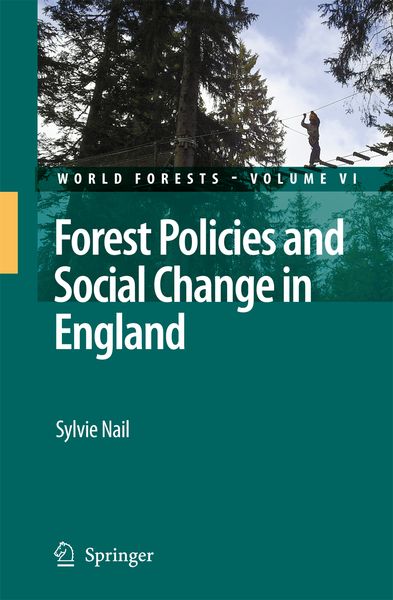
Produktbild: Forest Policies and Social Change in England
Band 6

Forest Policies and Social Change in England

Aus der Reihe World Forests

Fr. 192.00

inkl. gesetzl. MwSt., Versandkostenfrei


Beschreibung

Produktdetails

Einband

Taschenbuch

Erscheinungsdatum

28.10.2010

Verlag

Springer Netherland

Seitenzahl

329

Maße (L/B/H)

23.5/15.5/2 cm

Auflage

1. Auflage

Sprache

Englisch

ISBN

978-90-481-7856-8

Beschreibung

Rezension

From the reviews:"In this book the Author uses England as a case study to explore the relationships between forests, society and public perceptions … . Each of the chapters is well-referenced and provides the readers with ample background materials to explore in more depth any of the methods or studies discussed. … The intended audiences are the scientific and resource management communities, comprised of forest researchers, conservation biologists, and forest management professionals." (Francesco Ferrini, Advances in Horticultural Science, Vol. 23 (1), 2009)“This is the fourth volume in the Springer World Forests series, aimed at ‘advanced students’ and professionals interested in ‘interrelations between forests, society and the environment’. This reviewer is in both categories, the target … well hit. The author also suggests that England is a leader in urban and social forestry and that a wider international readership may find it useful. … this may be a good moment to read a book on the social background. Overall, this is comprehensive, substantial and balanced … .” (Alec Dauncey, International Forestry Review, September, 2010)

Produktdetails

Einband

Taschenbuch

Erscheinungsdatum

28.10.2010

Verlag

Springer Netherland

Seitenzahl

329

Maße (L/B/H)

23.5/15.5/2 cm

Auflage

1. Auflage

Sprache

Englisch

ISBN

978-90-481-7856-8

Herstelleradresse

Springer-Verlag KG
Sachsenplatz 4-6
1201 Wien
AT

Email: GPSR Kontakt

Noch keine Bewertungen vorhanden

Verfassen Sie die erste Bewertung zu diesem Artikel

Helfen Sie anderen Kundinnen und Kunden durch Ihre Meinung.

Kundinnen und Kunden meinen

Bewertungen (0)

  • Produktbild: Forest Policies and Social Change in England
  • Introduction.- 1. Woodlands as landscapes of power. 1.1 British woodlands, from nature to culture. 1.1.1 The natural woodland. 1.1.2 The beginnings of cultivation. 1.2 Woodlands as spaces of exclusion. 1.2.1 The Forest Law. 1.2.2 Hunting as an aristocratic privilege. 1.2.3 Reactions and controversy. 1.3 The economic balance between agriculture and forestry. 1.3.1 Woodlands as residual land use. 1.3.2 The uses of wood and timber. 1.3.3 The beginnings of plantations. 1.4 Wooden walls and hearts of oak. 1.4.1 Political identity. 1.4.2 The oak and the navy. 1.4.3 Hardwoods and social status. 1.4.4 The aesthetics of tree-planting.- PART 1: THE INSTITUTIONALISATION OF FORESTRY. 2. New relationships with the woodland. 2.1 Agriculture in crisis. 2.1.1 The end of the landed aristocracy. 2.1.2 Changing needs in woodland products. 2.2 The emergence of scientific forestry. 2.2.1 The disappearance of amateurism. 2.2.2 Towards a national forest policy. 2.3 Urbanisation and the rural idyll. 2.3.1 The growth of cities. 2.3.2 ‘Urban hells’ versus forest heritage. 2.4 Woodland and leisure for the working-class. 2.4.1 The public park movement. 2.4.2 Woodlands for recreation.- 3. The productivist dream and its aftermath. 3.1 The traumatic context of World War I. 3.1.1 The Acland Committee. 3.1.2 The Forestry Commission at its beginnings. 3.1.3 The first international congresses. 3.2 Post-Second World War priorities. 3.2.1 Post-War Forestry Acts. 3.2.2 Economic priorities. 3.3 Waking up. 3.3.1 Acknowledging failure. 3.3.2 Structural changes. 3.4 New labour and the England forestry strategy. 3.4.1 Changing the emphasis of forestry. 3.4.2 Devolution and decentralisation.- 4. Widening the scope. 4.1 Amenity. 4.1.1 Landscaping the plantations. 4.1.2 Providing for leisure needs. 4.2 Conservation. 4.2.1 The ecological value of forests. 4.2.2 Protecting ancient woodlands. 4.3 Sustainability: a new preoccupation inforestry. 4.3.1 International policies. 4.3.2 The European dimension. 4.3.3 Sustainability in British forests. 4.4 Integrating all forestry missions. 4.4.1 Governmental policies. 4.4.2 From the global to the local.- 5. Forestry comes to town. 5.1 The origin of the concept. 5.1.1 Genesis and definitions. 5.1.2 Coming of age. 5.2 Importing the concept. 5.2.1 Urban living in Europe. 5.2.2 Research and education. 5.3 Urban forestry and Britain. 5.3.1 Building up a toolkit. 5.3.2 From resistance to acceptance. 5.4 Governmental involvement. 5.4.1 Raising awareness. 5.4.2 Local Government. 5.4.3 The creation of the Community Forests.- PART 2: MULTI-PURPOSE FORESTRY: ANOTHER NAME FOR UTOPIA? 6. The economy of postproductivist forestry: the impossible challenge? 6.1 The meanings of ‘profitability’. 6.1.1 Market benefits. 6.1.2 Non-market benefits. 6.1.3 New mechanisms. 6.2. New outlets for forest products. 6.2.1 Certification. 6.2.2 Niche markets. 6.3 The markets of recreation and tourism. 6.3.1 The ‘leisure explosion’. 6.3.2 Woodland and tourism.- 7. Phoenix reborn: the role of forestry in regeneration. 7.1 Rural regeneration. 7.1.1 Objectives and incentives. 7.1.2 Resistances. 7.1.3 Assessment. 7.2 Industrial and urban regeneration. 7.2.1 Rationale. 7.2.2 Strategies. 7.2.3 Landfill sites. 7.2.4 Mines and industrial sites. 7.2.5 The case of the National Forest. 7.2.6 Assessment.- 8. The contribution of woodlands to the environment. 8.1 The benefits of trees. 8.1.1 Absorption. 8.1.2 Regulation. 8.1.3 Protection. 8.2 The ‘field of dreams’. 8.2.1 Trendy trees and the corporate image. 8.2.2 Tree planting versus climate change: myths and realities. 8.2.3 The limits of ‘green power’. 8.2.4 Caring and choosing. 8.3 Tree planting and environmental law. 8.3.1 Complying with regulations and expectations. 8.3.2 Has the bubble burst?- 9. Social forestry and the health and education