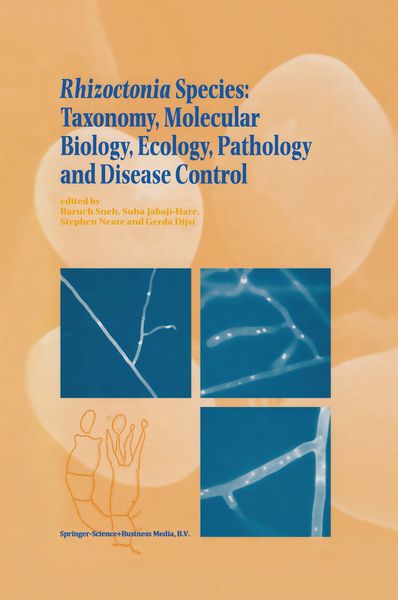
Rhizoctonia Species: Taxonomy, Molecular Biology, Ecology, Pathology and Disease Control
-
- Hardcover
- Taschenbuch ausgewählt
- eBook
-
Sprache:Englisch
Fr. 241.00
inkl. gesetzl. MwSt.,
Beschreibung
Produktdetails
Einband
Taschenbuch
Erscheinungsdatum
01.12.2010
Herausgeber
B. Sneh + weitereVerlag
Springer NetherlandSeitenzahl
578
Maße (L/B/H)
23.5/15.5/3.7 cm
Gewicht
970 g
Auflage
1. Auflage
Sprache
Englisch
ISBN
978-90-481-4597-3
Rhizoctonia Species: Taxonomy, Molecular Biology, Ecology, Pathology and Control , written by the world's most reputable experts in their respective fields of Rhizoctonia research, summarizes years of research in the various aspects of the ubiquitous complex group of soil-borne fungi belonging to the anamorph genus Rhizoctonia. Species of Rhizoctonia worldwide cause economically important diseases on most of the world's important plants such as cereals, potato, cotton, sugarbeet, vegetables, ornamentals and trees in nurseries.
The subject reviews covered in the book include classic as well as modern approaches to Rhizoctonia research in: Taxonomy and Evolution, Genetics and Pathogenicity, Plant-Rhizoctonia Interactions, Ecology, Population and Disease Dynamics, Disease Occurrence and Management in Various Crops, Cultural Control, Biological Control, Germplasm for Resistance, Chemical and Integrated Control Strategies. It aims to be the standard reference source book on Rhizoctonia for the next decade or more, just as Parmeter et al. (1970) has been in the past. It will be an important publication for Rhizoctonia investigators, plant pathologists, students, extension specialists, crop producers and companies dealing with plant disease control.
The subject reviews covered in the book include classic as well as modern approaches to Rhizoctonia research in: Taxonomy and Evolution, Genetics and Pathogenicity, Plant-Rhizoctonia Interactions, Ecology, Population and Disease Dynamics, Disease Occurrence and Management in Various Crops, Cultural Control, Biological Control, Germplasm for Resistance, Chemical and Integrated Control Strategies. It aims to be the standard reference source book on Rhizoctonia for the next decade or more, just as Parmeter et al. (1970) has been in the past. It will be an important publication for Rhizoctonia investigators, plant pathologists, students, extension specialists, crop producers and companies dealing with plant disease control.
Noch keine Bewertungen vorhanden
Verfassen Sie die erste Bewertung zu diesem Artikel
Helfen Sie anderen Kundinnen und Kunden durch Ihre Meinung.