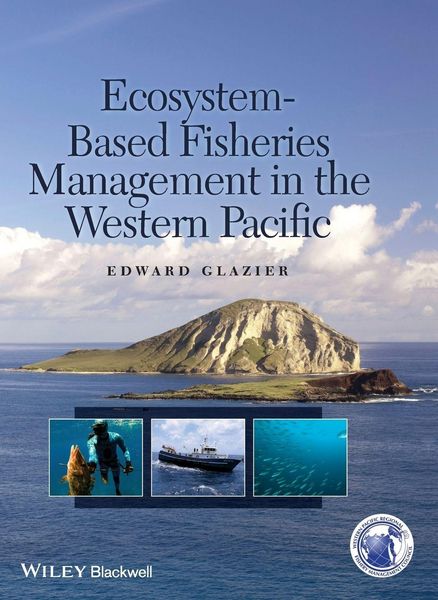
Produktbild: Ecosystem Based Fisheries Management in the Western Pacific

Ecosystem Based Fisheries Management in the Western Pacific

Aus der Reihe *Wiley-Blackwell

Fr. 329.00

inkl. gesetzl. MwSt., Versandkostenfrei


Beschreibung

Produktdetails

Einband

Gebundene Ausgabe

Erscheinungsdatum

26.05.2011

Verlag

John Wiley & Sons

Seitenzahl

312

Maße (L/B/H)

24.6/18.9/2.1 cm

Gewicht

838 g

Auflage

1. Auflage

Sprache

Englisch

ISBN

978-0-8138-2154-2

Beschreibung

Produktdetails

Einband

Gebundene Ausgabe

Erscheinungsdatum

26.05.2011

Verlag

John Wiley & Sons

Seitenzahl

312

Maße (L/B/H)

24.6/18.9/2.1 cm

Gewicht

838 g

Auflage

1. Auflage

Sprache

Englisch

ISBN

978-0-8138-2154-2

Herstelleradresse

Libri GmbH
Europaallee 1
36244 Bad Hersfeld
DE

Email: gpsr@libri.de

Noch keine Bewertungen vorhanden

Verfassen Sie die erste Bewertung zu diesem Artikel

Helfen Sie anderen Kundinnen und Kunden durch Ihre Meinung.

Kundinnen und Kunden meinen

Bewertungen (0)

Die Leseprobe wird geladen.
  • Produktbild: Ecosystem Based Fisheries Management in the Western Pacific
  • Foreword xi

    Preface xiii

    Acknowledgments xxvii

    List of Acronyms xxix

    Section 1: Ecosystem Science and Planning

    Chapter 1. Introduction to Ecosystem Science and Planning 3

    Background 3

    Workshop Goal and Objectives 4

    Organization 4

    Opening Discussion 5

    Ms Kitty M. Simonds 5

    Opening Presentations 6

    Steve Murawski 6

    Carl Walters 11

    Paul Dalzell 15

    Gerard DiNardo 20

    Chapter 2. Data Sources 23

    Fishery-Dependent Data 23

    Kurt Kawamoto 23

    Russell Ito 27

    Michael Quach 27

    Resource and Habitat Data 31

    Russell Brainard 32

    Frank Parrish 33

    Bud Antonelis 33

    Oceanographic Data 35

    Russell Moffitt 35

    Reconstructing Time-Series Catch Data 38

    Dirk Zeller 38

    References 41

    Chapter 3. Ecosystem Models and Modeling 43

    Lessons from Other Regions 43

    Neil Gribble 43

    Jerald Ault 47

    Carl Walters 50

    Villy Christensen 51

    Patrick Lehodey 53

    Jeff Polovina 54

    References 64

    Chapter 4. Ecosystem Indicators 65

    David Kirby 65

    Robert Wakeford 67

    Mike Fogarty 68

    David Witherell 70

    References 77

    Chapter 5. Working Groups 79

    Prelude to Breakout Sessions 79

    Data Needs Working Group Report 82

    Ecosystem Models Working Group Report 86

    Indicators Working Group Report 87

    References 91

    Chapter 6. Synthesis 93

    Summary Synthesis: Mike Orbach 93

    Summary Synthesis: David Fluharty 95

    Conclusions and Recommendations 97

    Reference 101

    Section 2: Ecosystem Social Science and Planning

    Chapter 7. Background on Ecosystem Social Science and Planning 105

    Rationale and Questions for an EAFM in the Western Pacific 105

    Purpose of the Social Science Workshop 107

    Organization of the Chapter 107

    Western Pacific Council Mission and Purview 107

    Brief Overview of the Fisheries 108

    A History of EAFM in the Pacific Islands 111

    Pacific Islands and Ecosystems 112

    The Antiquity of Ecosystem Concepts in the Region 113

    The Ahupua'a and Other Forms of EAFM in the Pacific Islands 114

    Formal Conceptual and Policy Background 118

    References 125

    Chapter 8. Introduction to Ecosystem Social Science and Planning 129

    Workshop Goal and Objectives 129

    Introductory Presentations 130

    Kitty Simonds 130

    Paul Dalzell 132

    Steven Murawski 136

    Samuel Pooley 137

    Michael Orbach 139

    Susan Hanna 142

    Reference 144

    Chapter 9. Ecosystem Social Science Models 145

    Jeffrey Johnson 145

    Richard Pollnac 148

    Lee Anderson 150

    Tim Hennessey 152

    Chapter 10. Social Science Data Sources 155

    Bryan P. Oles 155

    Susan Abbott-Jamieson 156

    Peter Wiley 158

    Island Context and Social Science Data Challenges and Solutions 160

    Paul Dalzell 160

    Craig Severance 162

    Paul Bartram 163

    Fini Aitaoto 166

    Judith R. Amesbury 168

    Jesse Rosario 170

    John Gourley 171

    Chapter 11. Social and Economic Indicators and Applications for EAFM in the Pacific 173

    Patrick Christie 173

    Leah Bunce 176

    Joeli Veitayaki 178

    Leanne Fernandes 181

    Leimana DaMate 182

    Chapter 12. Synthesis: Toward Incorporating Social Science in EAFM 185

    Drawing on Ancient Concepts and Practices 185

    Existing Institutions and Institutional Parameters 186

    Pursuing Ecosystem Goals and Objectives through Application of Social Science 188

    Research and Monitoring of Direct Ecosystem Relationships 188

    A Note on Social and Economic Indicators 191

    Research and Monitoring of Indirect Ecosystem Relationships and Effects 192

    Choices and Priorities 193

    Elements of Social Science Approaches to EAFM in the Western Pacific Region 194

    Addressing Variation with an Adaptive Approach 195

    Steps for Incorporating Social Science in EAFM in the Region 196

    References 198

    Chapter 13. Summary Conclusions 199

    Summary Points of Particular Relevance to Council FEP

    Objectives 199

    Concluding Discussion 201

    Section 3: The Ecosystem Policy Workshop

    Chapter 14. Introduction to Ecosystem Policy 205

    Background 205

    An Ecosystem Approach for the Western Pacific 206

    A Vast and Complex Region 206

    Addressing Uncertainties with an Adaptive and Incremental Strategy 207

    The Suitability of EAFM Policy in the Western Pacific 208

    Prelude to the Ecosystem Policy Workshop 209

    Organization of the Chapter 209

    References 210

    Chapter 15. Ecosystem Policy 211

    Objectives and Issues 211

    Overview of Findings 212

    References 212

    Chapter 16. Opening Presentations 213

    Kitty Simonds 213

    Samuel Pooley 213

    Michael Orbach 214

    David Fluharty 215

    Paul Dalzell 216

    David Kirby 219

    Frank Parrish 220

    Susan Hanna 222

    Stewart Allen 223

    Chapter 17. Policy for Indigenous Resource User Groups 227

    David Kirby 228

    John Gourley 228

    Judith Amesbury 230

    Fini Aitaoto 231

    Leimana DaMate 232

    Colin Kippen 234

    Paul Dalzell 235

    Chapter 18. Options for Community and Agency Interaction 241

    Paul Dalzell 242

    Jared Makaiau 243

    Reference 245

    Chapter 19. Conclusions and Recommendations 247

    Overview 247

    Potential Benefits of the EAFM 248

    Summary Recommendations for Maximizing the Benefits of the New Approach 249

    Biophysical Workshop Recommendations Reiterated 249

    Social Science Ecosystem Workshop Recommendations Reiterated 250

    Policy Workshop Recommendations for Enhancing Participation 251

    Policy Workshop Recommendations for Identifying Fiscal and Human Resources 252

    Conclusions and Final Recommendations 253

    References 256

    Appendix A: Speaker Biographies 257

    Appendix B: Select Demographic Tables 269

    Index 273