Gutscheinbedingungen

*Gültig bis 05.07.2026 auf (fast) alles. Ausgeschlossen sind Smartboxen, Zeitschriften, Tickets, Lebensmittel, Gaming-Elektroartikel, Tinte/Toner, Gutscheine, Geschenkkarten, Blumen und Abos | Einlösbar in allen Buchhandlungen von Orell Füssli, Barth Bücher, Buchladen Rapunzel, Papeterie Köhler, Schuler Orell Füssli, Stauffacher und ZAP unter Vorweisung des Gutscheins, auf www.orellfüssli.ch durch Eingabe des Gutscheincodes. Beim Service „eBooks verschenken“ und bei eBook-Käufen via eReader nicht einlösbar | Mindesteinkaufswert: Fr. 30.- | Nicht mit anderen Rabatten kumulierbar.

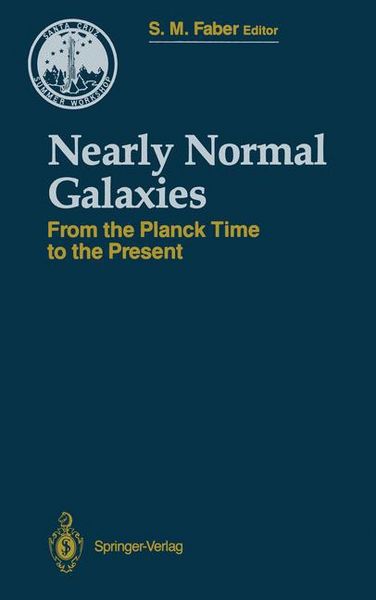
Produktbild: Nearly Normal Galaxies

Nearly Normal Galaxies From the Planck Time to the Present

Fr. 103.00

inkl. gesetzl. MwSt., Versandkostenfrei


Beschreibung

Produktdetails

Einband

Gebundene Ausgabe

Erscheinungsdatum

01.06.1987

Herausgeber

Sandra M. Faber

Verlag

Springer New York

Seitenzahl

464

Maße (L/B/H)

2.8/16/24 cm

Gewicht

1000 g

Auflage

1987.

Sprache

Englisch

ISBN

978-0-387-96521-5

Beschreibung

Produktdetails

Einband

Gebundene Ausgabe

Erscheinungsdatum

01.06.1987

Herausgeber

Sandra M. Faber

Verlag

Springer New York

Seitenzahl

464

Maße (L/B/H)

2.8/16/24 cm

Gewicht

1000 g

Auflage

1987.

Sprache

Englisch

ISBN

978-0-387-96521-5

Herstelleradresse

Springer Heidelberg
Tiergartenstr. 17
69121 Heidelberg
DE
buchhandel-buch@springer.com

Noch keine Bewertungen vorhanden

Verfassen Sie die erste Bewertung zu diesem Artikel

Helfen Sie anderen Kundinnen und Kunden durch Ihre Meinung.

Kundinnen und Kunden meinen

Bewertungen (0)

  • Produktbild: Nearly Normal Galaxies
  • Session 1 - Stellar Evolution in Galaxies.- The Stellar Population of the Nuclear Bulge.- Stellar Populations in Local Group Galaxies.- Star Formation in Colliding and Merging Galaxies.- Star Formation in Disks and Spheroids.- Star Formation in Disks: IRAS Results.- The Metallicity Distribution of the Extreme Halo Population.- Session 2 - Small Objects.- Systematic Properties of Extragalactic Globular Clusters.- Stellar Populations in Dwarf Spheroidals.- Blue Compact Dwarfs: Extreme Dwarf Irregular Galaxies.- Dwarf Galaxies and Dark Matter.- Session 3 - Galactic Structure and Dynamics: Observations.- Photometry and Mass Modeling of Spiral Galaxies.- The Stellar Population at the Galactic Center.- Hot Gas Evolution in Nearly Normal Elliptical Galaxies.- Hot Coronae Around Early Type Galaxies.- The Relative Masses of the Milky Way’s Components, the Ostriker-Caldwell Approach, and Differential Rotation Beyond the Solar Circle.- Mass Models for Disk and Halo Components in Spiral Galaxies.- Session 4 - Galactic Structure and Dynamics: Theory.- The Structure and Evolution of Disk Galaxies.- The Effects of Satellite Accretion on Disk Galaxies.- Self-Regulating Star Formation and Disk Structure.- Halo Response to Galaxy Formation.- Session 5 - Global Parameters of Galaxies.- Cores of Early-Type Galaxies: The Nature of Dwarf Spheroidal Galaxies.- Global Scaling Relations for Elliptical Galaxies and Implications for Formation.- Musings Concerning the Possible Significance of Surface Brightness Variations in Disk Galaxies.- The Luminosity Function: Dependence on Hubble Type and Environment.- Core Properties of Elliptical Galaxies.- Session 6 - Galaxies in Relation to Larger Structures.- Voids and Galaxies in Voids.- The Large Scale Distribution of Galaxy Types.- Coherent Orientation Effects of Galaxies and Clusters.- Galaxy Formation and Large Scale Structure.- Scenarios of Biased Galaxy Formation.- Biasing and Suppression of Galaxy Formation.- Session 7 - Distant Galaxies.- Stellar Populations in Distant Galaxies.- Evolution of Cluster Galaxies Since z = 1.- Galaxies at Very High Redshifts (z > 1).- Dynamics of Galaxies at Large Redshift: Prospects for the Future.- Session 8 - Dark Matter.- Dark Matter in Binary Galaxies and Small Groups.- Dark Matter in Dwarf Galaxies.- Dark Matter in Early-Type Galaxies.- What is the Cosmological Density Parameter ?0?.- Fundamental Physics and Dark Matter.- Session 9 - Galaxies Before Recombination.- Inflationary Universe Models and the Formation of Structure.- Formation and Evolution of Cosmic Strings.- The Quark-Hadron Phase Transition and Primordial Nucleosynthesis.- Testing Cosmic Fluctuation Spectra.- Session 10 - Galaxies After Recombination.- Models of Protogalaxy Collapse and Dissipation.- Unstable Dark Matter and Galaxy Formation.- Halos and Angular Momentum Generation.- Cosmic Strings and the Formation of Galaxies and Clusters of Galaxies.- Large Scale Drift and Peculiar Acceleration as Cosmological Tests.- Conference Summary.