Zitat
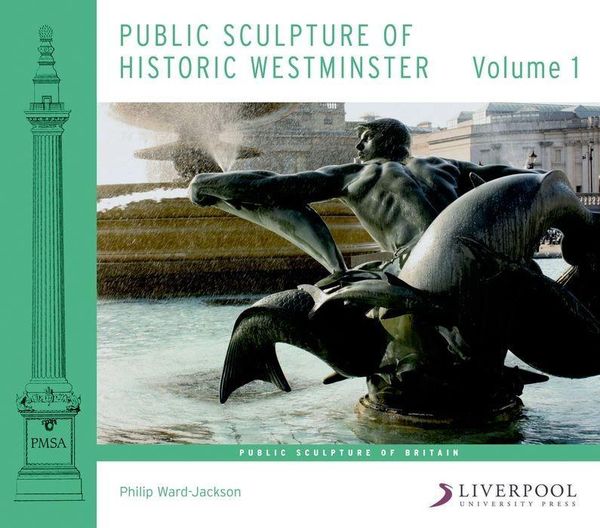
This latest Addition to the Public Sculpture of Britain series, published by the Public Monuments and Sculpture Association, is both a tour de force and a labour of love. At the risk of yielding to metropolitan arrogance, it is tempting to regard Public Sculpture of Historic Westminster Volume 1 as the most important volume so far. Few tourists or visitors would dispute this. Such landmarks as the Shaftesbury Memorial, the Queen Victoria Memorial, the Monument to Lord Nelson and the moveable feast of the 'empty' Trafalgar Square plinth are all addressed here. Numerically, Westminster has accounted for a comfortable majority of commemorative public monuments erected in London between 1800 and 1920. Given the five hundred-page compass of this book, a second volume is required for the complementary sculptures integral to Westminster architecture, including its eponymous Palace and Abbey. The format corresponds to that of previous volumes in the series, with an introduction followed in this instance by 235 case-study entries, the most important of which are of article length. Each features one or more black-and-white illustrations, mostly photographed by the author himself and which are of the quality befitting the (now sadly devalued) Conway Library at the Courtauld Institute of Art. Where individuals are commemorated, they are preceded with brief biographies. These acts of compression deserve commendation, as it is easy to be banal or unhelpfully tendentious in such an exercise, an endearing characteristic of Arthur Byron's London Statues (1981). This reviewer noted just one historical blemish; Lord Curzon, commemorated in Bertram Mackennal's pensive bronze statue (1930) outside the statesman's longtime residence in Carlton House Terrace, died a disappointed man not because of his removal as Foreign Secretary, but because Stanley Baldwin had unexpectedly beaten him to 10 Downing Street. In his art-historical analysis, Ward-Jackson misses little, however, drawing on his formidable sculptural databank, eye and, occasionally, wit. He identifies, for example, the consonance between David Backhouse's Memorial to animals in war (2004) at Brook Gate, Park Lane, and Antonio Canova's tomb of Maria Christina in the Augustinerkirche, Vienna (1798-1805): 'Backhouse's design does seem to acknowledge that the whole thing is a bit of an indulgence' by its 'hyperbolic redolence' of these 'great "weepies" of historical tomb sculpture'. Ward-Jackson's entries repeatedly remind us of how the powerful and privileged have long exerted undue influence on the outcomes of prestigious public sculpture. The lobbying and jobbery on behalf of the colossal equestrian statue of the Duke of Wellington (1846; now Round Hill, Aldershot) by that shallow and showy talent Matthew Cotes Wyatt, conducted by the Duke of Rutland and Colonel Frederick Trench, was paralleled some 125 years later by the Churchill family acting on behalf of Oscar Nemon. Perhaps fortunately, Nemon's rival Ivor Roberts-Jones won the limited competition, and Winston Churchill's ensuing statue in Parliament Square (1973) enjoys public affection and regard. Ward-Jackson justly sees Roberts-Jones as 'one of the country's more interesting sculptors', although he remains academically underrated. Ward-Jackson's observations of betterknown London landmarks may not necessarily be new, but they are consistently perceptive. John Bell's Crimean War Memorial on Pall Mall (1857-62) presages the First World War memorials in Westminster in three important aspects: 'the austere monolith, the sombre figures placed against it, and the literal representation of weapons of war'. In saying this, Ward-Jackson tactfully modifies Sue Malvern's claim that George Frampton's much later Edith Cavell Memorial (1915-20; St Martin's Place) is a pioneer in its modernist severity. Both sculptures were castigated for their starkness when they were unveiled, but in both instances critical opinion has been forced to catch up. Ward-Jackson is consistently sensitive to context and site specificity. While Barbara Hepworth is a more highly regarded sculptor than Elisabeth Frink, her Winged figure has never looked at home on the wall of the John Lewis building (1963; Oxford Circus), whereas Frink's Horse and rider (1975; Dover Street) presents an 'interesting' contrast in its psychological calmness to the busy Piccadilly locale (beside a Starbucks branch) which only 'reinforces its message'. Ward-Jackson approvingly quotes Adam White on the relocation of Hamo Thornycroft's landmark memorial to General Gordon (1885-88) from Trafalgar Square to an 'arid architectural backdrop' on Victoria Embankment, which 'makes a mockery of Thornycroft's painstaking consideration for the original surroundings'. While 'Londoners did not always get the best or most interesting' public sculpture, what they did get constitutes a fascinating ensemble, as this book compellingly conveys. The author appears to have become at least a partial convert to the so-called 'Constance Fund' sculpture, funded by a privately financed trust aimed at the beautification of London's parks and whose 'airy, smiling and cheery' fruits include the Diana drinking fountain by Estcourt J. Clack (1954; Green Park) and the Joy of life fountain by T.B. Huxley-Jones (1963; Hyde Park). The intellectually snobbish response to these works by the Royal Fine Arts Commission was nicely characterised by Charles Wheeler as 'leftish' and 'modernist'. While the Commission feared such works adopted a fashion 'that might soon lose its favour', they have never done so for a public that probably prefers them to Henry Moore's Locking piece (1963-64; Vauxhall Bridge) and certainly to Norman Foster & Partners' chillingly neo-modernist National Police Memorial (2005; Admiralty Citadel). From the 'commemorative vacuum' of the immediate post-War years to the 'saturation zone' and 'stress areas' of today, the public sculpture of Westminster has been fascinatingly unpredictable and will, as Ward-Jackson hopes, remain so. Will there be a place for representative works by, say, Jake and Dinos Chapman or, a politer option, Rachel Whiteread? More poignant than their likely offerings were the jumbled boxes and banners of the late antiwar protester Brian Haw, dating from the first years of his occupation of Parliament Square (2001-06; reconstructed by Mark Wallinger, 2007). Haw's installation (though he certainly did not dignify it with that term) may perhaps form as enduring a memory as the Goddess of democracy in Beijing's Tiananmen Square (1989), only in this case a very English one in its homespun ferocity. -- Mark Stocker The Burlington Magazine, cliv 201210 This latest Addition to the Public Sculpture of Britain series, published by the Public Monuments and Sculpture Association, is both a tour de force and a labour of love. At the risk of yielding to metropolitan arrogance, it is tempting to regard Public Sculpture of Historic Westminster Volume 1 as the most important volume so far. Few tourists or visitors would dispute this. The Burlington Magazine, cliv 201210 Philip Ward-Jackson's Public Sculpture of Historic Westminster Vol. 1 (Liverpool University Press, 500pp, GBP30) is the long awaited companion to his book on the City. As with the earlier book, it tells the stories of all the statues and public art in the area, giving detailed accounts of the commissioning of the statues, the selection of the sculptor and how they were funded. The process was often very long-winded and sometimes accompanied by controversy, all of which is related in detail here. This is a great book to dip into and an essential reference book. Friendsnews, Museum of London, Issue 46, Winter -- Peter Matthews Friendsnews, Museum of London, Issue 46, Winter 2012 This is a great book to dip into and an essential reference book. -- Peter Matthews Friendsnews, Museum of London, Issue 46, Winter 2012 This is a great book to dip into and an essential reference book. -- Peter Matthews Friendsnews, Museum of London, Issue 46, Winter 2012 Philip Ward-Jackson's Public Sculpture of Historic Westminster Vol. 1 (Liverpool University Press, 500pp, GBP30) is the long awaited companion to his book on the City. As with the earlier book, it tells the stories of all the statues and public art in the area, giving detailed accounts of the commissioning of the statues, the selection of the sculptor and how they were funded. The process was often very long-winded and sometimes accompanied by controversy, all of which is related in detail here. This is a great book to dip into and an essential reference book. -- Peter Matthews Friendsnews, Museum of London, Issue 46, Winter 2012 This is the fourteenth volume in the series titled the Public Sculpture of Britain put together by the Public Monuments and Sculpture Association (PMSA). The history of urban sculpture and commemorative art is one of those hybrid subjects which crosses several disciplines: a specific variant of art history combined often with urban history or, more specifically, the study of public art which is merely a sub-discipline of the study of sculpture. How art might fit in with cities and their institutions is a question few in England seem to ask. Judging by the short bibliography for urban sculpture outside this volume, attitudes and academic fashions remain remarkably narrow: overviews which manage to address nineteenth-century 'statuemania' as well as the post-World War II renaissance of public sculpture remain rare outside architectural guides like the Buildings of England or in-depth survey like volumes of the Survey of London. Detached attitudes are equally uncommon - perhaps urban sculpture is seen as too specialist, too ephemeral or just an adjunct to 'proper' monographs on artists, but even the not inconsiderable bibliography for a major artist like Elizabeth Frink proved to be useless when one of her most substantial public works was threatened a few years ago with potential removal from a regency square in Worthing in Sussex. Her vast heads, the Desert Quartet, like an echo of Easter Island, were actually an integral element of planning permission, so when their removal was threatened they were, unusually, given listed status less than 30 years after erection - they are clearly part of urban history even if attached to a structure. Public art audits like this PMSA volume can help to rectify and inform local and national contexts to the vast population of sites, yet librarians, conservation officers and local authorities lack the tools needed to assess the extraordinary diversity which has largely appeared since Henry Moore. Of course, only a minority can or will reach the status of Moore or Frink, so how does one begin to weigh these values beyond the gallery? How can one judge what has been put up with the intention to enhance the built environment? This volume is the latest in the PMSA series which tries to fill this largely urban gap. Volumes combine a scholarly familiarity and objectivity without presuming that public art history ended in 1914 or 1945 or can only be found indoors: here the time-lag in academic attention is brought up to the present so Nelson Mandela can sit on the page along with Disraeli or Lord Kitchener. The PMSA series and the same author have already addressed the City of London, other sections of the capital and a dozen other cities or regions in England and Scotland. An online audit is also being rolled out, but apart from English Heritage and a few enlightened funding bodies, such attempts at definition (unlike indoor art) receive little support. These volumes thus create the vital context in what can only be described as an urban audit absence: no governmental or national body exists in Britain whose remit is to define or control this ubiquitous topic, so apart from minor charities like the PMSA, founded in 1991, the only way this absence can be rectified is by asking your local authority whether they can make available a public art audit simply defining online these public assets. Such access is strangely rare, which only goes to prove the conspicuous inconspicuousness of the invisible public monument as defined in the 1930s by Robert Musil. When monuments are not ignored, the fickleness of taste is very evident in this volume: the Office of Works were 'unable to get anybody to agree to take responsibility' for a prominent fountain by a prominent sculptor situated on Park Lane which was taken down in 1948 as 'an awful example of the depths to which design, technique and taste had sunk in 1874-5'. This would never have happened inside a museum or gallery, so Ward-Jackson is right to observe the 'failure of government to come up with a coherent plan to control the surge in statues'. The sheer variety (if not serendipitous anarchy) shown by the modern surge in public art starts to become evident through these volumes: there is still almost no awareness or apparent interest in creating a national picture of this aspect of contemporary art, yet commentators persist in calling for some weird form of art police to get rid of or shunt around 'unsuitable' pieces, and keep uttering a stimulating variety of patronizing attitudes not unlike those of 1948 towards the Victorians. The author concludes this fascinating census by stating that 'despite the best efforts of officialdom to control our environment, it is to be hoped that the future of public art will remain unpredictable'. -- Ian Leith Urban History, Volume 40/1 2013 This latest addition to the Public Sculpture of Britain series, published by the Public Monuments and Sculpture Association, is both a tour de force and a labour of love. At the risk of yielding to metropolitan arrogance, it is tempting to regard Public Sculpture of Historic Westminster Volume 1 as the most important volume so far. Few tourists or visitors would dispute this. Such landmarks as the Shaftesbury Memorial, the Queen Victoria Memorial, the Monument to Lord Nelson and the moveable feast of the 'empty' Trafalgar Square plinth are all addressed here. Numerically, Westminster has accounted for a comfortable majority of commemorative public monuments erected in London between 1800 and 1920. Given the fivehundred-page compass of this book, a second volume is required for the complementary sculptures integral to Westminster architecture, including its eponymous Palace and Abbey. The format corresponds to that of previous volumes in the series, with an introduction followed in this instance by 235 case-study entries, the most important of which are of article length. Each features one or more black-and-white illustrations, mostly photographed by the author himself and which are of the quality befitting the (now sadly devalued) Conway Library at the Courtauld Institute of Art. Where individuals are commemorated, they are preceded with brief biographies. These acts of compression deserve commendation, as it is easy to be banal or unhelpfully tendentious in such an exercise, an endearing characteristic of Arthur Byron's London Statues (1981). This reviewer noted just one historical blemish; Lord Curzon, commemorated in Bertram Mackennal's pensive bronze statue (1930) outside the statesman's longtime residence in Carlton House Terrace, died a disappointed man not because of his removal as Foreign Secretary, but because Stanley Baldwin had unexpectedly beaten him to 10 Downing Street. In his art-historical analysis, Ward Jackson misses little, however, drawing on his formidable sculptural databank, eye and, occasionally, wit. He identifies, for example, the consonance between David Backhouse's Memorial to animals in war (2004) at Brook Gate, Park Lane, and Antonio Canova's tomb of Maria Christina in the Augustinerkirche, Vienna (1798-1805): 'Backhouse's design does seem to acknowledge that the whole thing is a bit of an indulgence' by its 'hyperbolic redolence' of these 'great "weepies" of historical tomb sculpture'. Ward-Jackson's entries repeatedly remind us of how the powerful and privileged have long exerted undue influence on the outcomes of prestigious public sculpture. The lobbying and jobbery on behalf of the colossal equestrian statue of the Duke of Wellington (1846; now Round Hill, Aldershot) by that shallow and showy talent Matthew Cotes Wyatt, conducted by the Duke of Rutland and Colonel Frederick Trench, was paralleled some 125 years later by the Churchill family acting on behalf of Oscar Nemon. Perhaps fortunately, Nemon's rival Ivor Roberts-Jones won the limited competition, and Winston Churchill's ensuing statue in Parliament Square (1973) enjoys public affection and regard. Ward-Jackson justly sees Roberts-Jones as 'one of the country's more interesting sculptors', although he remains academically underrated. Ward-Jackson's observations of better known London landmarks may not necessarily be new, but they are consistently perceptive. John Bell's Crime an War Memorial on Pall Mall (1857-62) presages the First World War memorials in Westminster in three important aspects: 'the austere monolith, the sombre figures placed against it, and the literal representation of weapons of war'. In saying this, Ward-Jackson tactfully modifies Sue Malvern's claim that George Frampton's much later Edith Cavell Memorial (1915-20; St Martin's Place) is a pioneer in its modernist severity. Both sculptures were castigated for their starkness when they were unveiled, but in both instances critical opinion has been forced to catch up. Ward-Jackson is consistently sensitive to context and site specificity. While Barbara Hepworth is a more highly regarded sculptor than Elisabeth Frink, her Winged figure has never looked at home on the wall of the John Lewis building (1963; Oxford Circus), whereas Frink's Horse and rider (1975; Dover Street) presents an 'interesting' contrast in its psychological calmness to the busy Piccadilly locale (beside a Starbucks branch) which only 'reinforces its message'. Ward-Jackson approvingly quotes Adam White on the relocation of Hamo Thornycroft's landmark memorial to General Gordon (1885-88) from Trafalgar Square to an 'arid architectural backdrop' on Victoria Embankment, which 'makes a mockery of Thornycroft's painstaking consideration for the original surroundings'. While 'Londoners did not always get the best or most interesting' public sculpture, what they did get constitutes a fascinating ensemble, as this book compellingly conveys. The author appears to have become at least a partial convert to the so-called 'Constance Fund' sculpture, funded by a privately financed trust aimed at the beautification of London's parks and whose 'airy, smiling and cheery' fruits include the Diana drinking fountain by Estcourt J. Clack (1954; Green Park) and the Joy of life fountain by T.E. Huxley-Jones (1963; Hyde Park). The intellectually snobbish response to these works by the Royal Fine Arts Commission was nicely characterised by Charles Wheeler as 'leftish' and 'modernist'. While the Commission feared such works adopted a fashion 'that might soon lose its favour', they have never done so for a public that probably prefers them to Henry Moore's Locking piece (1963-64; Vauxhall Bridge) and certainly to Norman Foster & Partners' chillingly neo-modernist National Police Memorial (2005; Admiralty Citadel). From the 'commemorative vacuum' of the immediate post-War years to the 'saturation zone' and 'stress areas' of today, the public sculpture of Westminster has been fascinatingly unpredictable and will, as Ward-Jackson hopes, remain so. Will there be a place for representative works by, say, Jake and Dinos Chapman or, a politer option, Rachel Whiteread? More poignant than their likely offerings were the jumbled boxes and banners of the late antiwar protester Brian Haw, dating from the first years of his occupation of Parliament Square (2001-06; reconstructed by Mark Wallinger, 2007). Haw's installation (though he certainly did not dignify it with that term) may perhaps form as enduring a memory as the Goddess of democracy in Beijing's Tiananmen Square (1989), only in this case a very English one in its homespun ferocity. CLIV October 2012 -- Mark Stocker The Burlington Magazine, 201210 This latest addition to the Public Sculpture of Britain series, published by the Public Monuments and Sculpture Association, is both a tour de force and a labour of love. At the risk of yielding to metropolitan arrogance, it is tempting to regard Public Sculpture of Historic Westminster Volume 1 as the most important volume so far. The Burlington Magazine, CLIV 201210