Gutscheinbedingungen

*Gültig bis 05.07.2026 auf (fast) alles. Ausgeschlossen sind Smartboxen, Zeitschriften, Tickets, Lebensmittel, Gaming-Elektroartikel, Tinte/Toner, Gutscheine, Geschenkkarten, Blumen und Abos | Einlösbar in allen Buchhandlungen von Orell Füssli, Barth Bücher, Buchladen Rapunzel, Papeterie Köhler, Schuler Orell Füssli, Stauffacher und ZAP unter Vorweisung des Gutscheins, auf www.orellfüssli.ch durch Eingabe des Gutscheincodes. Beim Service „eBooks verschenken“ und bei eBook-Käufen via eReader nicht einlösbar | Mindesteinkaufswert: Fr. 30.- | Nicht mit anderen Rabatten kumulierbar.

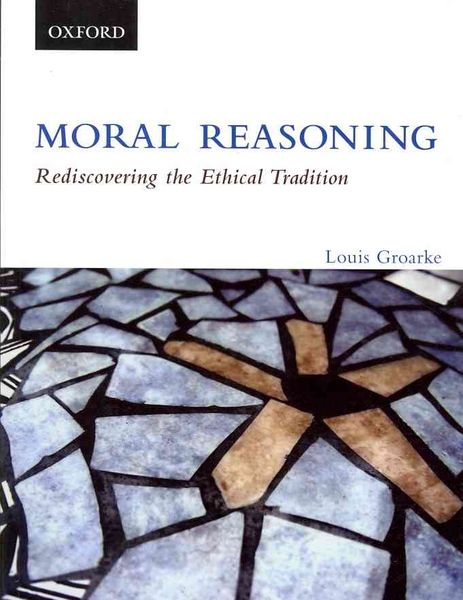
Produktbild: Moral Reasoning

Moral Reasoning Rediscovering the Ethical Tradition

Fr. 111.00

inkl. gesetzl. MwSt., Versandkostenfrei


Beschreibung

Produktdetails

Einband

Taschenbuch

Erscheinungsdatum

09.10.2011

Verlag

Oxford University Press

Seitenzahl

480

Maße (L/B/H)

22.6/17.5/1.8 cm

Gewicht

703 g

Sprache

Englisch

ISBN

978-0-19-542561-1

Beschreibung

Produktdetails

Einband

Taschenbuch

Erscheinungsdatum

09.10.2011

Verlag

Oxford University Press

Seitenzahl

480

Maße (L/B/H)

22.6/17.5/1.8 cm

Gewicht

703 g

Sprache

Englisch

ISBN

978-0-19-542561-1

Herstelleradresse

Libri GmbH
Europaallee 1
36244 Bad Hersfeld
DE

Email: gpsr@libri.de

Noch keine Bewertungen vorhanden

Verfassen Sie die erste Bewertung zu diesem Artikel

Helfen Sie anderen Kundinnen und Kunden durch Ihre Meinung.

Kundinnen und Kunden meinen

Bewertungen (0)

  • Produktbild: Moral Reasoning
    • Preface

    • Acknowledgements

    • 1: Introduction

    • What Is Ethics?

    • To Whom Is This Book Addressed?

    • This Book Presents an Alternative Account of Moral Philosophy

    • This Book Is an Account of Ethics in the Spirit of Aristotle

    • What Is the Purpose of Ethics?

    • Questions for Study and Review

    • 2: Moral Epistemology: We Can Reason about Morality

    • What is Moral Epistemology?

    • How Do We Reason

    • Challenges to Moral Epistemology

    • The 'Is-Ought' Fallacy

    • Why Should I be Moral? A Self-Interested Challenge

    • Moral Philosophy Requires Objectivity and Subjectivity

    • Questions for Study and Review

    • Suggestions for Further Reading

    • 3: The Early Tradition: From Confucius to Jesus and Beyond

    • Introduction

    • Master Kong (Confucius)

    • Heraclitus

    • Democritus

    • Diogenes the Cynic

    • Epicurus

    • Epictetus

    • Pyrrho

    • Protagoras

    • Jesus

    • Questions for Study and Review

    • Suggestions for Further Reading

    • 4: Socrates and Plato

    • Introduction

    • Socratic Teachings

    • Plato's Teachings

    • Questions for Study and Review

    • Suggestions for Further Reading

    • 5: Understanding Moral Theory: Aristotle

    • Introduction

    • On Happiness (Eudaimonia)

    • On Virtue (Arete)

    • On Practical Reason

    • On Means and Ends

    • On External Goods

    • On the Good Life

    • On Three Kinds of Life

    • On Virtue as Habit

    • On The Golden Mean

    • On Morality and Choice

    • On Two Moral Faults

    • On Six Character-Styles

    • On Five Kinds of Intelligence

    • On Two Minor Intellectual Virtues

    • On Moral Induction and Moral Deduction

    • (More) On First Moral Principles

    • On Slaves and Friends

    • Questions for Study and Review

    • Suggestions for Further Reading

    • 6: Understanding Moral Theory: Thomas Aquinas

    • Introduction

    • On Religion and Morality: The Euthyphro Problem

    • On Virtue: Theological and Cardinal

    • On the Cardinal Virtues

    • On the Definition of Law

    • On the Four Kinds of Law

    • Of the Principle of Double Effect

    • On the Internal and External Structure of Voluntary Action

    • On the Three Moral Criteria of a Good Action

    • A Thomistic Account of Ignorance

    • Questions for Study and Review

    • Suggestions for Further Reading

    • 7: The Contractarians: Thomas Hobbes, John Locke, Jean-Jacques Rousseau, and Karl Marx

    • Introduction

    • Ancient Contractarianism: The Anonymous Iamblichi

    • Thomas Hobbes and the Beginnings of Modern Contractarianism

    • John Locke: Two-Tiered Contactarianism

    • Jean-Jacques Rousseau and The State of Nature

    • Karl Marx: Rousseau's Legacy

    • Hypothetical Agreement

    • Contractarian Virtue

    • Questions for Study and Review

    • Suggestions for Futher Reading

    • 8: Kant: Duty and Moral Law

    • Introduction

    • Kant and the Enlightenment

    • On Reformation Theology

    • On Duty

    • On Morality Derives from Pure, A Priori Reason

    • On Happiness

    • On Good Will

    • On Imperatives: Categorical and Hypothetical

    • The Categorical Imperative: Five Universal Formulations

    • On Autonomy

    • Criticisms of Kant's Deontological Approach

    • Questions for Study and Review

    • Suggestions for Further Reading

    • 9: Utilitarianism and Liberalism: Jeremy Bentham and John Stuart Mill

    • Introduction

    • Jeremy Bentham: Original Utilitarianism

    • John Stuart Mill: Moral and Political Philosophy

    • Biography

    • Questions for Study and Review

    • Suggestions for Further Reading

    • 10: Contemporary Moral Theory

    • Anti-Theory: A Paradigm Shift in Ethics

    • Kierkegaard's Transcendental Subjectivism: Becoming Yourself

    • Personalism: Persons as the Most Fundamental Moral Reality

    • A Feminist Ethics of Care: Nel Noddings

    • Human Rights: Looking at Duty Backwards, Punishment

    • Divine Command Morality

    • Ecumenical Global Ethics: Agreements between Religions

    • Environmental Ethics: Beyond Deep Ecology

    • Contemporary Contractarianism: Rational Agreement

    • Epilogue

    • Questions for Study and Review

    • Suggestions for Further Reading

    • Glossary

    • Notes

    • Index