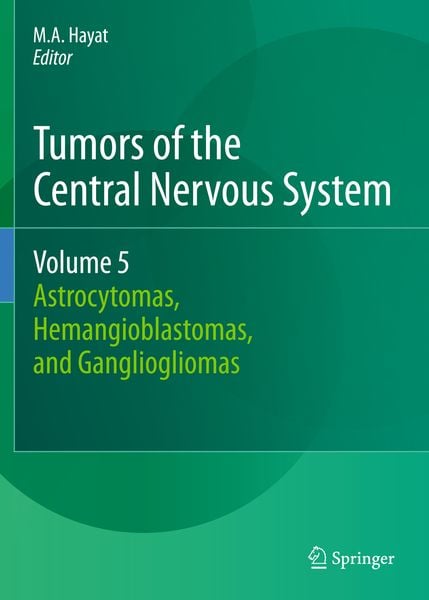
Tumors of the Central Nervous System, Volume 5 Astrocytomas, Hemangioblastomas, and Gangliogliomas
-
- Hardcover ausgewählt
- Taschenbuch
- eBook
-
Sprache:Englisch
Fr. 192.00
inkl. gesetzl. MwSt.,
Beschreibung
Produktdetails
Einband
Gebundene Ausgabe
Erscheinungsdatum
28.09.2011
Herausgeber
HayatVerlag
Springer NetherlandSeitenzahl
290
Maße (L/B/H)
26.6/19.8/2.2 cm
Gewicht
800 g
Auflage
1. Auflage
Sprache
Englisch
ISBN
978-94-007-2018-3
The most recent developments in diagnostic and therapeutic aspects of Gliomas (glioblastoma) in the brain are presented. The importance of personalized medicine and clinical validation for targeted therapy are discussed. The identification of various types of biomarkers (determined by molecular genetics) is included, along with their advantages and limitations as markers in tumor detection and diagnosis. The identification and validation of brain cancer (glioblastoma) genes are discussed. The role of cancer stem cells in the initiation and persistence of malignant gliomas is explained; response of glioblastoma cancer stem cells to various growth factors, such as epidermal growth factor receptor kinase inhibitor, is explained. The use of surgical resection, chemotherapy (e.g., temozolomide), immunotherapy, and radiation therapy for glioblastoma patients is included. Biological impediments for chemotherapy and radiotherapy for malignant glioblastoma are pointed out. Standard (established) as well as newer imaging modalities (proton magnetic resonance spectroscopy) are discussed. Also included are proton magnetic resonance spectroscopy in intracranial gliomas, and the use of proton magnetic spectroscopic imaging in determining the infiltration zone in gliomas. The role of molecular signaling in the CNS cancer development is explained, including cell death signaling in glioblastoma multiforme.
The most recent developments in diagnostic and therapeutic aspects of Gliomas (glioblastoma) in the brain are presented. The importance of personalized medicine and clinical validation for targeted therapy are discussed. The identification of various types of biomarkers (determined by molecular genetics) is included, along with their advantages and limitations as markers in tumor detection and diagnosis. The identification and validation of brain cancer (glioblastoma) genes are discussed. The role of cancer stemcells in the initiation and persistence of malignant gliomas is explained; response of glioblastoma cancer stem cells to various growth factors, such as epidermal growth factor receptor kinase inhibitor, is explained. The use of surgical resection, chemotherapy (e.g., temozolomide), immunotherapy, and radiation therapy for glioblastoma patients is included. Biological impediments for chemotherapy and radiotherapy for malignant glioblastoma are pointed out. Standard (established) as well as newer imaging modalities (proton magnetic resonance spectroscopy) are discussed. Also included are proton magnetic resonance spectroscopy in intracranial gliomas, and the use of proton magnetic spectroscopic imaging in determining the infiltration zone in gliomas. The role of molecular signaling in the CNS cancer development is explained, including cell death signaling in glioblastoma multiforme.
Noch keine Bewertungen vorhanden
Verfassen Sie die erste Bewertung zu diesem Artikel
Helfen Sie anderen Kundinnen und Kunden durch Ihre Meinung.