Gutscheinbedingungen

*Gültig bis 20.07.2026 auf alle Bücher. Ausgeschlossen sind Zeitschriften, Prozentbücher und Abos | Einlösbar in allen Buchhandlungen von Orell Füssli, Barth Bücher, Buchladen Rapunzel, Papeterie Köhler, Schuler Orell Füssli, Stauffacher und ZAP unter Vorweisung des Gutscheins, auf www.orellfüssli.ch durch Eingabe des Gutscheincodes. Beim Service „eBooks verschenken“ und bei eBook-Käufen via eReader nicht einlösbar | Mindesteinkaufswert: Fr. 30.- | Nicht mit anderen Rabatten kumulierbar.

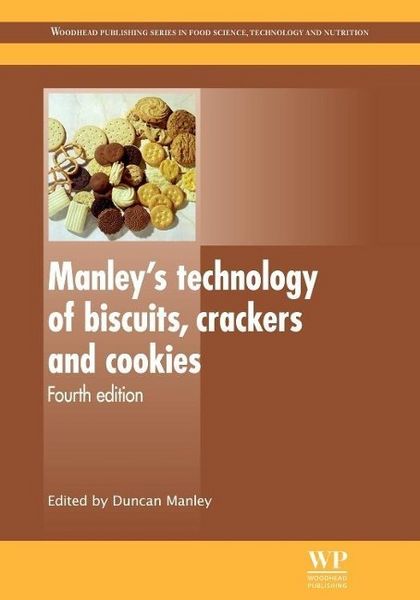
Produktbild: Manley, D: Manley's Technology of Biscuits, Crackers and Coo

Manley, D: Manley's Technology of Biscuits, Crackers and Coo

Fr. 352.00

inkl. gesetzl. MwSt., Versandkostenfrei


Beschreibung

Produktdetails

Einband

Gebundene Ausgabe

Erscheinungsdatum

01.09.2011

Herausgeber

Duncan Manley

Verlag

Elsevier Science & Technology

Seitenzahl

632

Maße (L/B/H)

25.2/17.7/4.3 cm

Gewicht

1190 g

Auflage

4. Auflage

Sprache

Englisch

ISBN

978-1-84569-770-9

Beschreibung

Rezension

"Clear, authoritative and practical - you can find the answer to most problems in it." --Mike Webber, The Biscuit, Cake, Chocolate and Confectionery Association, UK on the third edition

Produktdetails

Einband

Gebundene Ausgabe

Erscheinungsdatum

01.09.2011

Herausgeber

Duncan Manley

Verlag

Elsevier Science & Technology

Seitenzahl

632

Maße (L/B/H)

25.2/17.7/4.3 cm

Gewicht

1190 g

Auflage

4. Auflage

Sprache

Englisch

ISBN

978-1-84569-770-9

Noch keine Bewertungen vorhanden

Verfassen Sie die erste Bewertung zu diesem Artikel

Helfen Sie anderen Kundinnen und Kunden durch Ihre Meinung.

Kundinnen und Kunden meinen

Bewertungen (0)

  • Produktbild: Manley, D: Manley's Technology of Biscuits, Crackers and Coo
  • Chapter 1: Setting the scene: A history and the position of biscuits

    Abstract:

    1.1 Introduction

    1.2 The beginnings of biscuit manufacturing

    1.3 Ingredients and formulation development

    1.4 Engineering

    Part I: Management of technology in biscuit manufacture

    Chapter 2: The role of the technical department in biscuit manufacture

    Abstract:

    2.1 Introduction

    2.2 The requirements of the technical (or technology) department

    2.3 Selection of staff for the technical department

    2.4 Facilities for the technical department

    2.5 Liaison with other technical establishments

    2.6 Support for purchasing

    2.7 Support for training

    2.8 Management of technical developments

    Chapter 3: Quality management systems and hazard analysis critical control point (HACCP) in biscuit manufacture

    Abstract:

    3.1 Quality management

    3.2 Management of product safety

    Chapter 4: Quality control and good manufacturing practice (GMP) in the biscuit industry

    Abstract:

    4.1 Principles and management

    4.2 Quality control tasks for finished product inspection

    4.3 Quality control tasks for ingredient and packaging materials

    4.4 Good manufacturing practice (GMP)

    4.5 Hygiene surveys

    Chapter 5: Process and efficiency control in biscuit manufacture

    Abstract:

    5.1 Process control and efficiency

    5.2 Process audit

    5.3 Process control checks and records for plants with no continuous monitoring sensors

    5.4 Making process control measurements

    5.5 Action procedures as a result of product measurements

    5.6 Instrumentation for monitoring

    5.7 Efficiency and integrated plant control

    5.8 Outline of the instrumentation that is available

    5.9 Troubleshooting

    5.10 Energy efficiency

    Chapter 6: Product development in the biscuit industry

    Abstract:

    6.1 Introduction

    6.2 Product development

    6.3 Facilities for process and product development

    6.4 Assessing products

    6.5 Establishing the product specification

    6.6 Management of product development

    Chapter 7: Sustainability in the biscuit industry

    Abstract:

    7.1 Introduction

    7.2 Key drivers for sustainability in the biscuit industry

    7.3 Carbon emissions and energy use

    7.4 Reducing water use

    7.5 Reducing waste

    7.6 Packaging

    7.7 Other options for improving sustainability

    Part II: Materials and ingredients for biscuit manufacture

    Chapter 8: Choosing materials for biscuit production

    Abstract:

    8.1 Introduction

    8.2 Important technical aspects

    8.3 Important commercial aspects

    8.4 Programme for the meeting with a supplier

    Chapter 9: Wheat flour and vital wheat gluten as biscuit ingredients

    Abstract:

    9.1 Introduction

    9.2 Flour from the viewpoint of the miller

    9.3 Flour from the viewpoint of the biscuit manufacturer

    9.4 Vital wheat gluten

    Chapter 10: Meals, grits, flours and starches (other than wheat)

    Abstract:

    10.1 Introduction

    10.2 Cereal-based materials

    10.3 Non-cereal flours and starches

    Chapter 11: Sugars and syrups as biscuit ingredients

    Abstract:

    11.1 Introduction

    11.2 Common sugar, sucrose

    11.3 Syrups

    11.4 Sugars and syrups from starches - glucose

    11.5 Non-diastatic malt extract

    11.6 Maillard reaction

    11.7 Polyols

    Chapter 12: Fats and oils as biscuit ingredients

    Abstract:

    12.1 Introduction

    12.2 The role of fat in biscuits

    12.3 The chemistry and physical properties of fats

    12.4 Quality and handling issues of fats

    12.5 Key characteristics of fats for biscuits

    12.6 Quality control of fats

    12.7 General specification requirements for oi