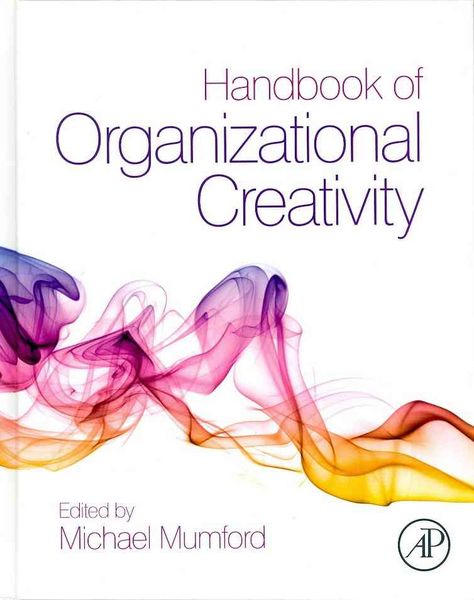
Handbook of Organizational Creativity
-
- Hardcover ausgewählt
- Taschenbuch
- eBook
-
Sprache:Englisch
Fr. 189.00
inkl. gesetzl. MwSt.,
Beschreibung
Produktdetails
Einband
Gebundene Ausgabe
Erscheinungsdatum
17.08.2011
Herausgeber
Michael D. MumfordVerlag
Academic PressSeitenzahl
754
Maße (L/B/H)
28.7/22.4/4.5 cm
Gewicht
2289 g
Sprache
Englisch
ISBN
978-0-12-374714-3
Handbook of Organizational Creativity is designed to explain creativity and innovation in organizations. This handbook contains 28 chapters dedicated to particularly complex phenomena, all written by leading experts in the field of organizational creativity. The format of the book follows the multi-level structure of creativity in organizations where creativity takes place at the individual level, the group level, and the organizational level. Beyond just theoretical frameworks, applications and interventions are also emphasized. This topic will be of particular interest to managers of creative personnel, and managers that see the potential benefit of creativity to their organizations.
Noch keine Bewertungen vorhanden
Verfassen Sie die erste Bewertung zu diesem Artikel
Helfen Sie anderen Kundinnen und Kunden durch Ihre Meinung.