Gutscheinbedingungen

*Gültig bis 05.07.2026 auf (fast) alles. Ausgeschlossen sind Smartboxen, Zeitschriften, Tickets, Lebensmittel, Gaming-Elektroartikel, Tinte/Toner, Gutscheine, Geschenkkarten, Blumen und Abos | Einlösbar in allen Buchhandlungen von Orell Füssli, Barth Bücher, Buchladen Rapunzel, Papeterie Köhler, Schuler Orell Füssli, Stauffacher und ZAP unter Vorweisung des Gutscheins, auf www.orellfüssli.ch durch Eingabe des Gutscheincodes. Beim Service „eBooks verschenken“ und bei eBook-Käufen via eReader nicht einlösbar | Mindesteinkaufswert: Fr. 30.- | Nicht mit anderen Rabatten kumulierbar.

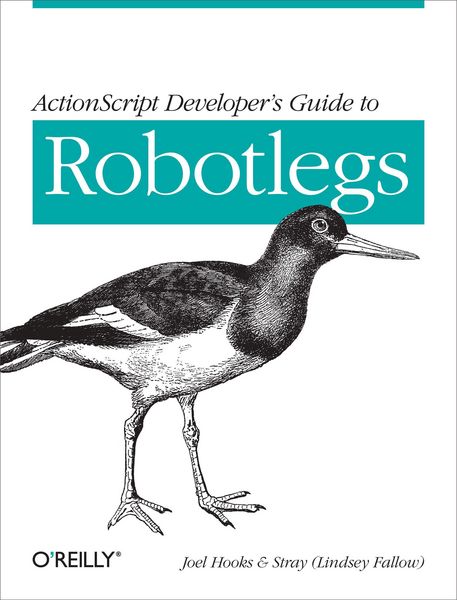
Produktbild: ActionScript Developer's Guide to Robotlegs

ActionScript Developer's Guide to Robotlegs Building Flexible Rich Internet Applications

Fr. 31.90

inkl. gesetzl. MwSt., Versandkostenfrei


Beschreibung

Produktdetails

Einband

Taschenbuch

Erscheinungsdatum

13.09.2011

Verlag

O'Reilly

Seitenzahl

136

Maße (L/B/H)

23.6/17.9/1.2 cm

Gewicht

252 g

Sprache

Englisch

ISBN

978-1-4493-0890-2

Beschreibung

Produktdetails

Einband

Taschenbuch

Erscheinungsdatum

13.09.2011

Verlag

O'Reilly

Seitenzahl

136

Maße (L/B/H)

23.6/17.9/1.2 cm

Gewicht

252 g

Sprache

Englisch

ISBN

978-1-4493-0890-2

Herstelleradresse

Libri GmbH
Europaallee 1
36244 Bad Hersfeld
DE

Email: gpsr@libri.de

Noch keine Bewertungen vorhanden

Verfassen Sie die erste Bewertung zu diesem Artikel

Helfen Sie anderen Kundinnen und Kunden durch Ihre Meinung.

Kundinnen und Kunden meinen

Bewertungen (0)

Die Leseprobe wird geladen.
  • Produktbild: ActionScript Developer's Guide to Robotlegs
  • Preface; Robotlegs: Something a little bit special; Who this book is for; Who this book is not for; Conventions used in this book; Using code examples; Safari® Books Online; How to contact us; Acknowledgments; Chapter 1: Robotlegs is a lightweight framework for ActionScript 3; 1.1 What does Robotlegs actually do?; 1.2 Do you need a framework at all?; 1.3 Less boilerplate code is a good thing...; Chapter 2: The Robotlegs dream...; 2.1 80% of the problems can be solved with 20% of the API; 2.2 Coding for Robotlegs shouldn't tie you to the framework; 2.3 Robotlegs aims to enable and not dictate; 2.4 Most AS3 applications benefit from the MVCS approach; 2.5 Testing, testing! (We test, and we make it easy for you to test); 2.6 Some final things every Robotlegs cadet should know; Chapter 3: Anatomy of a Robotlegs application; 3.1 Joel's Personal Kanban; 3.2 Lindz's Mosaic Design Tool; 3.3 How a Robotlegs application gets things done; 3.4 Getting to grips with Robotlegs architecture; 3.5 User stories as implemented in Robotlegs; 3.6 All of this is possible because of the Robotlegs Injector; Chapter 4: Automated Dependency Injection; 4.1 So, what exactly is Automated Dependency Injection?; 4.2 You already use Dependency Injection; 4.3 There are different ways to inject dependencies; 4.4 Automated DI gets around the need to 'pass the parcel', but keeps code flexible; 4.5 How does Robotlegs Injection work?; Chapter 5: The Robotlegs context in action; 5.1 Provide the context with a root-view; 5.2 Ask it to run startup()-immediately or when you're ready; 5.3 Use startup() to provide your injection rules, map your mediators to views and commands to events; 5.4 Shutting down a Context; 5.5 Now you have some Context; Chapter 6: The CommandMap in action; 6.1 A Command is a concise single-purpose controller object; 6.2 Commands are triggered by events; 6.3 Commands can be any class with an 'execute' method; 6.4 Commands should do their thing and then die; 6.5 Commands rely on their injections to be useful; 6.6 Commands know about the injector, command map, mediator map and context view; 6.7 Commands can also dispatch events; 6.8 Great command names pay dividends; 6.9 Use helper classes for shared logic; 6.10 Detain and release when you need your command to hang around; Chapter 7: Models and services: How are they different?; 7.1 Models and Services usually extend Actor; 7.2 They don't listen, they only talk; 7.3 Use your API through a Command; 7.4 Distinguishing Models from Services; 7.5 Classes that don't dispatch events to the shared event dispatcher don't need to extend Actor; 7.6 Configuring services; 7.7 Working with non-Actor models and services (including third party code); 7.8 Model design tips for Robotlegs; 7.9 Managing the relationships between models and services; Chapter 8: Connecting views with Mediators; 8.1 Introducing the MediatorMap; 8.2 Mediating your view components; 8.3 Why can't Mediators be injected into other objects?; 8.4 Working with complex composite views; 8.5 Using the same mediator with more than one view; 8.6 A good Mediator is just a mailman; Chapter 9: Working with Robotlegs: Rich Examples; 9.1 Feature implementation walk-through: Mosaic Tool; 9.2 Feature implementation walk-through: Personal Kanban App; 9.3 Wait, I want more examples!; Chapter 10: Testing your Robotlegs application; 10.1 Your test provides the injections; 10.2 Testing models; 10.3 Testing services; 10.4 Testing commands; 10.5 Testing mediators; Chapter 11: Power-ups; 11.1 Bootstraps can break up fat contexts; 11.2 The ContextEvents help keep control; 11.3 Tag methods with [PostConstruct] to run them after injection is complete; 11.4 Use Signals between complex views and their mediators; 11.5 Modular and multiple-context Robotlegs; 11.6 Extend Robotlegs with utilities and add-ons; 11.7 ViewMap-injection for your views; 11.8 Mediator map performance; Troubleshooting tips; Problem: Injection doesn't occur; Problem: Things work for a while and then mysteriously stop; Problem: Event dispatch does not work as expected; Problem: Mediator isn't running onRegister; Problem: Handlers in the mediator are running repeatedly; Error: Injector missing rule for X; Warning: Duplicate mapping in the injector; Error: Call to a possibly undefined method X; Where to get more help; Swiftsuspenders: The power behind the Robotlegs Injector; What does Swiftsuspenders actually do?; We think limited metadata is a good thing; Colophon;