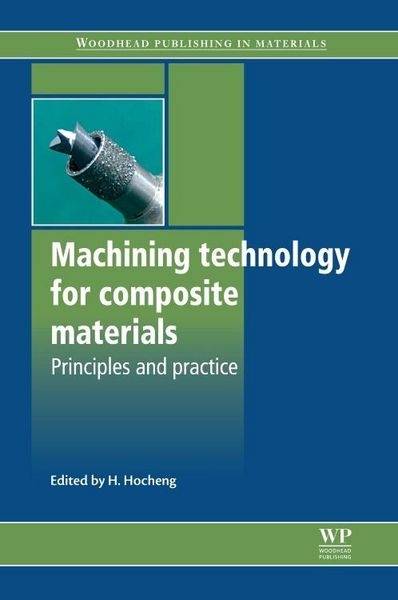
Machining Technology For Compo Principles and Practice
Aus der Reihe
Woodhead Publishing Series in
Fr. 292.00
inkl. gesetzl. MwSt.,
Beschreibung
Produktdetails
Einband
Gebundene Ausgabe
Erscheinungsdatum
01.12.2011
Herausgeber
H. HochengVerlag
Woodhead PubSeitenzahl
488
Maße (L/B/H)
23.4/15.6/2.7 cm
Gewicht
890 g
Sprache
Englisch
ISBN
978-0-85709-030-0
Machining processes play an important role in the manufacture of a wide variety of components. While the processes required for metal components are well-established, they cannot always be applied to composite materials, which instead require new and innovative techniques. Machining technology for composite materials provides an extensive overview and analysis of both traditional and non-traditional methods of machining for different composite materials.The traditional methods of turning, drilling and grinding are discussed in part one, which also contains chapters analysing cutting forces, tool wear and surface quality. Part two covers non-traditional methods for machining composite materials, including electrical discharge and laser machining, among others. Finally, part three contains chapters that deal with special topics in machining processes for composite materials, such as cryogenic machining and processes for wood-based composites.With its renowned editor and distinguished team of international contributors, Machining technology for composite materials is an essential reference particularly for process designers and tool and production engineers in the field of composite manufacturing, but also for all those involved in the fabrication and assembly of composite structures, including the aerospace, marine, civil and leisure industry sectors.
Noch keine Bewertungen vorhanden
Verfassen Sie die erste Bewertung zu diesem Artikel
Helfen Sie anderen Kundinnen und Kunden durch Ihre Meinung.