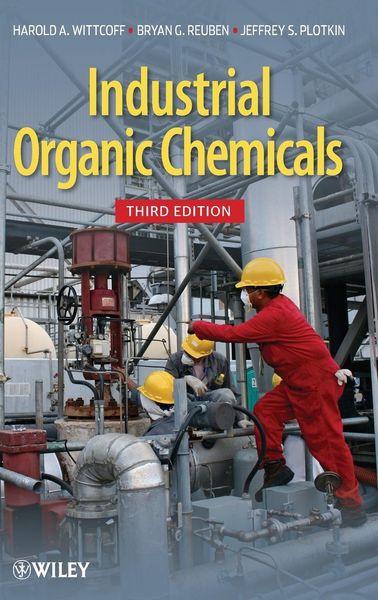
Industrial Organic Chemicals
-
Sprache:Englisch
-
Verlag:John Wiley & Sons Inc
Fr. 223.00
inkl. gesetzl. MwSt.,
Beschreibung
Produktdetails
Einband
Gebundene Ausgabe
Erscheinungsdatum
11.12.2012
Verlag
John Wiley & Sons IncSeitenzahl
840
Maße (L/B/H)
24/16.1/4.9 cm
Gewicht
1417 g
Auflage
3rd edition
Sprache
Englisch
ISBN
978-0-470-53743-5
An essential introduction to the organic chemicals industry--in the context of globalization, advances in technology, and environmental concerns
Providing 95 percent of the 500 billion pounds of organic chemicals produced in the world, the petroleum and natural gas industries are responsible for products that ensure our present quality of life. Products as diverse as gasoline, plastics, detergents, fibers, pesticides, tires, lipstick, shampoo, and sunscreens are based on seven raw materials derived from petroleum and natural gas. In an updated and expanded Third Edition, Industrial Organic Chemicals examines why each of these chemical building blocks--ethylene, propylene, C4 olefins (butenes and butadiene), benzene toluene, the xylenes, and methane--is preferred over another in the context of an environmental issue or manufacturing process, as well as their individual chemistry, derivatives, method of manufacture, uses, and economic significance.
The new edition details the seismic shifts in the world's chemistry industry away from the United States, Western Europe and Japan, transforming the Middle East and Asia-Pacific region, especially China, into major players. The book also details:
* The impact of globalization on the patterns of worldwide transportation of chemicals, including methods of shipping chemicals
* The technological advances in the area of polymerization and catalysis, including catalyst design and single-site catalysts
* Chemicals for electronics, with much new material on conducting polymers, photovoltaic cells, and related materials
* The discovery of vast reserves of shale gas and shale oil, altering long-term predictions of resource depletion in the United States and other countries
* Commercial and market aspects of the chemical industry, with coverage of emerging new companies such as INEOS, Formosa Plastics, LyondellBasell, and SABIC
With expanded coverage on the vital role of green chemistry, renewables, chemicals and fuels on issues of sustainability and climate change, Industrial Organic Chemicals offers an unparalleled examination of what is at the heart of this multi-billion dollar industry, how globalization has transformed it, and its ever growing role in preserving the Earth and its resources.
Providing 95 percent of the 500 billion pounds of organic chemicals produced in the world, the petroleum and natural gas industries are responsible for products that ensure our present quality of life. Products as diverse as gasoline, plastics, detergents, fibers, pesticides, tires, lipstick, shampoo, and sunscreens are based on seven raw materials derived from petroleum and natural gas. In an updated and expanded Third Edition, Industrial Organic Chemicals examines why each of these chemical building blocks--ethylene, propylene, C4 olefins (butenes and butadiene), benzene toluene, the xylenes, and methane--is preferred over another in the context of an environmental issue or manufacturing process, as well as their individual chemistry, derivatives, method of manufacture, uses, and economic significance.
The new edition details the seismic shifts in the world's chemistry industry away from the United States, Western Europe and Japan, transforming the Middle East and Asia-Pacific region, especially China, into major players. The book also details:
* The impact of globalization on the patterns of worldwide transportation of chemicals, including methods of shipping chemicals
* The technological advances in the area of polymerization and catalysis, including catalyst design and single-site catalysts
* Chemicals for electronics, with much new material on conducting polymers, photovoltaic cells, and related materials
* The discovery of vast reserves of shale gas and shale oil, altering long-term predictions of resource depletion in the United States and other countries
* Commercial and market aspects of the chemical industry, with coverage of emerging new companies such as INEOS, Formosa Plastics, LyondellBasell, and SABIC
With expanded coverage on the vital role of green chemistry, renewables, chemicals and fuels on issues of sustainability and climate change, Industrial Organic Chemicals offers an unparalleled examination of what is at the heart of this multi-billion dollar industry, how globalization has transformed it, and its ever growing role in preserving the Earth and its resources.
Kundinnen und Kunden meinen
Verfassen Sie die erste Bewertung zu diesem Artikel
Helfen Sie anderen Kund*innen durch Ihre Meinung