Produktbild: Creating Safer Organisations

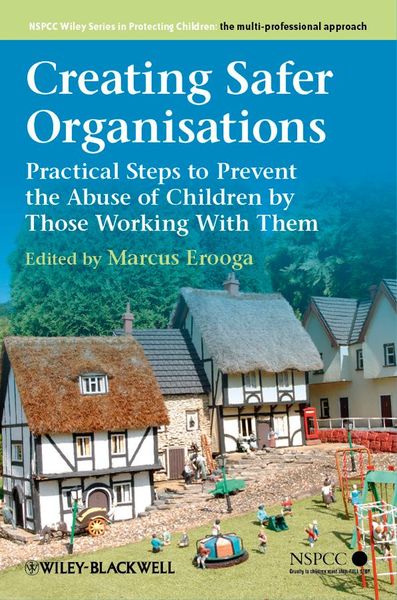
Creating Safer Organisations Practical Steps to Prevent the Abuse of Children by Those Working With Them

Fr. 153.00

inkl. gesetzl. MwSt., Versandkostenfrei


Beschreibung

Produktdetails

Einband

Gebundene Ausgabe

Erscheinungsdatum

30.04.2012

Herausgeber

Erooga Marcus

Verlag

John Wiley & Sons

Seitenzahl

208

Maße (L/B/H)

22.9/15.5/1.5 cm

Gewicht

408 g

Auflage

1. Auflage

Sprache

Englisch

ISBN

978-1-119-97269-3

Beschreibung

Rezension

"Creating Safer Organisations is a wonderfully hands-on, functional guide that not only raises awareness of the issue of organisational abuse but provides an empirical framework to the media-focused discourse on this topic." ( NOTA News , March 2013)

"This is where organisations should head immediately for guidance on safer recruitment, organisational planning and the safe use of space... Creating Safer Organisations offers a firm, accessible and engagine platform on which further work can build." ( Journal of Sexual Aggression, March 2013)

"It provides an overview of the literature and research in each area it covers and weaves the outcomes together to create a holistic view of how children are either protected or put at risk by current practices. However, the real strength and value of the book to professionals is the evidence-based way it provides practical advice on creating safer organisations." ( Child and Adolescent Mental Health , 1 September 2013)

Produktdetails

Einband

Gebundene Ausgabe

Erscheinungsdatum

30.04.2012

Herausgeber

Erooga Marcus

Verlag

John Wiley & Sons

Seitenzahl

208

Maße (L/B/H)

22.9/15.5/1.5 cm

Gewicht

408 g

Auflage

1. Auflage

Sprache

Englisch

ISBN

978-1-119-97269-3

Kundinnen und Kunden meinen

0 Bewertungen

Informationen zu Bewertungen

Zur Abgabe einer Bewertung ist eine Anmeldung im Konto notwendig. Die Authentizität der Bewertungen wird von uns nicht überprüft. Wir behalten uns vor, Bewertungstexte, die unseren Richtlinien widersprechen, entsprechend zu kürzen oder zu löschen.

Die Bewertungen sind nach Format, Anzahl Sterne und Datum sortiert.

Verfassen Sie die erste Bewertung zu diesem Artikel

Helfen Sie anderen Kund*innen durch Ihre Meinung

Kundinnen und Kunden meinen

0 Bewertungen filtern

Die Leseprobe wird geladen.
  • Produktbild: Creating Safer Organisations
  • About the Contributors xi

    Preface xv

    Creating Safer Organisations - An Overview 1
    Marcus Erooga

    1 Understanding and Responding to People Who Sexually Abuse Children Whilst Employed In Positions of Trust: An Overview of the Relevant Literature - Part One: Offenders 7
    Marcus Erooga

    People Who Sexually Abuse Children in Organisational Positions of Trust - a definition 7

    How Prevalent are Sexual Offences Committed Against Children in Professional or Workplace Settings? 8

    Characteristics and Behaviour of People Who Sexually Abuse Children in Organisational Positions of Trust 8

    Findings From a Study of Residents in a Specialist Treatment Setting Who had Sexually Abused Children Whilst in Organisational Positions of Trust 9

    Grooming 11

    Use of the Internet 14

    Motivations to Sexually Abuse 15

    Thought Processes and Cognitive Distortions 18

    Female Sexual Abusers 20

    Conclusions 22

    2 Understanding and Responding to People Who Sexually Abuse Children Whilst Employed In Positions of Trust: An Overview of the Relevant Literature - Part Two: Organisations 27
    Marcus Erooga

    Characteristics of 'Vulnerable Organisations' - the Importance of the Organisational Environment in Preventing Abuse 27

    Corruption of Care 28

    Models of Authority 33

    Characteristics of Sexual Abuse in Specific Organisational Settings 34

    Motivations to Abuse 38

    Developing Preventative Strategies 39

    3 Policy and Legislation - Changing Responses to an Emerging Problem 44
    Kerry Cleary and Marcus Erooga

    General Organisational Legal Responsibilities 45

    Child care Focussed Policy and Legislation 45

    Department for Children, Schools and Families List 99 47

    Protection of Children Act (PoCA) List 48

    Disqualification Orders and Regulated Positions (replaced by the Safeguarding Vulnerable Groups Act, 2006) 48

    Sex Offender Register Notification Arrangements 49

    Criminal Records Checks 49

    Shortcomings of These Arrangements 50

    The Safeguarding Vulnerable Groups Act, 2006 (England, Wales and Northern Ireland) 50

    The Protection of Vulnerable Groups (Scotland) Act 2007 53

    Strengths and Limitations of Legislation and Regulation 54

    What Do Developments in Legislation and Regulation Indicate About Desirable Cultures for Organisational Safeguarding by Government Organisations and Individuals? 58

    A Model 59

    How Should Legislation and Regulation Support the Development of Safer Organisational Cultures? 60

    4 Sexual Abuse of Children By People In Organisations: What Offenders Can Teach Us About Protection 63
    Marcus Erooga, Debra Allnock and Paula Telford

    Introduction 63

    Methodology 64

    The Sample 65

    Findings 68

    Organisational Facilitating Factors 68

    Individual Facilitating Factors 73

    Discussion 79

    Situational Crime Prevention as a Response 81

    Conclusion and Recommendations 82

    5 Manipulation Styles of Abusers Who Work With Children 85
    Joe Sullivan and Ethel Quayle

    Introduction 85

    Demographic Profile and Offending Patterns of Professional Perpetrators 86

    Psychometric Comparisons with Intra- and Extra-Familial Child Abusers 86

    Rationale for a Qualitative Methodology 87

    Motivation to Sexually Offend 87

    Victim Selection, Grooming and Abuse 89

    Manipulation Styles 90

    Conclusions 95

    Multi Disciplinary Issues 97

    Future Directions 97

    6 Organisational Issues and New Technologies 99
    Ethel Quayle

    An Evolving Issue 99

    Technology In the Workplace 100

    Abusive Images 102

    Sexting 104

    Grooming 104

    Stalking 105

    Adult Pornography 105

    Misuse of Social Media 105

    The Individual and Organisational Abuse 106

    Situational Factors and Technology Mediated Organisational Abuse 108

    Guidelines on Child Protection Policies and Procedure In Relation to Technology 113

    Conclusion 116

    7 Safer Recruitment - Guidance for Organisations 122
    Kerry Cleary

    Introduction 122

    Doing the Basic Things Well 123

    Importance of Values and Emotional Intelligence 124

    Safer Recruitment Within a Safeguarding Culture 126

    A Model of Safer Recruitment - PICK 127

    P - Plan 127

    I - Identify 130

    C-Check 134

    K is for Keep 136

    The Basics Are Necessary But Not Sufficient 137

    Appendix 1 Safer Recruitment Checklist 138

    8 Prevention Is Better Than Cure: The Value of Situational Prevention In Organisations 140
    Keith L. Kaufman, Hayley Tews, Jessica M. Schuett, and Benjamin R. Kaufman

    A Foundation for Prevention in Organisations and Institutions 141

    Rational Choice Theory 141

    Routine Activity Theory 143

    Defensible Space Theory 144

    Applying the Situational Prevention Model to Child Sexual Abuse 146

    A Structured Approach to Applying the Situational Prevention Model with Community Organisations and Institutions 150

    The Situational Prevention Model Approach to Assessing Local Organisational Settings 151

    Identifying Common Risks Across National Organisations and Institutions 161

    Situational Prevention Model Children's Hospital Consultation - a Case Study 163

    The Boys & Girls Club Child Sexual Abuse Prevention Self-Assessment Initiative 164

    Conclusions 166

    9 Avoiding and Managing Allegations Against Staff 170
    Jo Green

    Introduction 170

    The Incidence of Allegations 171

    Behaviour That Gives Rise to Allegations 173

    Procedural Fairness Within a Precautionary Approach 174

    Characteristics of a Safe Organisation 186

    Index 188